Follow Us on Google
By Philip Nwosu
When five Nigerian Navy warships steamed out of the Apapa Naval Base in early October 2025, escorted by two helicopters and a contingent of Special Boat Service (SBS) commandos, it signaled more than just another round of naval maneuver. It marked the commencement of Exercise Crocodile Lift 2025 — an amphibious and maritime warfare exercise jointly conducted by the Nigerian Navy and the French Navy, designed to strengthen tactical coordination, regional security, and naval diplomacy in the Gulf of Guinea.
The exercise, which was conducted between October 8 and 10, according to naval experts, symbolized a powerful statement that Nigeria is steadily consolidating its role as a maritime power in West Africa, and France is reaffirming its enduring strategic interest in the region. Together, the two nations embarked on three days of rigorous operations, simulation exercises, and capacity-building exercise that highlighted how far their naval partnership has evolved — and how vital it is for the safety of regional waters.
The Gulf of Guinea remains one of the world’s most volatile maritime regions, notorious in past years for piracy, oil theft, illegal fishing, and smuggling. But recent progress — largely credited to Nigeria’s robust naval reforms and joint multinational operations — has drastically improved the security outlook.
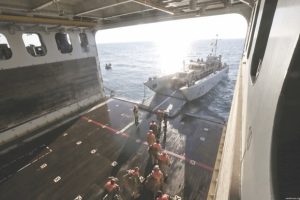
In that context, Exercise Crocodile Lift was conceived not just as a training routine, but as a practical platform for cooperation and deterrence. Its 2025 edition brought together hundreds of personnel from both navies; warships, aircraft, and specialized troops — all tasked with executing complex amphibious warfare scenarios.
Speaking at the flag-off ceremony aboard NNS KADA, Nigeria’s Chief of Transformation, Rear Admiral Monday Unurhiere, who represented the Chief of Naval Staff, described the exercise as “a practical demonstration of Nigeria’s commitment to regional peace and maritime safety.
“Crocodile Lift 2025 tests our amphibious landing capability and reinforces cooperation with strategic allies such as France. It enables our personnel to learn, share, and refine tactics needed to protect our national and regional maritime interests.”
For France, the exercise aligns perfectly with its long-standing defence cooperation agenda in West Africa — a region that hosts over 70,000 French citizens and accounts for significant French commercial investments. Representing the French contingent, Captain Arnaud Bolelli, commander of the French amphibious assault ship Tonnerre, said France’s participation was aimed at “strengthening maritime security and freedom of navigation” in the Gulf of Guinea.
“Our collaboration with Nigeria goes beyond symbolism. It is about practical action to ensure that the sea remains safe for all users,” Bolelli remarked.
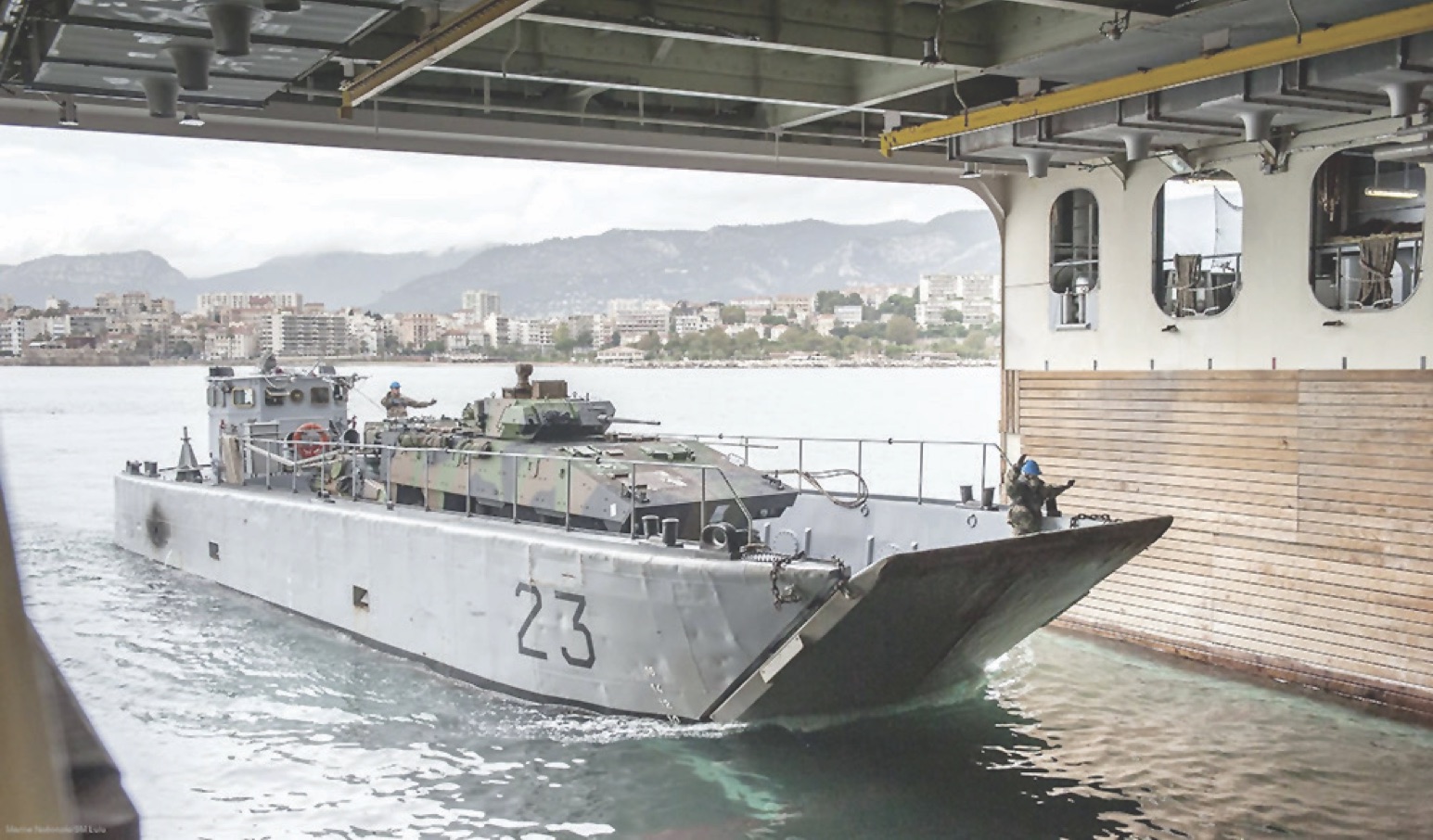
The grandeur of the exercise was evident from the outset. Nigeria deployed five naval ships, two helicopters, and SBS teams, while France fielded over 650 sailors and marines from the Tonnerre — a 200-metre-long helicopter carrier and one of Europe’s most advanced amphibious platforms.
The choice of Tonnerre was significant. The ship, capable of carrying helicopters, landing craft, tanks, and troops, symbolizes French projection capability and readiness for joint expeditionary operations. For Nigeria, the exercise provided an opportunity to benchmark its newly acquired logistics and amphibious assets, such as NNS KADA, against world-class standards.
Operations were concentrated off the Lagos coastline, extending toward Takwa Bay Island, which served as the primary training ground for amphibious assaults and simulated hostage-rescue missions.
One of the highlights of Crocodile Lift 2025 was a mock anti-piracy operation that drew attention from local and international observers. In the exercise, a simulated Pirate Action Group (PAG) hijacked vessels and held 16 hostages off the Lagos coast.
Nigerian SBS operatives, supported by French marines and aerial reconnaissance from Tonnerre, launched a coordinated rescue mission. They executed an amphibious beach landing, conducted tactical rappelling from helicopters, secured the perimeter, and “freed” all hostages in a meticulously choreographed operation.
The exercise was both realistic and instructive — testing command coordination, joint communications, medical evacuation, and hostage-handling under simulated combat conditions.
Rear Admiral Michael Oamen, Flag Officer Commanding, Western Naval Command, commended the flawless execution, noting that the exercise was “a demonstration of how real-time collaboration can translate into life-saving operations at sea.”
“Our goal is to ensure that our navy can seamlessly cooperate with friendly forces, share intelligence, and respond swiftly to threats that transcend national boundaries,” Oamen said.
French Colonel Brunet, who commanded the landing group aboard Tonnerre, praised the professionalism of Nigerian troops, describing their performance as “disciplined, agile, and responsive.”
“These exercises build trust and mutual understanding,” he said. “They also allow us to test interoperability — our ability to fight together, communicate effectively, and achieve a common mission objective.”
In the last three years, the Nigerian Navy has recorded notable progress in maritime security operations. The country was removed from the International Maritime Bureau’s piracy-prone list in 2022 and has maintained a zero-piracy record in its territorial waters since then.
This achievement has been underpinned by investments in fleet expansion, the establishment of the Deep Blue Project, and collaboration with international partners — including the European Union, France, the United States, and ECOWAS maritime forces.
Exercise Crocodile Lift has become a major pillar in that cooperation architecture. Since its inception, the series has evolved from small-scale joint drills into a large-scale combined operation involving multiple naval commands and foreign assets. For the Nigerian Navy, it offers an opportunity to sustain operational readiness and improve synergy with allies. For France, it consolidates influence and extends its maritime engagement in the Atlantic corridor.
Vice Admiral Ikechukwu Ogalla, Nigeria’s Chief of Naval Staff, has repeatedly linked such exercises to Nigeria’s growing reputation as a maritime security leader in the Gulf of Guinea.
“The collaboration with France and other partners is not about dependency, but about partnership. Through exercises like Crocodile Lift, we enhance our capacity to independently secure our maritime environment while strengthening global cooperation,” Ogalla noted in a statement.
France’s participation in Exercise Crocodile Lift is part of a broader pattern of strategic engagement across West and Central Africa. Following a recalibration of its defense posture after military coups in Mali, Niger, and Burkina Faso, Paris has sought to maintain its maritime and naval foothold as a counterbalance to reduced land presence in the Sahel.
The deployment of Tonnerre to the Gulf of Guinea underlines this maritime pivot. The vessel’s three-month mission — which includes stops in Côte d’Ivoire, Senegal, and Gabon — reflects France’s ongoing effort to support African navies, strengthen maritime governance, and deter transnational threats such as piracy, trafficking, and illegal fishing.
According to security analysts, France’s collaboration with Nigeria provides both tactical and diplomatic dividends.
Dr. Amaka Eze, a maritime security scholar at the University of Lagos, explained: “France understands that Nigeria is the anchor state in the Gulf of Guinea. Partnering with the Nigerian Navy allows it to retain influence and relevance in a changing geopolitical environment while contributing to regional stability.”
She added that such partnerships also provide platforms for joint intelligence sharing, operational interoperability, and defense diplomacy — all of which are vital to the collective management of the Gulf of Guinea.
Beyond maneuvers and mock operations, Crocodile Lift 2025 included training sessions on amphibious doctrine, navigation, casualty evacuation, communications, and maritime domain awareness (MDA). Nigerian officers received exposure to French command systems and operational doctrines, while French sailors interacted with Nigeria’s coastal patrol assets and Deep Blue surveillance framework.
The collaboration also facilitated exchanges on logistics management, ship maintenance, and joint humanitarian operations, particularly disaster response and search-and-rescue missions.
Participants noted that the presence of Tonnerre — equipped with hospital facilities, drones, and advanced command centers — offered Nigerian officers a rare opportunity to experience the operational sophistication of a NATO-class amphibious ship.
“This is how real partnerships are built — through shared knowledge and practical exposure,” remarked a senior Nigerian naval officer who participated in the drills.
Analysts believe the exercise sends a strong message of deterrence to criminal networks operating in the Gulf of Guinea. Although piracy incidents have drastically declined, the region remains vulnerable to asymmetric threats, including smuggling, arms trafficking, and unregulated fishing.
The combination of Nigerian and French naval assets demonstrates a credible capacity to project force across vast maritime spaces — from the Niger Delta creeks to the deep offshore zones where vital oil and gas infrastructure lies.
Moreover, such joint operations promote confidence-building among Gulf of Guinea nations, many of which look to Nigeria for leadership in implementing the Yaoundé Code of Conduct on maritime security.
By integrating France — a major European maritime power — into these regional exercises, Nigeria reinforces a multilateral approach that blends African leadership with global support.
Exercise Crocodile Lift 2025 was not merely a spectacle of ships and uniforms; it was a reaffirmation of the principle that maritime security is a shared responsibility. The presence of the French Navy alongside the Nigerian fleet illustrated how cooperative engagement, rather than competition, can yield tangible outcomes for peace and stability.
As the last helicopter lifted off from Takwa Bay and the warships returned to base, the message resonated clearly: the Gulf of Guinea is safer when nations collaborate, train together, and trust one another.
For Nigeria, it was another milestone in its journey toward full maritime autonomy and operational excellence. For France, it was a reaffirmation of its global maritime strategy and a demonstration of commitment to its African partners. And for the region at large, Crocodile Lift 2025 was a reminder that collective vigilance is the surest safeguard of the seas that sustain life, trade, and prosperity.