Follow Us on Google
From Abel Leonard, Lafia
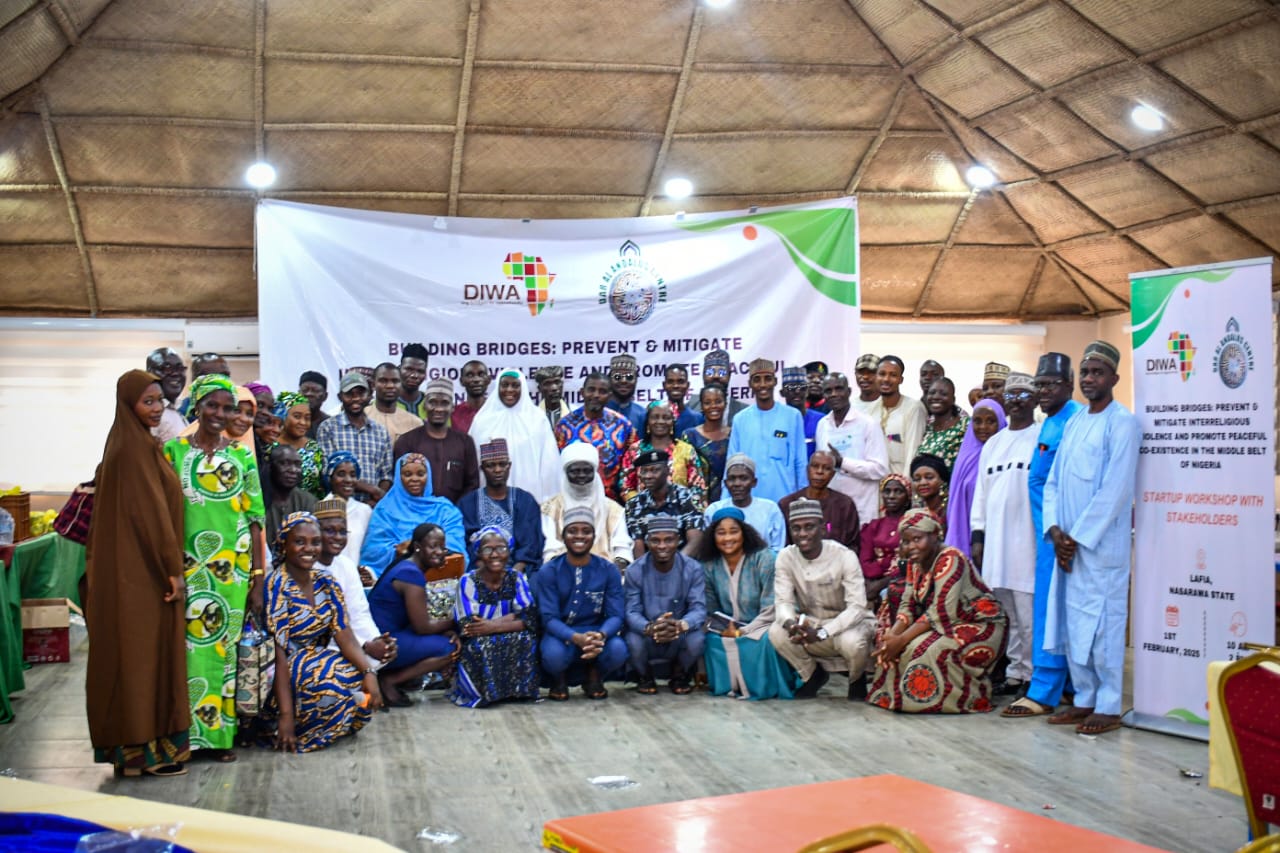
Religious leaders from the Middle Belt region have vowed to strengthen relationships, prevent interreligious violence, and promote peaceful coexistence in Nigeria. This commitment was made during a one-day peace-building programme organised by the Development Initiative of West Africa (DIMA) in Lafia on Saturday.
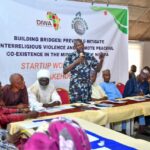
Speaking at the event, Musa A. Mohammed, Programme Manager of DIMA, emphasised the significance of interfaith collaboration in fostering peace.
“Building Bridges is an interreligious peace-building project designed to cement relationships between community members,” Mohammed said. “We are leveraging the influence, networks, and connections of religious and traditional actors to serve as gatekeepers and engineers for sustained peace.”
According to him, the project is being implemented in three states, with Nasarawa identified as a model for peace-building efforts. He explained that religious leaders would be trained and encouraged to conduct step-down training sessions, engage in dialogue, and participate in community-based initiatives.
“Our approach is not just about dialogue in halls; it is about practical peace-building in communities,” he added. “We are also engaging the media, both social and conventional, to ensure widespread dissemination of peace initiatives.”
Mohammed noted that while many efforts are being made to promote peace, there remain gaps that certain elements exploit to instigate violence.
“We realised that despite ongoing peace efforts, a crucial gap exists—engagement with religious leaders. They hold significant influence, and one statement from them can shape an entire community,” he said. “We aim to rebuild social capital, foster mutual respect, and encourage economic and social cooperation across religious lines.”
Other News
Ango Abdullahi, Executive Secretary of YMCA Mada Hills and Coordinator of the African Activist for Climate Justice Project in Nasarawa, lauded the initiative, describing it as a welcome development.
“This project, supported by DIMA, is vital for Nasarawa State. It unites people, fosters coexistence, and addresses divisive issues,” Abdullahi stated. “We are pleased that this programme is happening here, especially when other states have been left out.”
Similarly, Hajiya Yagana Shani, a representative of the GNI Women Wing, highlighted the importance of grassroots engagement, particularly among women.
“We have attended several peace meetings before, but we hope this initiative will have a lasting impact,” she said. “Women interact closely within their communities, and after this meeting, we will take the message back to our homes, families, and neighbours.”
Shani stressed the necessity of peace for societal progress, warning against manipulation by self-serving individuals.
“Without peace, even food loses its taste,” she remarked. “We must not allow ourselves to be used by a few individuals to fight along religious, cultural, or tribal lines. These differences existed before us, and they should not be a source of division.”
The peace-building project aims to create a long-term impact by fostering understanding and ensuring communities work together towards sustainable peace.