Follow Us on Google
From Juliana Taiwo-Obalonye, Abuja
With over 18 million Nigerian women navigating menopause—characterised by the cessation of menstrual cycles and a cascade of physical and emotional symptoms—the stakes are high. Menopause, though universal, remains shrouded in stigma and misinformation, particularly in Nigeria, where cultural and religious misconceptions contribute to mental health struggles among women. Ignorance, and cultural myths, leading to untreated symptoms, mental health issues, family breakdowns, and disrupted lives.

Menopause is a natural yet often misunderstood phase marking the end of menstrual periods and fertility, usually around age 49 to 50 nationally with research showing the mean natural menopause age at 49.4 years.
It marks the permanent end of menstruation after 12 consecutive months without a period, driven by a natural decline in ovarian hormones estrogen and progesterone. Symptoms, however, vary widely and may begin years earlier during perimenopause, including hot flashes, fatigue, joint pains, irritability, anxiety, poor memory, urinary symptoms, and depression.
A Southeast Nigeria study involving 402 women found that 79.6% experienced hot flushes, 74.8% fatigue, 69.6% joint pains, 68.4% irritability, and 37.3% depression. These symptoms significantly affect women’s quality of life, compounded by misinformation and stigma leading many to delay or avoid medical care. Factors associated with earlier menopause included lower education, being unmarried, and low parity. Notably, only 25% of women had a positive attitude toward menopause, with 70% apprehensive or frustrated, underscoring a pressing need for supportive information and care.
Globally, over one billion women are in perimenopause, menopause, or postmenopause, a number expected to increase as population aging trends continue, with projections indicating 1.2 billion menopausal women worldwide by 2030.
For Mosunmola Dosunmu, menopause was not just a biological event but a life-altering experience. “For two years, I wasn’t myself, unaware of what I was going through,” she shared during the Walk4Menopause event. “I spent so much time and money going from one hospital to another without answers. Some thought witches were disturbing me because of ignorance. This silence and stigma nearly destroyed my life.”
She further explained the heavy toll that misunderstanding of menopause takes on families and relationships. “Menopause causes mood swings and emotional changes. Without proper understanding, it leads to divorces, children become afraid of their mothers, and communication breaks down into shouting instead of calm dialogue. Husbands, men, brothers, and fathers must become the support system women need during this stage. Their understanding and empathy can transform households and save families,” Mosunmola emphasised.
Her struggle gave birth to the Menopause Support Initiative, a campaign started three years ago with just 750 members and now grown to a movement engaging over 8,000 women on WhatsApp and more than 10,000 social media followers. The initiative has launched Nigeria’s first menopause radio show, developed a mobile app connecting women nationwide, and partnered with 20 health centers across Nigeria to reduce costly medical checks from N250,000 to N85,000.
“We have already reached over 300,000 Nigerian women with awareness and education,” Mosunmola declared passionately. “But by 2030, one in every six women will be menopausal, and many will face family challenges because their partners don’t understand what they are going through. The government must step up to partner with us. We cannot do this alone”
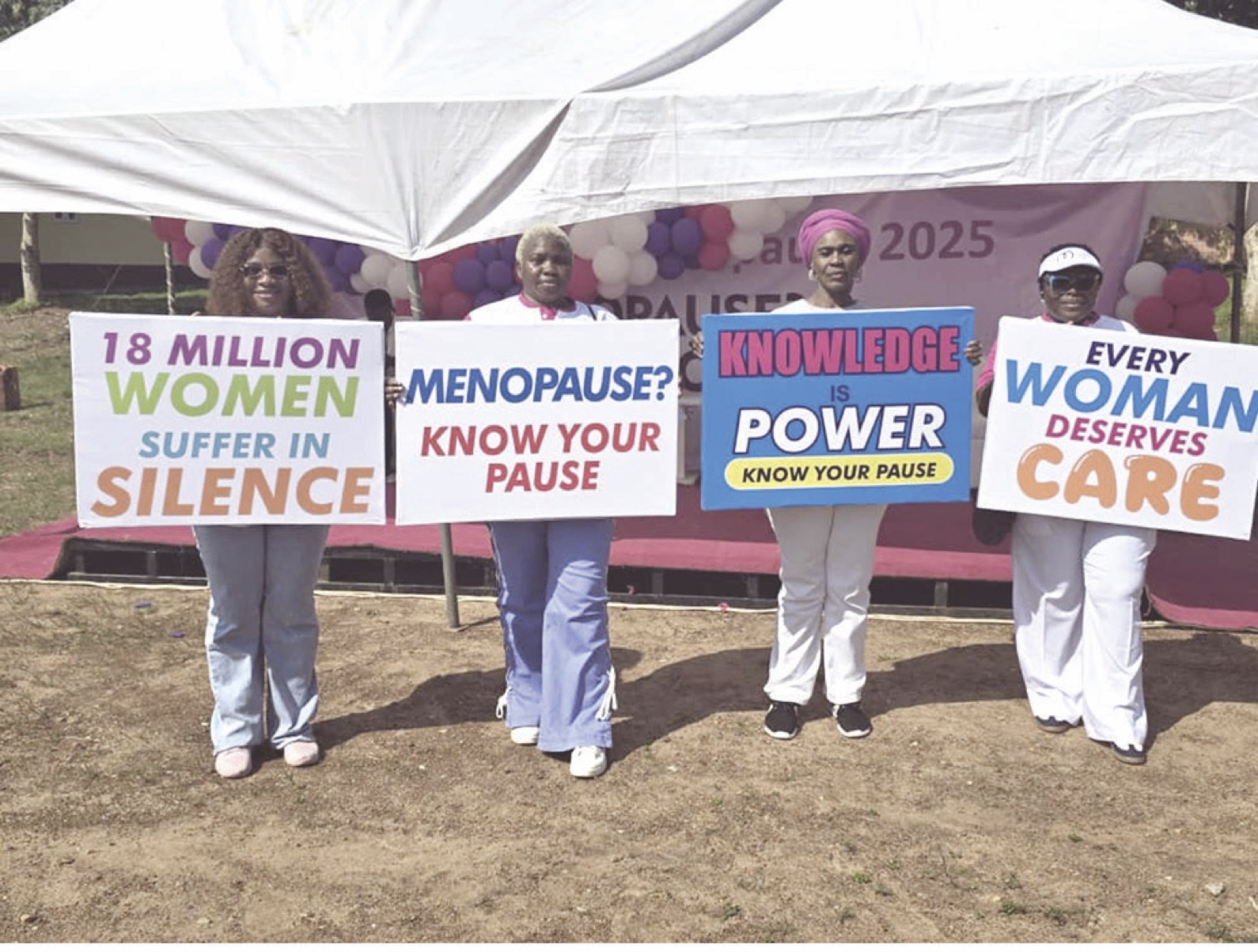
Walk4Menopause brought together women from all corners of Abuja, many of whom had never truly understood menopause until they faced confusing and frightening symptoms themselves. The event was filled with hope and energy as women proudly collected T-shirts and caps, took advantage of free medical tests offered by dedicated health partners, and lifted their spirits with music, art sessions, and an invigorating fitness dance. Starting from Government Secondary School in Zone 3, the walk moved to bustling Wuse Market, where passionate volunteers reached out to men, women, and young girls, sharing vital information about menopause and breaking the silence surrounding this natural but often misunderstood phase of life.
A telling moment captured the pervasive stigma when a religious lady, on receiving a campaign flyer, asked if it was a church programme and, upon learning it was about menopause awareness, exclaimed, “God forbid!” This interaction illustrated the dangerous mix of ignorance and religious misconception that drives mental health issues among menopausal women —issues the initiative seeks to combat through education.
Chairperson of the Abuja chapter of the Initiative, Elizabeth Onifade, reflected on the challenges and successes: “Menopause still carries stigma, and many women prefer to hide it. It has been difficult to get them to come forward. But today, so many women showed up because the pain they feel is real. During our roadshow, we heard about women suffering mental health problems linked to menopause, sometimes forcing them to leave their workplaces. We will continue educating and advocating”.
Mandate Secretary for the Women Affairs Secretariat of the Federal Capital Territory Administration (FCTA), Adedayo Benjamins-Laniyi, delivered a stirring and heartfelt message to the gathering. She began by emphasising the power of women supporting women: “Every woman supporting the woman next to her is a strength and a gap filler. In times of grief, pregnancy, job loss, or personal struggle, women provide the strength that cannot be bought or replaced. We are born to nurture life and connection; that power emanates from our wombs and extends through our collective spirit.” Benjamins-Laniyi, who represented the Mandate Secretary for Health and Environment Secretariat of the Federal Capital Territory Administration (FCTA), Adedolapo Fasawe, went deeper into the concept of happiness as a fundamental human right, saying, “Your first human right is your happiness right. No medicine, surgery, or financial wealth can give you that happiness—it is a gift you give yourself daily through gratitude and resilience. Life will test your soul and your faith, whether you are religious or simply a believer in life itself. That is why, when you face challenges like menopause, you must never give up.”
Citing the struggle women go through to strengthen the participants during the event, she shared a poignant moment from the event where one woman had almost given up during the Musical Chairs game, where a player who manages to sit down first when the music stops wins that round, and the player left standing without a chair is eliminated. In the scenario described, the lady was one of the last two players remaining in the game of Musical Chairs. Despite feeling tired from dancing around the chairs, she initially wanted to give up her spot. However, when the music stopped, she managed to win the round by being the first to sit on a chair.
Benjamins-Laniyi hailed her for her renewed courage: “Too many women quit believing in themselves when tired or overwhelmed. But you never gave up your seat during the dance competition, your place, or your power. The message is clear, even when tired, keep going—your perseverance is your strength!”
She celebrated the community spirit displayed during the event saying, “The sense of sisterhood here today, cheering each other on, lifts everyone. We (women) were born to create life and uplift life; when one of us rises, we all rise. Menopause is not a time to retreat or despair but a phase of strength, knowledge, and community support.”
“On behalf of the Mandate Secretary for Health and Environment Secretariat of the FCTA, I want to celebrate each woman here—and all Nigerian women facing menopause. You are not alone. We stand with you in hope and commitment to improved health services and awareness. Let us continue this journey united in strength and grace”
Her encouragement resonated with participants like Mrs. Peter from Masaka, Nasarawa State, whose story illustrated the confusion and fear many women experience before discovering menopause. “I didn’t really know much about menopause until today. My mother had her periods well into her 60s, but mine stopped at 42. I started having strange symptoms—sudden sleeplessness, headaches, swollen legs, and bizarre food cravings where I wanted to eat something but lost appetite right after cooking it. I felt like I was dying silently,” she revealed.
In her search for answers, Mrs. Peter first turned to her mother, hoping for guidance. “It was hard to talk to her at first, but eventually, I gathered courage. She told me that in her days, food was fresher and work was more physical, so our bodies are different. She reassured me not to panic despite the early change,” Mrs. Peter recalled. Unsatisfied and scared, she confided in a friend who assured her she was not dying, yet it still wasn’t enough to ease her mind.
Her fear drove her to visit the hospital multiple times. “I argued with doctors when they said it was just menopause. I thought menopause started at an old age, not at 42. The day before the walk, I had a headache and rushed to General Hospital Maitama. That’s when I met the Walk4Menopause team at Wuse Market singing ‘come and know your pause.’ I explained my symptoms, and they gave me supplements to help. I’m grateful and ready to join this group to educate other women,” she said.
Another participant shared how a junior colleague initially denied her premenopausal symptoms until hospital tests confirmed there was no medical issue, highlighting the denial and confusion many women experience.
Another woman, married for several years with no children and having stopped menstruating, boldly joined the awareness campaign team to express the sorrow and sadness this has caused her. After receiving education, she was overjoyed to be given free supplements.
As Mosunmola Dosunmu and the Menopause Support Initiative boldly push forward, the message is clear: government engagement and public-private partnerships are essential to scale menopause education and healthcare. The campaign urges women’s groups, NGOs, healthcare providers, and policymakers to unite in awareness campaigns, affordable medical testing, treatment access, and stigma eradication.
The Menopause Support Initiative has emerged as a groundbreaking force in Nigeria’s women’s health scene. Mosunmola’s vision is clear: “We started without funds, only passion and faith. We faced obstacles, but every day we took one step forward. Today, we have created history with the first menopause walk in Abuja and grown into a national movement.”
She called on the government and NGOs to collaborate, “One person or 200 people cannot carry the weight of 18 million women. We need partnerships to create infrastructure, education, and health services for menopausal women nationwide”