Follow Us on Google
• As Guild of Editors marks 3rd Jakande Memorial Lecture
By Henry Uche
Bauchi State Governor, Bala Abdulkadir Mohammed, has tasked Nigerian journalists to take up the responsibility of training future public servants and creating national consciousness.
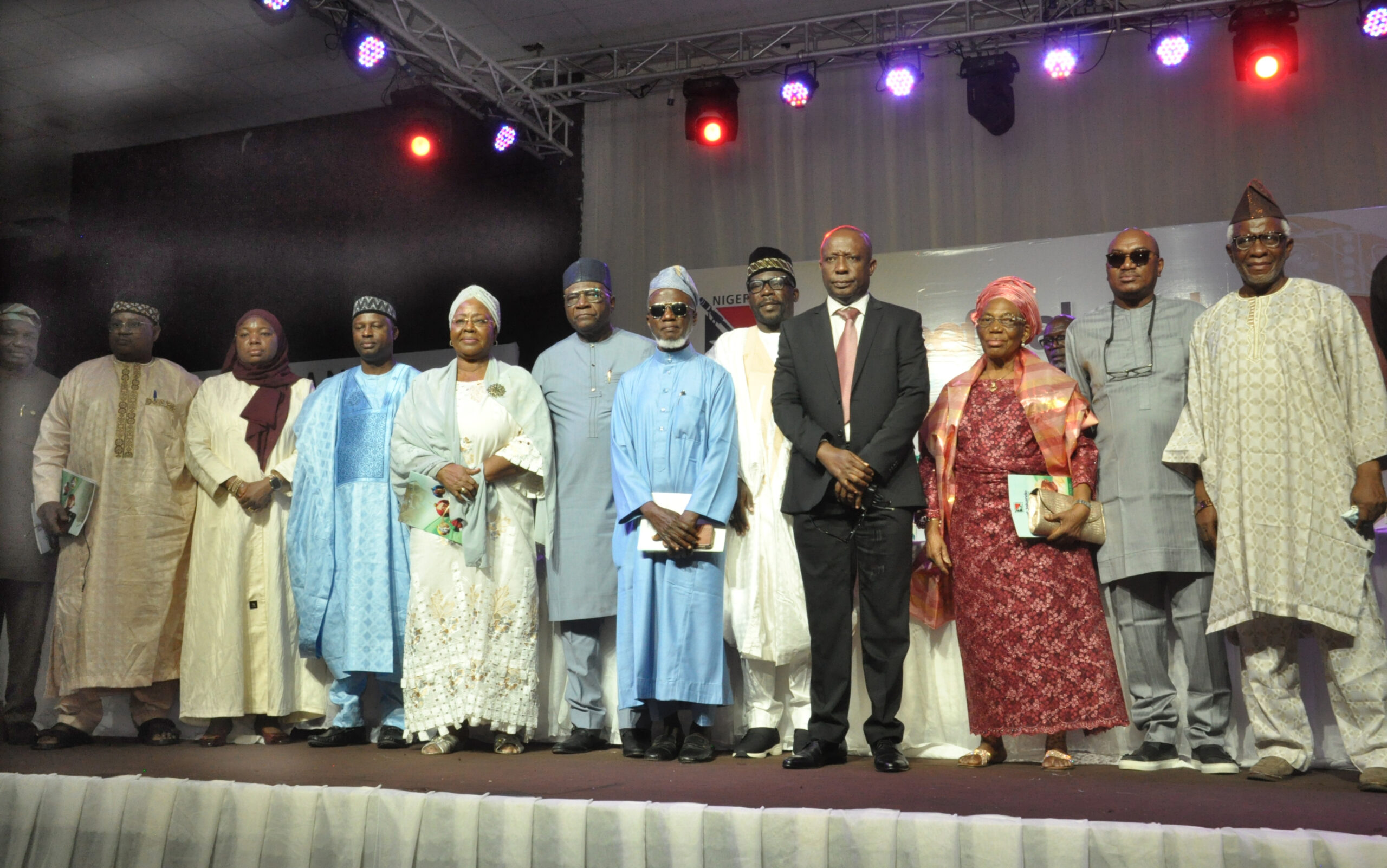
Speaking at the third Lateef Jakande Memorial lecture organised by Nigerian Guild of Editors (NGE), in Lagos, Governor Mohammed said only journalism has the capacity to not only train future leaders but also shape the nation.
In his paper, “Journalism and the challenge of nation-building in a multi-ethnic society,” the Bauchi State governor said journalists are in a position to serve public interest.
He said the media must create a national consciousness on “values, justice, merit and shared destiny,” emphasising: “We must not merely be a federation of ethnicities, we must be a nation of citizens.”
In creating national consciousness, he said the media would have to cultivate “national ethos: values that transcend our differences, respect for life, rule of law, dignity of labour, truth over tribe. Let the Life of Lateef Jakande be a reminder that power is not what we hold, it is what we do with what we hold.”
Governor Mohammed urged journalists to remain steadfast, principled, patriotic, saying, “even when others falter, let the Nigerian press be remembered as the last men and women standing. We need the right media with integrity, let the Nigerian media be the spark of that integrity.”
On the role of journalists in nation-building, the governor said: “Let me be clear: journalism is not just about reporting events. It is about shaping the nation’s soul.
“We must not merely be a federation of ethnicities. We must be a nation of citizens. This requires cultivating national ethos: values that transcend our differences. Respect for life. Rule of law. Dignity of labour. Truth over tribe.”
He said his dream Nigeria is a country “where children are not judged by their surname, their state of origin, or their place of worship, but by the content of their character and the strength of their service.”
According to him, that dream can only become a reality with the right leadership and with the right media.
He tasked journalists to defend the rule of law. “The moment a society begins to ignore judicial decisions, it is on the path to lawlessness. No nation can survive selective justice. The media must call out every instance where court orders are flouted — not because of who is involved, but because of what is at stake: the soul of the republic. And when conflict brews, let dialogue — not denial — be our first response.”
Governor Mohammed also urged the media to demand credible leadership by questioning “every candidate, scrutinise every promise and highlight integrity over popularity. Elections should be contests of ideas, not identities. Leadership must never be reduced to entitlement.”
He tasked the media to champion national reconciliation, stating: “Nigeria must confront its past. We can no longer sweep historic grievances under the rug. A Truth and Reconciliation Summit, led in part by the media, could help heal our wounds.”
The governor also asked journalists to promote civic education and ensure language inclusion by encouraging the learning of Nigerian languages outside one’s own. Understanding each other is the first step to loving each other,” he said.
He tasked the media to do what he called “housekeeping” by fixing “its own broken windows. Exploiting interns, hoarding opportunities, turning a blind eye to corruption within — these must stop. The pen must remain clean to remain powerful.”
The governor said Nigeria’s survival is not optional but imperative, emphasising: “Our size gives us leverage; Our diversity, properly harnessed, is strength; Our shared history binds us more than it divides; Our natural resources can fuel prosperity — if managed with integrity.”
He urged journalists to “remain steadfast. Remain principled. Remain patriotic,” saying: “Even when others falter, let the Nigerian press be remembered as “the last men and women standing.”
Meanwhile, the Federal Government has cautioned media practitioners against spreading fake news, misinformation and disinformation, warning that such actions could set the country on fire.
Minister of Information, Alhaji Mohammed Idris, who was represented by Mr Bayo Onanuga, Special Adviser to President Bola Tinubu on Information and Strategy, urged the Guild to enforce professional standards to uphold the integrity of journalism in Nigeria.
Idris advised journalists to develop the habit of verifying and double-checking all information before publication.
“If journalists continue to spread fake news, one day it may set the country on fire. Fake news spreads fast, and its consequences can be devastating,” he warned.
Other News
“We have many pieces of misinformation, disinformation, all going on in the name of our profession.
“There are certain people in our profession, gatekeepers, who are there because they have a telephone, a smartphone and internet connection.
“We see them sending out fake news, fake information. Many of us here, we retweet or we reprint news on social media. Yet, there are rules, don’t always retweet what you find on social media.
“Therefore, we need to really enforce the rules that govern our profession. If we get any piece of information, check, and ask, is it correct? If it’s not correct, don’t produce it.
The minister, however, stressed that the nation could not survive without journalists, the press, and—most importantly—a free press, as they were all interconnected.
According to him, both the government and the people need to be heard, and journalists serve as the vital link between the two.
Idris expressed concern over the rise of individuals presenting themselves as journalists without upholding the core responsibilities of the profession.
He reaffirmed the Tinubu administration’s commitment to press freedom anchored on the principles of truth, fairness, and accountability.
The minister added that the Federal Government would collaborate with the media to raise professional standards, promote media literacy, strengthen public communication, and “tell the Nigerian story in a way that inspires hope and galvanises action.”
Taking their turns during the panel session, former MD/Editor -In- Chief of the Guardian Newspaper, Emeka Izeze, raised the consciousness of the media towards their roles saying: “Our roles towards nation building have gone beyond informing, educating, and entertaining the public. Our responsibilities are more sophisticated now than ever. We must see ourselves as partners not as appendages in policy making. Government cannot thrive without proper journalism” He added that journalists are purveyors of solutions who must help the government govern better: “When we don’t do these, we have failed.”
On his part, Special Adviser to late President Muhammadu Buhari, Mr. Femi Adesina, tasks media professionals to be at the forefront of uniting Nigeria as the country shows signs of division and bitterness. He noted that Nigerian media was born into activism and must remain that way. “I don’t expect us to stop activism. The media prepares us for efficient public service. A lot has gone wrong in the media space. The contents of our character must be checked” he stressed.
Former president of the Guild, Mrs. Funke Egbemode, pointed out some wrongs going on in the newsroom and questioned the readiness of media veterans to reproduce themselves as they would leave the stage in the nearest future. “What package are we building? We need to make conscious effort to train the younger journalist so that what comes out of the newsroom does not consume us”
She implored her colleagues to ‘rescue the pen from irresponsibility’ as many Nigerians parade themselves as journalists without formal training and certifications. “There are no citizen lawyers nor citizen doctors, why do we have citizen journalists? You are either a journalist or a hacker. We must train our people so that they won’t widen the cracks,” she admonished.
Managing Director/Editor-In-Chief of The Punch newspaper, Mr. Joseph Adeyeye, challenged leaders across strata to emulate the late Jakande’s leadership model as a seasoned administrator.
Adeyeye called for regular media training, saying: “Let’s speak to our leaders, there must be free and independent media for nation building. We must let the government know that they must show interest for the survival of the media. We must train our journalists for future roles and responsibilities, so that they can make the right decisions and position the media as a net contributor to nation building.”
Earlier in his address of welcome, NGE’s President, Mr Eze Anaba, said the theme of the event was timely at a time when the country continued to grapple with foundation issues of justice, unity and identity in nation building.
He said the lecture was centred on national dialogue on how journalists could contribute meaningfully to bring about a cohesive society.
“As journalists, we have the power to influence the narrative and promote national values. Moreover, we have a duty to ensure that our storytelling helps build a stronger, united, and more progressive nation.”
He urged journalists across the country to wield their power with every sense of responsibility and professionalism.
“We must practice with a sense of responsibility and professional integrity.”
He added that the Guild would continue to celebrate Alhaji Jakande by promoting his legacy.