Follow Us on Google
By Ikenna Emewu
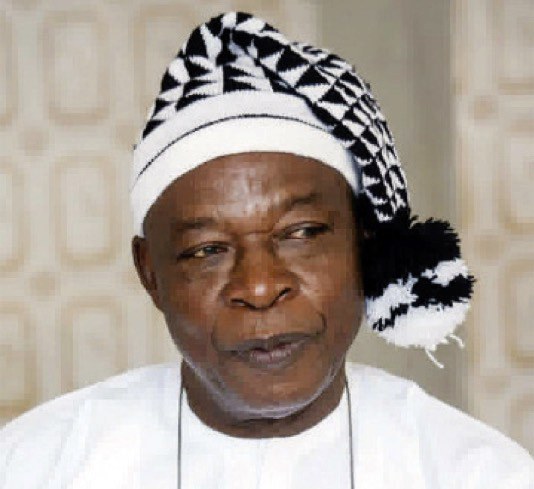
On August 28, 1951, a child was born into a family, the first of many – the Nnachi Agwu Agbai family of Amaeke, Amoso Edda.
When he was 32, the tide of his somehow tortuous journey turned, and against him, with an extra burden. That was when his father, the late Chukwu Nnachi Agwu, the postmaster, burned out.
The extraneous encumbrances of the family he was born into, and being one who cared, made him become a father to his younger ones, a good number of them. But grace pulled him through.
The grace of God sustained and steered his course from the very first day.
He grew through childhood and early adult life with a fair share of the vagaries that tried to pull his elements apart. But Mazi stayed stable, unflinching, and never deviating from the track of his journey.
His early life included instability in health, the Biafra War that tore apart their world, and later early schooling that took him to so many parts of southern Nigeria.
Because his father worked with the Post and Telecommunications (P&T), he was transferred from place to place. That itinerant lifestyle took him from Ibadan, where he was born, to his growing up and early schooling in Ahoada, ane Abak, which is why he still spoke the Anang or Ibibio language all his life.
As his life unfolded, he carved an image for himself as a person of extraordinary selflessness. Mazi lived for others more than for himself. He was a rare breed of human being whose major longing was to grow the people around him. He spared nothing to help others. He trained many; he fathered a clan; he was to many strangers a source of succour, livelihood, and comfort. To him, all humanity was his one large family, and he never got tired of listening to cries for assistance. This is a man who wakes up in the morning to make calls, soliciting resources to shoulder other people’s needs even when his was weighing him down until his end.
His generosity and selfless life started from the cradle. He told the story of how he used to access his father’s bedroom and take whatever money he finds to go and share to people. The first time his dad caught him, he received some spanking, but did not stop. When his father found he was undeterred, he allowed him have his way, but applied negotiation with him on what to share to people and what to leave behind. his parents.
Mazi Okoro Agwu lived a life of sacrifice for others. At a point in Lagos, his home was a haven for all young Edda people who needed a spot to squat and start their lives, most of them young graduates who needed a foothold and a compass for their future.
With all the kindness and concern for others, Mazi was a merry-go-lucky person. He rolled, he raved, he fraternized, and he had fun. He never allowed the wear and tear of life to pull the hair off his skin and always said, “Life is meant for the living.” He lived to the potential and didn’t spare any fun life brought. That was his anti-shock gadget against the vagaries of life.
To him, class differentiation and stratification didn’t apply. The table Mazi sat at to eat or drink was the same for his boys, even the ones he still paid their school fees for.
During the war when he was just a teen, his late mom narrated how the young boy was at two times captured by Biafran forces that conscripted young people into the army to prosecute the sanguinary war between May 1967 and January 1970. On those two occasions, his mom would find her way to Ohafia and confront the Biafran army commanders to release her son, whom she argued was too tender to join the military. It happened again for the third time, and his mom also repeated her resistance. This time, before she could get to Ohafia, the commander recognised the young boy and asked his men to release him to go, because very soon his mother would come harassing him again with her ‘big grammar.” It was after that, the mom warned him off the streets; he should stop roaming around with his catapult hung on his neck, where they would see him for conscription. That is how he stayed out of harm’s way until the war ended, and he enrolled in secondary school at Umuahia.
He completed his early education in Abak, and Ahoada, from where he proceeded to Evangel High School, Old Umuahia, and graduated in 1975.
His educational journey later took him to the Institute of Management and Technology (IMT), Enugu. He was in the 1982 Accountancy Class. Later, Mazi Okoro Agwu attended Enugu State University of Technology (ESUT) for his postgraduate course.
Mazi did his one-year mandatory NYSC in the old Kaduna State in 1982/1983 with his place of primary assignment at the University of Zaria, later renamed Ahmadu Bello University.
In 1983, towards the end of the year, the journey of life landed him at Nigeria Reinsurance as a graduate accountant, his first employment.
He served there until 2003, a 20-year sacrifice, from which he voluntarily retired as Senior Manager, Technical Account.
His retirement was necessitated by the unbridled sale of public enterprises by the government then. While the organisation, alongside the affiliate, NICON Insurance, was sold to new owners, he took the option of leaving rather than working under the unstructured and frustrating conditions of the private buyers.
He later turned to farming and insurance brokerage in his personal company, and developed palm tree and bush mango plantations in Oso.
In one of those efforts, Mazi set a history of bringing the first telephone company to Edda, the Ejuok Telecoms Ltd. You may well say that his younger brother, whom he raised, and now has a chain of investments in Edda: Okamkpa Oil, Okamkpa Farms, Okamkpa Cold Stores, took the impetus from his elder brother and mentor.
His Ejuok Telecoms and Business Centre was like a dream to the locals when it filled so much of the telecommunication void. Edda people journeyed to the spot to make and receive phone calls. The introduction of the GSM system to all rural places in Nigeria, including Edda, affected the longevity of the business.
He was later also to operate the first funeral services in Edda with his ambulance services. Those two investments brought essential services closer to people who used to travel to nearby towns to find them.
Before this, and during his years of service, Mazi, in his typical self, which aligned with progress and whatever was good, kept the young ones he raised busy productively and bought into the idea of starting a publication on Edda, the first of its type. In 1999, Edda Trumpet Magazine was born to blaze the trail in documenting Edda through the media. Mazi was the publisher and sole financier of Edda Trumpet that debuted and hosted a public launch at Ezi Edda Town Hall in December 1999.
The magazine was the first Edda formal media platform to raise awareness as a bastion for good governance in Edda LGA, calling for accountability from those in charge, demanding prudence and focus on the people, and making leaders understand that the resources of Edda and how they handled them to either grow Edda or otherwise is a duty, and that the people need to know.
On December 7, 1991, at the Presbyterian Church, Yaba Cathedral, Lagos, Mazi and his childhood sweetheart, Edith Ejutu Okoro Agwu (Nee Igwe Mba) of Nkeluogo Ezi Edda, got wedded to build a family. The union bore fruit with two men: Okoro Agwu Jnr, and Uko Chinedu Okoro Agwu.