Follow Us on Google

By Bimbola Oyesola
Workers in the chemical and non-metallic sector so far were among the worst hit during the pandemic, and they are still not completely out of the woods.
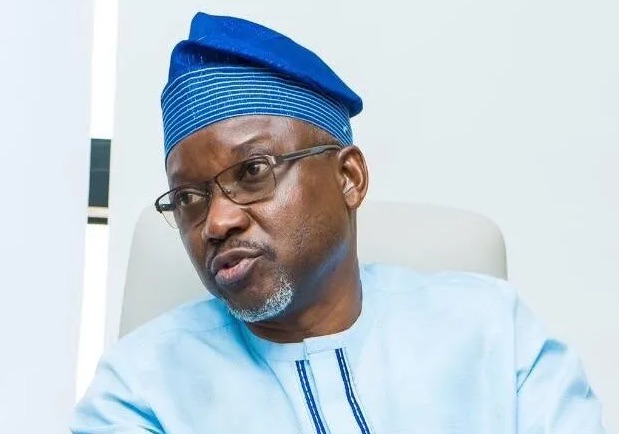
That was the submission of the President of the Chemical and Non-Metallic Products Senior Staff Association of Nigeria (CANMPSSAN), Segun David.
He also lamented poor treatment meted to indigenous workers in comparison to their foreign counterparts and the need for Government to act on this.
As Nigerian workers celebrate the Workers Day today, the labour leader equally tasked government on insecurity which he said has been a very big challenge for labour.
Excerpts:
With the theme of this year’s May Day celebration, ‘COVID-19: Social Economic Crisis – The Challenges for Decent Jobs, Social Protection and Welfare’, in what ways do you think that COVID-19 has impacted on Nigerian workers?
COVID-19 in so many ways has brought some positive and negative things to workers. Some employers used the opportunity to better the lot of workers while some did otherwise. Some of them did so many things that were inimical to the growth of workers under the pretence of COVID-19. For instance, you see a lot of companies downsize arbitrarily and indiscriminately, while some had gone ahead to reduce salary of workers. Now that things have improved reasonably, those salaries were not reversed. Also, we saw companies last month declared profit, where majority of them declared huge profits than they usually made in time past. But most of them till date have not done salary appraisals, salary increase for two years running and yet they are declaring huge profits. These profits if I may say, part were gotten as a result of suppression of workers because some of them did not perform salary increase, some employees retired and there were no replacements, they freeze promotions and in all these, they counted them as profits, not even considering the workers that worked for them to make these profits.
Could you tell us some of the challenges in your sector?
The chemical and non-metallic sector was among the worst hit during the pandemic, and we are still not completely out of the woods yet. There were cases where salaries were reduced by various percent and cases of redundancy declared, only for the companies to come back and reinvest in the same plant and bring in casual workers, which is anti-labour. In the sector, employers see the pandemic as an avenue to cash out on the frailty of the workers and helplessness of the workforce in order to make more profit.
Specifically, how has your union been able to deal with the challenges, especially with those companies making life difficult for workers?
We still have couple of companies now that we are having challenges with, but because we are tolling the line of peace we are being careful to see that we resolve issues amicably. For instance, we had a very long battle with one of the companies in the sector, Nycil, and until we got to the ministry of labour, where the office of the minister had to wade in before we were able to resolve and settle the matter among others. Also, while the Federal Government in its own way tried to release palliatives and loans for workers, even though they were questionable, employers in their own way did not make the work environment conducive for workers to access the palliatives and loans provided by government. For instance, we have tried to review our procedural agreement and the condition of service, which we discovered has not been reviewed since 2007, and employers are cashing on this to shortchange workers. Among our plans are for the expatriates where there are double standards. They have different years of retirement while the indigenous workers have different years of retirement. For the expatriates, they’ll give them long years of retirement, claiming that it is what they have in their country and for the indigenous workers, they have lower years of retirement. Most of the companies have been reluctant to adhere to government’s mandatory 60 years for retirement age. I believe the union will treat the matter dispassionately and bring up good resolution on that. The other issue is on workers’ welfare. We know that many companies shy away from giving their employees loans, considering their poor remuneration. Nigerian workers can hardly afford bank loans considering the collateral involved as their remuneration is very poor. What is the benefit of working in an organisation if you cannot get a loan? No wonder, most employees after few years retirement falls ill and some die. As president of CANMPSSAN, I will ensure that some of these policies are reversed or in some cases sustained.
Looking at the social economic situation in the country vis-a-vis workers’ welfare and N30,000 national minimum wage that is nothing to write home about, how do you think Nigerian workers and the masses can get out of this situation. Do you think there is need for another review of the minimum wage?
Going through memory lane when the minimum wage issue was being discussed with the Federal Government then, exchange rate was N360 and fuel price was still N97. But now dollar is going to N500. Also fuel is now N165. This has called for concern for labour leaders for urgent review of minimum wage so that an average worker can have little to fend for themselves, because N30,000 is nothing to write home about given the current trend. Also, apart from inflation and exchange rate, the high level of insecurity in the country has made it difficult for an average worker to get things at ease, which had made things to go above the reach of the common man.
What is your take on the high level of insecurity in the country, how it has impacted on your sector and labour as a whole?
Insecurity in the country has been a very big challenge for labour. Apart from the COVID-19 pandemic, everyone is scared of travelling. Recently, we had election up north and not everyone could go because we couldn’t afford to put the lives of our secretariat employees at risk, and so this is affecting in terms of connectivity, relationship and interaction.
We can’t even still reach some of our members in some areas in the north if we want to organise meetings online due to poor network. We also have the issue with some companies struggling due to cases of kidnappings, which has made some of the companies to produce their own security, which is also cost effective, thereby impacting on their revenue. At the end, it is the workers that bear the brunt as workers cannot ask for salary increase or welfare package since it is obvious that bulk of their revenue had been used to pay for security. On how government should approach the issues is that they should stop playing the ostrich in this matter. They should admit that there is a problem because if they fail to do so, then we have not started. Security issues in Nigeria is now a misnormal in the sense that people no longer report incidences, they just take it that it has happened. It is only those that it has affected that come to make noise about it. Investors are shying away due to insecurity. This calls for attention and the Federal Government and President Muhammadu Buhari in particular need to address this matter. We must stop playing the ostrich in the case of insecurity in Nigeria if we must move forward.
Expatriates quota has been grossly abused in recent times, we have more foreigners in some organisations. What step is labour taking to address this?
This has been a source of concern for labour leaders and we are coming up with a position on this. We are planning to have a meeting with the Ministry of Interior and Labour on this matter. There is a benchmark; it is one percent to the indigenous workforce but what we have now is about three to five percent, which is totally unacceptable. We know that Europe is saturated now and so most of these companies are pushing their workers because they cater for their own citizens so that they can still keep them in active employment and still get returns in terms of taxes to still keep their companies afloat. But in Nigeria, government is not looking at this because the more we allow more foreigners in, the more they are depleting our own workforce or industry. However, we are not avast to having expatriates working in our country but there is a process and standard, we should follow the rules so that all of us can work in accord. Most of them when they come in, the only way they can make way is to gradually phase out indigenous workers.
What is your take on organisations that sack workers without consulting the unions?
Recently, we had cases where we took some employers to the National Industrial Court and we won. There are lines of process we also want to take where we will talk to the employers. Some of them don’t even respect their own unions, the employers federation. We will not hesitate to take whatever action that we deem fit to save our members. We have also involved the IndustriALL Global Union and they have given us the backing through the International Labour Organization (ILO) and we will also engage all necessary tools to ensure we will no longer accept anything that will jeopardise the lives of Nigerian workers. We will not hesitate to picket companies, we will not hesitate to take them to arbitration panel and ultimately the industrial court.
What is your message as labour celebrates May Day?
We need to see that there is hope beyond where we are. For us to be able to achieve meaningful results, we need to come together as unions and start talking together with one voice, no need for rivalry. We need togetherness and unity. We must be able to point out to employers where they are erring for them to make adjustments.