Follow Us on Google
By Daniel Kanu
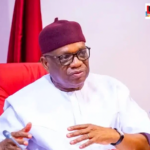
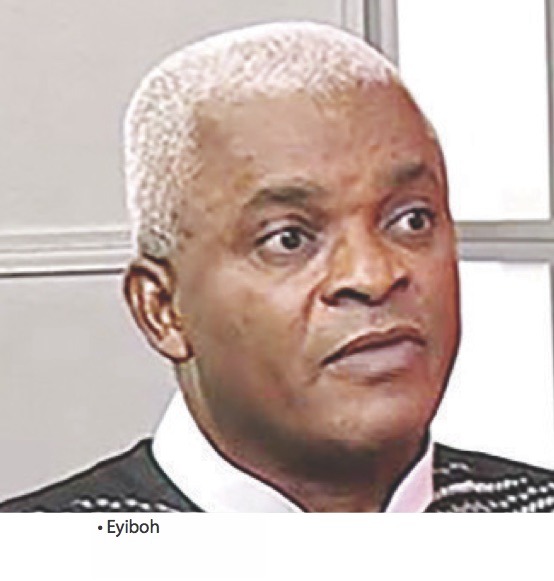
Hon. Eseme Eyibo, the quintessential former House of Representatives spokesman is not one that holds back his views on critical issues. Even when his party is involved in the mess, he never restricted himself from nailing those involved.
The former spokesman and chairman of the Information and Strategic Communication Committee to the Akwa Ibom APC Governorship Campaign in the 2019 election, told Sunday Sun that President Mohammadu Buhari as a person is a good man and has good intentions for Nigeria, but for the actions of those who are wrongly recruited into his cabinet, who without supervision, grew larger than the institutions they were expected to manage.
Eyiboh speaks on the Buhari legacy, National Assembly politics, and the call for a shift of the inauguration date from May 29, among other national issues. Excerpt:
Criticisms have been trailing President Buhari-led APC government as he winds up his tenure given the failure of promises he made in the areas of economy, security, and anti-corruption, among others?
The truth is that President Buhari is a very honest man, but unfortunately, those that he recruited into national leadership were seeing governance from a perspective different from his. The man (Buhari) came in with genuine intension, with sincerity of purpose, but sadly, those he recruited into leadership turned out to be the problem against his genuine intension. Secondly, he performed, but that performance does not match what was informed. There was a communication gap because all that he performed were not adequately reported. The public was not properly informed as much as he performed. On the issue of anti-corruption, the problem was lack of supervision, some persons now see the country as common paternity, and it is like some people were like untouchables. A situation some individuals were left as ministers for eight years. They became stronger than their ministry. They now assumed a sense of entitlement that this ministry is my ministry and nobody was supervising them. So, it created room for series of incentives for corruption as some ministers were more powerful than their ministries, more than the institution they were in-charge of. They administered their ministries with breaches and violations. Some stayed for so long as ministers and without supervision and as I said, that became an incentive for corruption. Such a long stay was not good for our governance, especially when there was no proper supervision. They were doing things regardless of public service rules. So part of the incentive for corruption was poor leadership recruitment of some individuals in different offices. A minister or head of department or agency or somebody will sit back and create imaginary programmes or imaginary projects, but because they are bigger or have assumed to be bigger than their ministry there was no more supervision, no regard for rules and regulations. Also, the legislature suffered a very strong deficiency in their oversight responsibilities. You can imagine, for example, how somebody will come up with the re-designing of the currency. The new currency (Naira) was not even available and before you know it, within that short period of time people started rejecting money, telling you: I am not taking this one again, unless you give me the other (new) one. That singular tragedy was part of the factors that crippled the economy and now, we are using dual design, the old currency and the new one. We are at the mercy of counterfeiters; most people no longer know which one is original and which one is fake. Then the issue of the controversial subsidy is also there. The other day, I read that they want to pay some money as fines, debt, and penalties from the government and all of that. It’s like they are just creating a buffet, something like, let’s eat and go. We have damaged the economy, but as I said the President (Buhari) as a person is a very honest man, he has a very strong integrity, but I can tell you that his inability to change some of those people in his government by allowing them to stay back was a minus. They became institutions in the respective institutions and under such an atmosphere there is no way you can have a good economy. Nigeria has the market, we don’t have the economy.
Do you think that since the Presidential Election Tribunal is yet to pronounce its judgment on who the winner is, there is a need to shift the handover date from May 29?
Those people that are proposing that the May 29 handover to a new government should not take over are anarchists they are not nationalists, they are not patriots. Where in the world… there have been election disputes in many places in the world, it happened in America, which place has such a suggestion taken place? What they are saying is that we should extend the tenure of Buhari beyond May 29, which will be unconstitutional, an aberration or you have an interim government that has no place in a democracy. So, those who are proposing such are just anarchists and people should stop giving them the name opposition because there is no opposition in governance. You have opposition in party politics and when elections are concluded, party politics ends with the election. We are now in governance, the governance of the Federal Republic of Nigeria, so respective or irrespective of the platform you came on to participate in the field of governance at any level either as a governor of a state or as a president or as a member of the House of Representatives, Senate or State House of Assembly, etc, whichever platform you are representing, you are working for the interest of the Federal Republic of Nigeria. So, they should not be called opposition, because there are some people who hold the opinion that the way we use opposition sometimes: you are trying to give allowance and introducing interlopers, people who never contested an election and never won and are sitting down in their respective houses to begin to propose and canvass for what is undemocratic.
As member of the APC are you not worried about what the President Buhari-led government will be leaving behind?
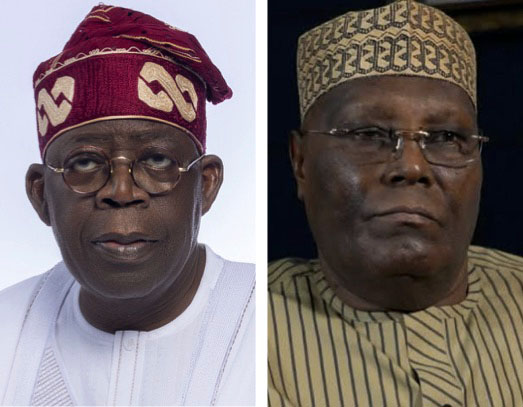
Well, I am one of those people who believe that we shouldn’t look at what went wrong in governance, we should be interested in what will work and I want to assure Nigerians that Asiwaju Bola Ahmed Tinubu and Shettima is a balanced diet for governance. They have the capacity to instigate those interventions that will change Nigeria for the better given the background they are coming from. The recruitment of leaders into the various positions of government is going to be on merit and anybody who is recruited will be supervised.
What is your impression concerning what is going on in the National Assembly, particularly the Senate where they are positioning Senator Akpabio as the Senate President…?
(Cuts in) There is politics going on there now at the National Assembly and that is expected. It’s part of democratic politics. What is happening there is very democratic, everybody is canvassing support; everybody is presenting himself or herself for one position or the other with a full conviction that he or she has the capacity, and the relevant attributes of leadership to be able to intervene in the governance issues of the respective chambers, but I can tell you that Senator Akpabio, given his pedigree, from his experience, from his human relationship management is a connecting rope that will be able to connect the Legislature to the Executive, to the Judiciary in such a way and manner that the engine of governance will be transacted with robust and seamless limit, creating the needed harmony for the smooth running of the government, devoid of avoidable rancor. I am optimistic that if he emerges, he will do well.
Buhari also failed in the area of security or you think otherwise?
I think he was able to deconstruct the various security challenges. For example, Boko Haram at this point is no longer as alarming as it used to be. But, if I can say this: what we have in this country, I mean the problem of security is the problem of lack of national consciousness. People do not have national consciousness to be able to know that even when somebody robs in your neighborhood, instead of calling the police they will be using their phones to record from the window and put in the social media. A citizen who is nationally conscious, the first thing he or she does is to make sure they call the police. Tell the police, for instance, that, oh there is a robbery in my neighborhood, or there is a thief in my area…Report fast and first to the police, so we must be very concerned with what is going on in our neighborhood first. Policing is first local, you must have to be very sensitive to your local environment first, know what is going on there first, and make observations and report things that are not expected to happen there, like robbery, kidnapping, and all sorts of atrocities being committed. We must know that those committing those crimes are not spirits, so if we are careful in our observation of movements, we can expose them. When it is happening in other places and we do not show concern, gradually, only a matter of time it will also surface in your environment, where you least expected it. It’s good to be our brothers’ keeper. Somebody may be attacking people in the neighbouring state like Anambra, for instance, and another person in another state may not think or know that what is happening there may affect them one day. So, we must as a people develop security consciousness and not be unconcerned, not allowing or seeing the issue of security as one only in the hands of the governors or the president or security agents. We all have a responsibility, or a duty to perform in this regard.