Follow Us on Google
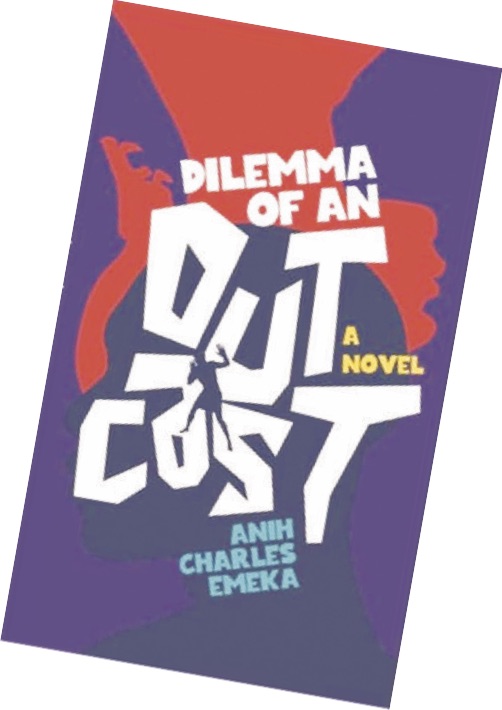
Title: Dilemma of an Outcast
Author: Anih Charles Eneka
Publisher: Parrasia Publishers, Lagos
Year: 2025
Pagination: 145
Reviewer: Henry Akubuiro
Ruth and Ifedi thought nothing on earth could pose a barrier to their marriage, having known each other well since their university days in Lagos. Theirs would be marriage made in heaven. But there was a cultural landmine waiting to explode and rip through their love life. Osu, the agelong Igbo caste system, forbade a freeborn Diala or Amadi and an Ohu, slave, to intermarry. But the love birds were about to rewrite history. And they did – by eloping and getting married, daring the custodians of a curious tradition to stop them. Not all took that bold step.
Other News
“When my husband first took me home,” says Ruth on page 135 of Anih Charles Emeka’s novel, Dilemma of an Outcast, his father nearly reduced me to subhuman. He told Ifedi, to my face, that their family shouldn’t marry mine. I’ve forgiven Papa. He’s seen his error. But here’s the kicker: Ifedi and I are from the same town, yet a river divides us because of Ohu and Amadi nonsense. Centuries ago, they say one brother borrowed from another during a famine and couldn’t repay. So, the debtor’s household was enslaved. Over a thousand years later, that debt still hangs, branding one side servants. So petty!”
Jide and Ruth aren’t the only ones in Dilemma of an Outcast challenged by the cruelty of tradition and the trammels of the past. Jide, a Yoruba man, falls in love with Agatha, an Osu child from eastern Nigeria, and his quest to marry her sends tongues wagging in Amaasa community, who saw an abomination on the horizon. Even colleagues from the community won’t want Jide to sully his bloodline. An example is the bombastic Chiazam, who rejects to take Jide to the Osu enclave, where his would-be wife comes from. “Hear him: “Visiting an Osu is an expensive son,” (p.5). However, Jide isn’t bound by prejudice. He sees humanity as one, and chooses love over traditional shibolet by marrying the love of his life.
Dilemma of an Outcast is a contemporary response to Jean Paul Satre’s literature of commitment in denouncing art for art’s sake. Like Satre, Emeka is sold to the argument that artists have a responsibility to society through their conscious, willed actions, including the creation of socially useful work. Dilemma of an Outcast, thus, appeals to engage readers through the trials and tribulations of the protagonists in the social issues of the day. Emeka sees himself as a writer with a moral obligation to address the injustice and segregation that obtain in the Osu caste system of Igboland. Though Osu has been abolished in most Igbo societies, it hasn’t disappeared completely.
A work like Dilemma of an Outcast seeks to mediate between reason and tradition to end the cultural practice that leaves today’s Osu lineage with emotional baggage all through their lives, for no fault of theirs. It is also a recollection of the past and an aspect of its ugly hue, especially in society where the caste system has faded away. It offers us a microscope through which we see the reactions of humans when the sword of Damocles is hanging over their love lives.
Besides, by using the educated elites, like Jide, Agatha, Ruth and Ifedi, to change the social status quo, it is an invitation by the author for sanity to prevail in the marriage and culture institutions of Africa by courting the educated among us to be the vanguards of change, where tradition tends to supersede rationale thinking. The work is mostly set in the city and in the university community, where the major characters learn to forge relationships without cultural stratification and complexes. From their exposures in the city, the new breed become the voice of reason in the villages, where the last man standing isn’t ready to buckle to suasion.
Emeka does something also brilliant with linguistic deployment in the fiction. In the university setting, he infuses the lingo of the Kegites, a club formed to advance pan Africanism, popularly called the palmwine club in most campuses today, in the conversations, thus, adding varieties to textual interpretations. Jide tells us about “wokerised and karid Okpekes who are bembestic azuburata of Okpekes”, a reference to unique campus ladies. Ifedi also “gyrates” to his field: “Our father langauge Comradium, did you come across any Odo via palm wine intervention, which can lead the son pf engine near Ile lonbus Sunkrunmus?” For the non initiates, the author invites you to deeper to dig deeper into the metaphors and relish the onomatopoeias.
Dilemma of an Outcast is socially relevance with its focus on the Osu caste system. Marriage and association should not be legislated by extraneous considerations, it tells us. The novel does not only lampoon society but it offers solutions, including the formation of an NGO by victims of this outdated cultural practice and others concerned about it. It highly recommended to the general readers and those interested in cultural research.