Follow Us on Google
By Adewale Sanyaolu
Renewed calls for accountability and probity in the oil sector heightened yesterday, as the Petroleum Products Retail Outlets Owners Association of Nigeria (PETROAN) expressed concern over what has become of the $4 billion spent of the rehabilitation of the nation’s refineries.
National Public Relations Officer of PETROAN, Mr. Joseph Obele, lamented that despite the huge expenditure of taxpayers’ money, Nigerians are yet to see tangible results, raising serious questions about efficiency, accountability, and project delivery.
The association also called on the Federal Government and NNPC Ltd to provide a definite, realistic, and workable timeline for the revival of Nigeria’s refineries.
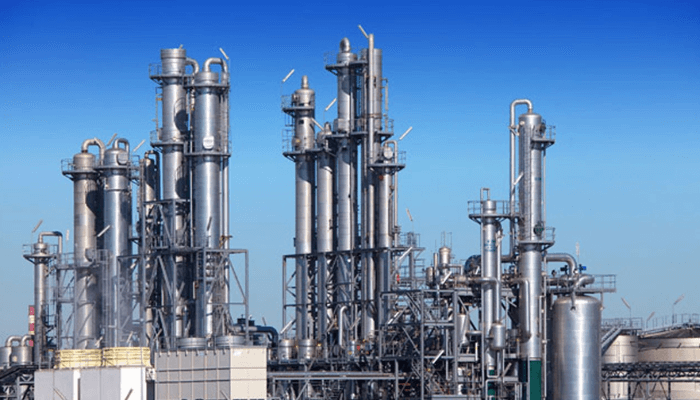
Nigeria’s refineries located in Port Harcourt, Warri, and Kaduna have a combined installed production capacity of 445,000 barrels per day with the Port Harcourt Refinery leading with 210,000 barrels per day, Warri Refinery: 125,000 barrels per day and Kaduna Refinery: 110,000 barrels per day.
But, despite the substantial capacity, the refineries have remained largely non-operational for years.
“PETROAN notes with concern that over $4 billion has been spent on the rehabilitation of these refineries over time, including funds approved and disbursed for the most recent turnaround maintenance and rehabilitation contracts.”
PETROAN added that, stakeholders and Nigerians are therefore asking a simple but critical question: when will Nigeria’s refineries resume production?
The association explained that, while the NNPC Ltd has announced that it is currently carrying out project appraisals and sourcing strategic partners, it insisted that every serious project must be guided by a clear timeline with measurable milestones, saying Nigerians deserve to know exactly when these refineries will return to operation.
Other News
On his part, PETROAN National President, Mr. Billy Gillis-Harry, expressed deep concern that Nigeria is fast approaching another election season.
He noted that governance and project execution often slow down during such periods, making it imperative that decisive action be taken within the first quarter of the year, ahead of the forthcoming election calendar.
Gillis-Harry stated that the operationalisation of Nigeria’s refineries would significantly reduce the cost of petroleum products.
According to him, local refining will drastically cut importation, conserve foreign exchange, strengthen the naira, and create thousands of direct and indirect jobs across the petroleum value chain.
PETROAN reaffirmed its readiness to fully support the NNPC Ltd and the Federal Government in reviving all four refineries, noting that credible foreign technical and financial partners are on standby to collaborate toward achieving this national objective.
Recall that Petrol importation remained the dominant source of fuel consumed in Nigeria in 2025, accounting for 62.47 per cent of the country’s total Premium Motor Spirit consumption.
This trend persisted despite the commencement of operations, steady ramp-up in production and distribution of petrol by domestic refineries, notably the Dangote Petroleum Refinery, alongside state-owned refineries and several modular facilities, as published in the latest midstream and downstream sector factsheet released by the Nigerian Midstream and Downstream Petroleum Regulatory Authority (NMDPRA).
According to the newly released NMDPRA factsheet on the state of the midstream and downstream petroleum sector, total national petrol consumption by Nigerians stood at approximately 18.97 billion litres in 2025, with oil marketing companies accounting for 11.85 billion litres through imports, highlighting the market’s continued dependence on foreign supply.
This means that nearly two-thirds of petrol consumed by Nigerians in 2025 was sourced from imports, while domestic refineries contributed about 7.54 billion litres, representing 37.53 per cent of total consumption, the regulator stated.