Follow Us on Google
By Adewale Sanyaolu
The Petroleum Products Retail Outlets Owners Association of Nigeria (PETROAN) has urged the Federal Government to reinstate petrol import licenses in order to avert a potential inflation spike.
The association also reiterated its commitment to promoting healthy competition in Nigeria’s downstream petroleum sector as a catalyst for growth, efficiency, and price stability.
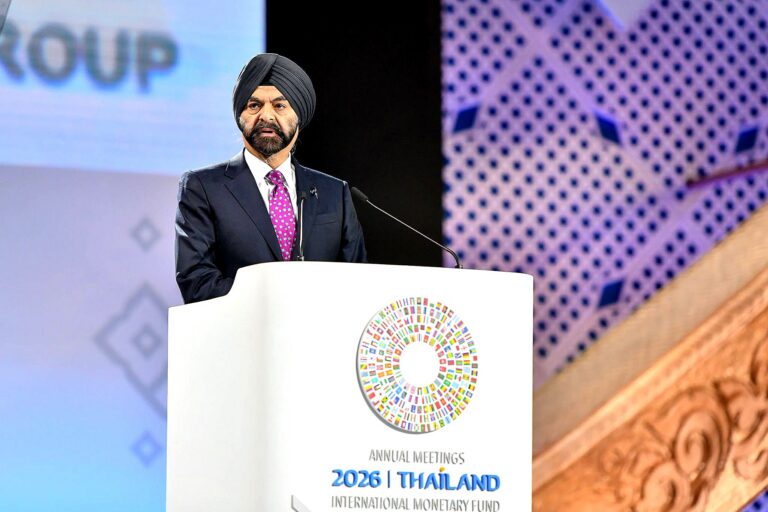
A statement by the National President of PETROAN, Mr. Billy Gillis-Harry, drummed support for the recent position of the World Bank report on the need to resume petrol imports.
Gillis-Harry emphasised that the position by World Bank further validates PETROAN’s long-standing advocacy for a liberalized and competitive downstream market.
According to the report, the World Bank highlighted that restricted competition and supply constraints in the downstream sector have contributed to rising fuel prices, with Premium Motor Spirit (PMS) prices exceeding import parity levels. The institution further warned that sustained supply rigidity, coupled with rising global oil prices, could worsen inflationary pressures across the Nigerian economy. Reacting to this, Billy Gillis-Harry stated that competition remains the most effective tool for stabilizing prices and ensuring energy security.
“PETROAN aligns with this position and emphasizes that a competitive and liberalized market framework is essential for ensuring price moderation, product availability, and operational efficiency,’’ he said.
He noted that the reintroduction of petrol import licences will promote supply diversification, prevent monopolistic tendencies, and ultimately protect consumers from exploitative pricing.
He further stressed that the recent price of petroleum products would not have occurred if government-owned refineries were fully functional or properly privatised.
Furthermore, he argued that PETROAN strongly asserts that sustained competition in the downstream sector can only be achieved through a combination of fuel importation and the full privatization of government-owned refineries in Port Harcourt, Warri, and Kaduna.
Other News
This, according to Billy Gillis-Harry, will ensure efficiency, eliminate operational bottlenecks, and create a truly competitive supply environment.
“The Association draws a clear parallel with the transformation witnessed in Nigeria’s telecommunications sector following liberalization. The entry of private operators such as MTN Nigeria and Airtel Nigeria led to improved service delivery, wider coverage, innovation, and significant reduction in costs for consumers.
PETROAN believes that similar reforms in the downstream petroleum sector will yield comparable benefits for Nigerians,”.
The Association further stressed that healthy competition is not a threat to local refining but rather a necessary mechanism to stabilize the market while domestic refining capacity continues to grow, including contributions from facilities such as the Dangote Petroleum Refinery.
“PETROAN also acknowledges the strategic importance of investments such as the Dangote Petroleum Refinery, which represents a significant milestone in Nigeria’s industrial and energy landscape. The Association notes that such large-scale private investments demonstrate the potential of the Nigerian economy when supported by the right policies,’’.
PETROAN emphasised that true economic growth and sustainability can only be achieved through liberalization that encourages multiple investors, promotes competition, and avoids market concentration.
The Association further stressed that healthy competition is not a threat to local refining but rather a necessary mechanism to stabilize the market while domestic refining capacity continues to grow.
PETROAN further recommended to the Federal Government, NMDPRA and the Nigerian National Petroleum Company Limited: the full privatisation or commercial restructuring of government-owned refineries to ensure efficiency, transparency, and optimal performance, commencement of production activities at Port Harcourt Refinery and the creation of a truly deregulated and competitive market environment with clear regulatory oversight that prevents monopolies and promotes fair pricing across the value chain.
It therefore called on the Federal Government and relevant regulatory agencies to urgently implement policies that encourage open market participation, remove supply bottlenecks, and ensure a level playing field for all operators in the downstream sector.
The Association, it said, remains committed to working collaboratively with stakeholders to build a resilient, transparent, and competitive petroleum distribution system that supports economic stability and national development.