Follow Us on Google

Nigeria’s longstanding maritime policy implementation challenges, growing seafarer unemployment, bottlenecks in vessel registration and weak indigenous shipping capacity are expected to dominate discussions as industry stakeholders gather in Lagos for the 2026 National Convention of the Alumni of Maritime Academy of Nigeria, Oron (AMANO).
The three-day convention, scheduled for November 12–14, 2026, in Lagos, is expected to bring together global maritime leaders, government officials, regulators and industry practitioners to examine longstanding challenges confronting the sector and develop practical strategies for translating policies into measurable economic and operational outcomes.
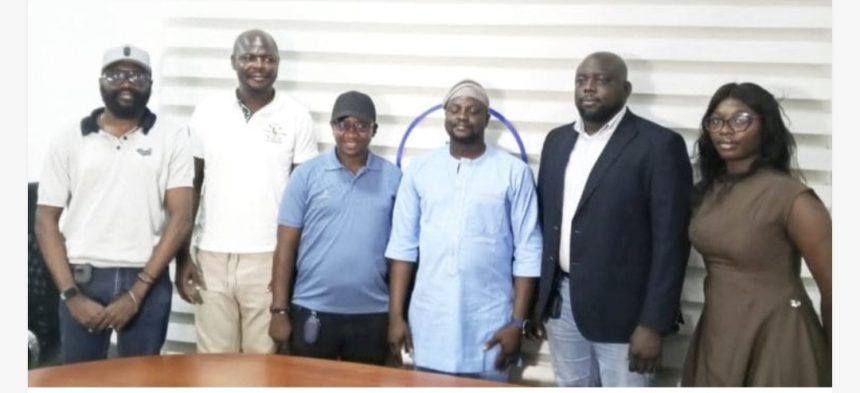
Speaking at a pre-convention press briefing held at the secretariat of the Maritime Reporters Association of Nigeria (MARAN) in Lagos, AMANO President, Mr. Emmanuel Maiguwa, said Nigeria’s maritime industry must move beyond signing international agreements, ratifying conventions and establishing regulatory institutions to ensuring that such initiatives produce tangible benefits.
Maiguwa challenged stakeholders, particularly maritime journalists, to critically examine the actual provisions and implementation of Memoranda of Understanding (MoUs) signed by Nigeria with other countries, stressing that the titles of such agreements do not necessarily reflect their specific provisions or potential benefits.
Citing a recent maritime agreement between Ghana and Canada as an example, he explained that bilateral agreements could cover several areas, including mutual recognition of seafarers’ certificates, flag registration and the appointment of surveyors to conduct inspections on behalf of another maritime administration.
He urged journalists to investigate the specific commitments contained in Nigeria’s maritime agreements and determine whether they are creating meaningful employment opportunities for Nigerian seafarers and strengthening the country’s shipping industry.
On vessel registration, he acknowledged that Nigeria’s closed ship registry comes with additional statutory and security requirements but maintained that the registration process should not take more than two weeks.
“I do not agree that the process should take more than two weeks. The prolonged registration procedures impose unnecessary commercial costs on shipowners by keeping vessels away from revenue-generating operations,” he warned.
He argued that regulatory processes must be efficient enough to support shipping investments rather than create administrative obstacles that undermine the competitiveness of Nigerian-owned vessels.
Other News
Beyond registration challenges, Maiguwa identified inadequate vessel availability and limited cargo opportunities as major constraints to seafarer employment and the development of indigenous shipping capacity.
He noted that providing cadets with the mandatory sea-time training required for certification was not sufficient to address the employment crisis, insisting that Nigeria needed a viable and sustainable shipping market capable of supporting vessel investments, creating jobs and providing opportunities for trained maritime professionals.
The AMANO president also cautioned against the disbursement of the Cabotage Vessel Financing Fund (CVFF) without first addressing the fundamental challenges of cargo availability and viable shipping opportunities.
According to him, releasing the fund without establishing a sustainable market for beneficiaries could expose indigenous shipowners to financial difficulties, loan defaults and possible asset seizures.
He stressed that access to financing must be accompanied by the availability of cargo and other enabling conditions that would allow indigenous operators to generate sufficient revenue to service their loans and sustain their businesses.
Meanwhile, Chairman of the Convention Planning Committee, Chief Jonathan Agassi, said the 2026 convention, themed “From Policy to Practice: Executing Maritime Excellence through Professional Capability and Real-World Results,” would focus on two critical areas: implementing International Maritime Organization (IMO) standards with measurable national outcomes and strengthening professional competence through effective training policies.
Agassi explained that the organisers deliberately selected industry practitioners with proven experience in translating maritime policies into practical results, rather than relying solely on theoretical presentations.
He said the convention would provide an opportunity for participants to examine the gaps between policy formulation and implementation while identifying practical approaches to improving professional capacity and operational efficiency across the maritime sector.
The President of the World Maritime University, Mr. Maximo Mejia, and Nigeria’s Minister of Marine and Blue Economy, Dr. Adegboyega Oyetola, are expected to attend the convention as Special Guests of Honour.