Follow Us on Google
• Oloyede, JAMB Registrar, on how to recruit, train, reward teachers
By Gabriel Dike
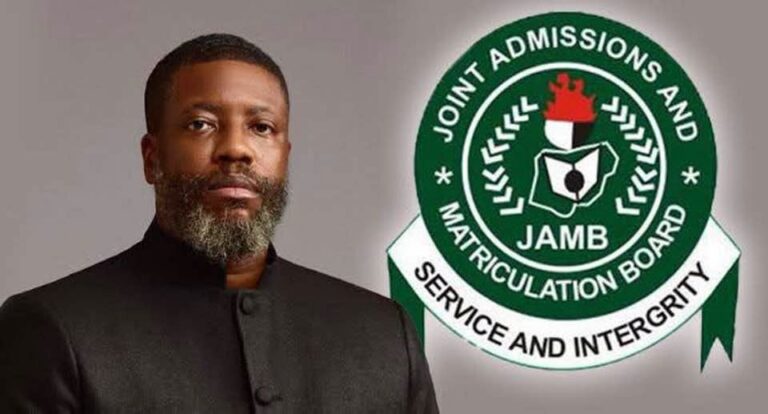
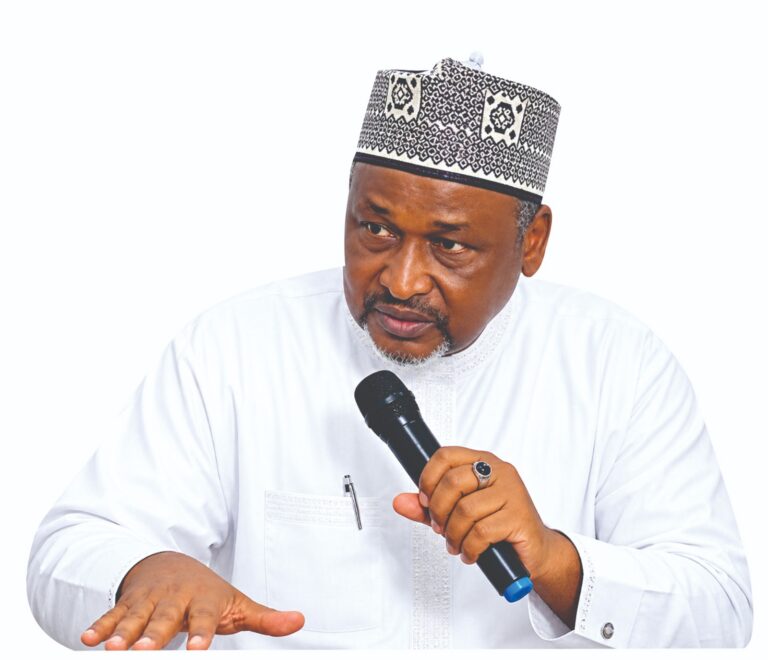
Registrar, Joint Admissions and Matriculation Board (JAMB), Prof. Ish-qa Oloyede, yesterday identified some challenges affecting the teaching profession and called for a major reform to attract best hands. He suggested establishment of National Institute of Professional Teachers like what is obtainable in the medical, law and accounting professions to certify and induct qualified teachers.
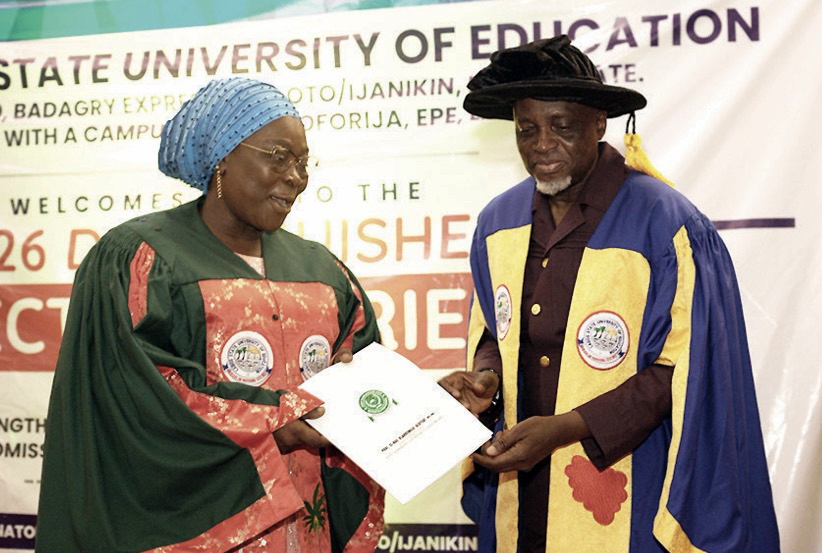
He spoke on Strengthening Teachers Preparation in Nigeria: Admission and Contents Consolidation, at the Lagos State University of Education (LASUED), Ijanikin, Lagos-Badagry Expressway. He said: “Candidates accept courses in colleges of education after they have been rejected in their first or second choice course in the university. Nigeria’s future will be shaped not only in parliaments and boardrooms, but also in classrooms.
“Nigeria celebrates the teacher rhetorically and often weakens the system that produces, support and reward teachers. Teacher preparation in Nigeria cannot be strengthened unless two questions are addressed together, which are admission and contents consolidation.
“Nigeria needs teachers, but does not sufficiently choose them. The crisis is not only of supply. It is also a crisis of esteem, design, coherence and professional status. Teacher education today faces challenges of attractiveness, admissions logic, cuticular fragmentation and institutional ambiguity.”
On global context, Oloyede said UNESCO projects a major global teacher shortage by 2030, with sub-Saharan Africa carrying the heaviest burden: “Nigeria shares these pressures but faces additional complications. Society calls teachers indispensable, yet compensation, prestige, and working conditions often suggest otherwise. Moral praise without material support eventually becomes hollow.
“Young people do not choose professions only on the basis of idealism. They also consider social esteem, career progression, remuneration, training quality and institutional prestige. When teaching becomes a last resort, preparation begins with a motivational deficit.”
He used admission into colleges of education for the Nigeria Certificate of Education (NCE) to buttress his argument: “Many candidates do not begin by choosing teacher education as first destination. They arrive there after displacement from preferred programmes. That is not how strong professions recruit members.
“In the 2025 admission exercise, out of 2.5million applicants, only 146,418 applied for NCE while just 12,2064 were offered admission out of a quota of 19,8661. In 2024, 84,370 applicants sought for admission into colleges of education, only 10,751 were given admission as against a quota of 14, 518. In 2023, 115,000 applied and only 8,052 offered placement out of a quota of 13, 805, in 2022, 67,198 applied for NCE, 9,083 offered admission out of a quota of 12,824. For 2021, 53,612 applicants applied, 5,854 secured placements out of a quota of 10,538.”
Oloyede identified four weaknesses in admission, “which are motivational distortion, inappropriate uniformity in entry requirements, poor signally of prestige and weak screening for disposition that matters in teaching. The country needs a differentiated, profession-sensitive admissions architecture for teacher education and it should include academic competence, aptitude for teaching, communication skills, ethical maturity and evidence of commitment.
Other News
“The nation should establish competitive teaching scholarships for high-performing school leavers who choose education as their first option. Such scholarships would do more than support students financially and send a message that teaching is not consolation prize of the tertiary system. If medicine has medical schools and teaching hospitals, and law has a law school framework, why should teaching remain permanently diffuse and low-status.
“No reform of teacher preparation can succeed if professional reward remains untouched. A serious reform agenda for teacher preparation in Nigeria should include: purposeful recruitment, differentiated but coherent pathways, curriculum consolidation, stronger practicum, caution with compressed formats, governance rationalization, institutional prestige and resting the
reward structure.
“If Nigeria continue to recruit into teaching by accident, train by fragmentation and reward by neglect, educational outcomes will remain unstable. But if Nigeria recruits by design, prepares by coherence, and reward by conviction, teaching can once again become a first-order national profession.”
LASUED Vice Chancellor, Prof. Bidemi Lafiaji-Okuneye, said: “The lecture is not merely another item on our academic calendar but a serious intellectual moment.
“It is a moment of reflection, of policy engagement and of renewed commitment to the future of education in our dear country. We are gathered here to think together about one of the most consequential questions before any nation: how do we prepare the teachers who will prepare the future?”
He described the theme as timely, strategic and deeply significant: “The question before us is not simply how many teachers Nigeria needs, but what quality of teachers our future demands. Admission is not a routine administrative exercise; it is the first architecture of quality.
“Content consolidation is not curriculum congestion; it is the disciplined alignment of subject knowledge, pedagogy, values, practicum, digital competence and assessment around the realities of twenty-first century learning. When admission is weak, quality suffers from the very beginning. When content is fragmented, competence becomes uneven. When both are strong, teacher preparation becomes a force for national renewal.
“As a specialised university of education, LASUED has a special obligation to lead in the conversation with seriousness and clarity. At LASUED, we share the conviction that education reform must be principled, evidence-driven and future-facing.”
Chairman on the occasion and member, House of Representatives, Adeboye Paul, acknowledged the transformation Oloyede introduced in JAMB. He commended LASUED for engaging in intellectual discourse that is of national importance.
The lecture was attended by among others Vice Chancellors of University of Ilorin, Kwara State, Prof. Wahab Egbewole and Crawford University, Igbesa, Ogun State, Prof. Solomon Makinde.