Follow Us on Google
FG, states, LGAs race to clean up social register, capture 20m indigent households
By Okwe Obi, Abuja
Worried by the corruption bedeviling the fight against poverty through the inflation of figures in the national social register, the Federal Government, through the National Social Safety Nets Coordinating Office (NASSCO), the state and local government areas have joined forces to clean up the social register for a seamless identification of indigent Nigerians.

NASSCO National Programmer Manager, Dr. Funmi Olotu, disclosed that that the goal is to capture 20 million households across the country.
Already, she said across the 37 states and 774 Local Government Areas, covering 8,756 wards and 217,777 communities, over 9.7 million household records have been updated, with 12.3 million NINs captured and 11.5 million successfully validated, in the last 10 years.
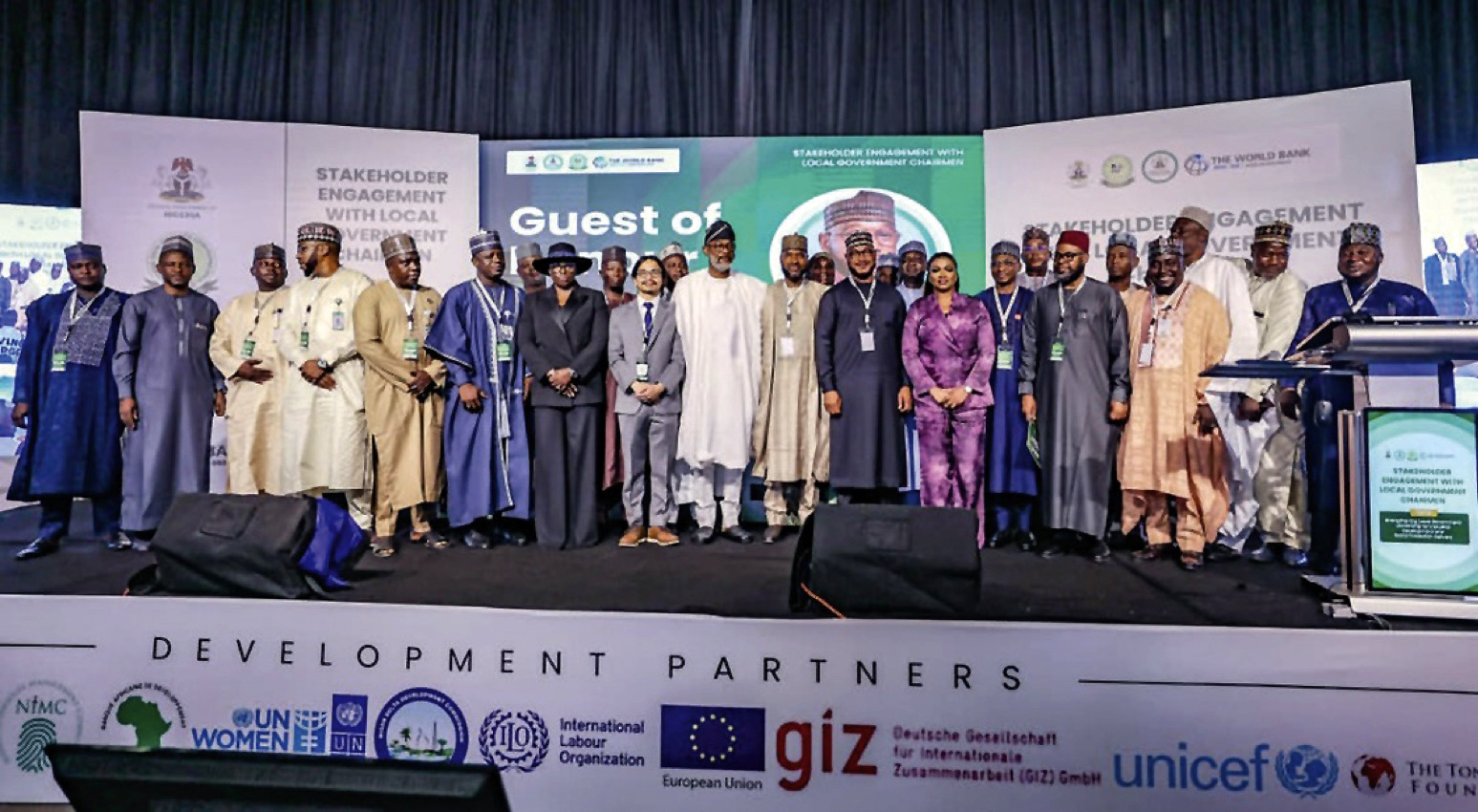
Olotu, at a stakeholders meeting convened under the theme, “Strengthening Local Government Leadership for Inclusive Development and Social Protection Delivery,” recently in Abuja, maintained that without the inputs of local government authorities the initiative would be in vain, as they are in a better position to identify indigent families.
She stressed that local governments are not merely administrative structures, but institutions of service delivery, closest to the people and essential to translating policy into real outcomes in citizens’ lives.
She said: “Today, the register covers over 20 million households and more than 77 million individuals across all 36 states and the Federal Capital Territory.
“Beyond these numbers lies its true value, a system that enables government to see clearly, understand better, and respond more effectively to the realities of its people.
“In alignment with the Renewed Hope Agenda of His Excellency, President Bola Ahmed Tinubu, government has set a clear direction that social interventions must be targeted, transparent, and accountable, with the National Social Register serving as the foundation for delivery.”
She explained that to strengthen National Social Register, all hands must be deck to integrate the National Identification Number (NIN) into the register.
Moreso, she pointed out the reform will enhance data integrity, eliminates duplication, and ensures that interventions reach the right people with precision and credibility.
The manager, however, observed that with the people Tyr exercise would be in futility, because according to her, leadership is key.
She warned against the politicisation of the initiative, stressing that Local Government Chairmen are the drivers of execution.
“We are building a system that ensures no vulnerable household is invisible, no intervention is misdirected, and no Nigerian is left behind.
“This effort requires partnership. It requires alignment between Federal, State, and Local Governments, supported by development partners and institutions committed to inclusive development.
“If we succeed, the impact will extend beyond social protection,” she added.
Zamfara State Governor, Dauda Lawal, said his government would provide maximum co-operation in the exercise, stating that in conflict-affected states like Zamfara, social protection had evolved from a welfare initiative into a critical instrument for governance, security, poverty reduction, and community resilience.
Lawal lauded the expansion of the National Social Register and the integration of the National Identification Number (NIN) to improve transparency, efficiency, and accountability in service delivery.
He stressed that engagement was timely and strategic, lamenting that in Zamfara State, “insecurity causes displacement, livelihood disruptions, food insecurity, and economic impacts, increasing vulnerability of women, children, the displaced, disabled, and rural communities.
“Social protection interventions must be better coordinated, transparent, data-driven, and targeted to ensure resources reach those who need them most.
“Zamfara State supports efforts to enhance coordination among Federal, State, and Local Government, and to strengthen collaboration with development partners and agencies involved in social protection.”
On his part, Permanent Secretary, Ministry of Humanitarian Affairs and Poverty Reduction, Olubunmi Olusanya, stressed that strengthening social protection in Nigeria cannot be achieved through policy design alone, nor sustained through fragmented interventions or isolated data systems, but what he called disciplined alignment across institutions, tiers of government, and critically, between national frameworks and subnational execution.
Olusanya disclosed that the ministry is advancing the concept of a One Humanitarian–One Poverty Response System, a unified framework designed to harmonise interventions, align institutional efforts, eliminate fragmentation, and ensure a single, coordinated government response to poverty and vulnerability.
According to him, this approach aligns with government’s broader commitment to inclusive growth, poverty reduction, and improved service delivery to Nigerians.
“The Federal Ministry of Humanitarian Affairs and Poverty Reduction remains fully committed to ensuring that this system is not only well-designed, but operationally effective. Our responsibility is clear—to translate policy intent into implementation reality, consistently and accountably.
“The National Social Register remains a central pillar of this architecture. It provides a credible and verifiable basis for identifying poor and vulnerable households. Its integrity and continuous updating are essential to improving efficiency, strengthening transparency, building public trust, and ensuring that interventions reach real people, and not ghost beneficiaries,” he added.