Follow Us on Google
By Doris Obinna
Experts have commenced Nigeria’s first immunotherapy clinical trial for colorectal cancer, offering new hope to patients battling advanced stages of the disease.
The Phase II study, formally titled “PD-1 Blockade in Mismatch-Repair Deficient Colorectal Cancer in Nigeria,” will provide free immunotherapy treatment to eligible patients by harnessing the body’s immune system to fight cancer.
The initiative is a collaboration involving Medserve, Obafemi Awolowo University (OAU), Lagos University Teaching Hospital (LUTH) and Memorial Sloan Kettering Cancer Center (MSKCC) in the United States.
According to the World Health Organization (WHO), colorectal cancer is the third most common cancer globally and the second leading cause of cancer-related deaths worldwide.
In Nigeria, colorectal cancer remains a growing health crisis, with fewer than half of patients surviving beyond one year after diagnosis. Researchers say nearly 30 per cent of Nigerian patients carry a genetic profile known as mismatch-repair deficient (dMMR) or microsatellite instability-high (MSI-H), which makes tumours resistant to chemotherapy but highly responsive to immunotherapy.
The trial will evaluate tislelizumab, an immunotherapy drug that blocks the PD-1 protein used by cancer cells to evade the immune system, enabling the body’s natural defences to recognise and attack tumour cells.
The experts disclosed that before its launch, the study underwent extensive review and received approval from the National Health Research Ethics Committee and the National Agency for Food and Drug Administration and Control (NAFDAC).
Other News
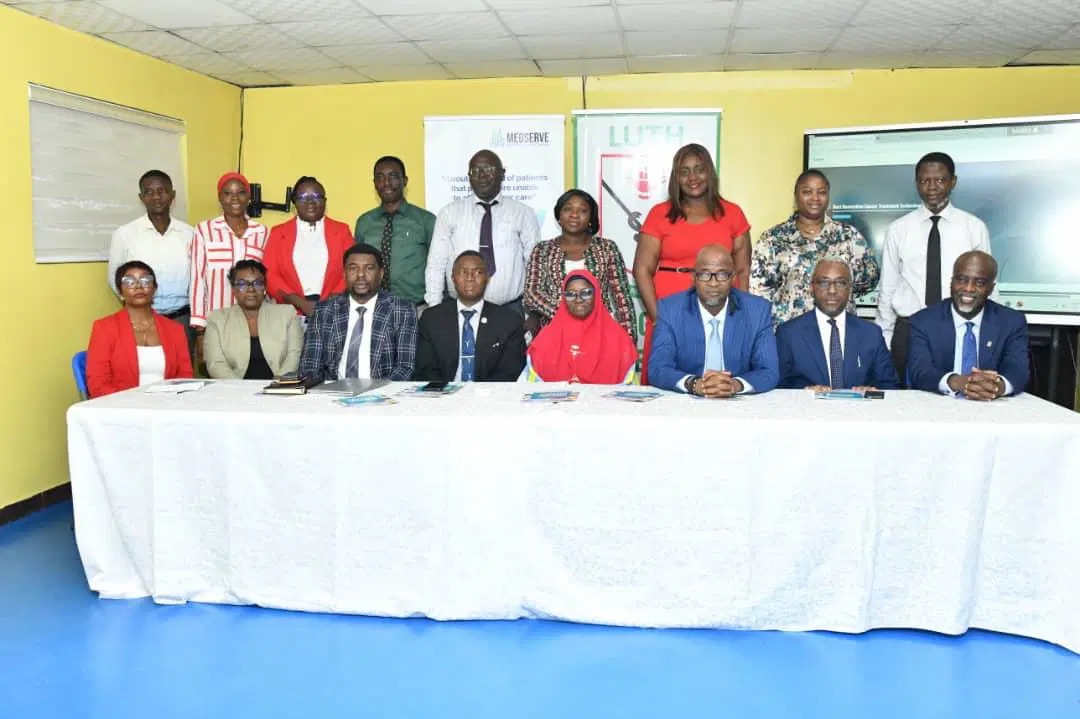
Speaking at a press conference at LUTH, Idi-Araba, co-Principal Investigator Prof. Fatimah Abdulkareem described the trial as a crucial step toward reducing Nigeria’s high colorectal cancer mortality rate, noting that more than 50 per cent of patients die within one year of diagnosis.
“Currently, their only real option is chemotherapy, which often doesn’t work for them. There is an urgent need for innovative, evidence-based treatment,” she said, adding that over 30 per cent of colorectal cancer cases in Nigeria are of the dMMR subtype and respond exceptionally well to immunotherapy.
Professor of Surgery at OAU and National Director of the African Research Group for Oncology, Prof. Olusegun Alatise, described the initiative as a major milestone in cancer research and care in Nigeria.
Also, Consultant clinician and radiation oncologist at the Medserve LUTH Cancer Centre, Dr. Eben Aje, said the open-ended pilot study aims to gather preliminary data on immunotherapy use among Nigerian patients with active colorectal cancer. He explained that the trial would enrol two cohorts, including treatment-naïve patients aged 18 and above with Stage II and Stage III rectal cancer, who will receive 200mg of tislelizumab intravenously every four weeks for about two years, followed by a two-year monitoring period.
Chief Medical Director, LUTH, Prof. Wasiu Adeyemo, said the centre was fully equipped to conduct the study, describing it as the eighth clinical trial at the facility and its first involving immunotherapy. He commended the Federal Government for supporting clinical research and strengthening tertiary health institutions, adding that the model being implemented at LUTH are being replicated in other federal teaching hospitals across the country to expand access to advanced cancer treatment.
Adeyemo identified late presentation as a major challenge in cancer treatment in Nigeria and urged the media to intensify public awareness on early diagnosis and available treatment options.
Director, Global Cancer Research and Training at MSKCC, Dr. Peter Kingham, said the collaboration aims to build a sustainable model of patient-centred cancer care in Nigeria.
Chief Executive Officer, Medserve LUTH Cancer Centre, Dr. Tolulope Adewole, said the partnership reflects a commitment to equitable, high-quality oncology care. “Quality oncology care should not be a privilege; it must be the minimum standard irrespective of location. Participants will be enrolled at the OAU Teaching Hospital in Ile-Ife and the Medserve LUTH Cancer Centre in Lagos,” he said.