Follow Us on Google
•ASUU takes frustration on non-implementation of agreement to Nigerians, parents express concern
By Gabriel Dike
Six months after the Federal Government and the Academic Staff Union of Universities (ASUU) signed an agreement following the conclusion of re-negotiation of the 2009 agreement between the two parties, it appears both parties are set on a collision course.
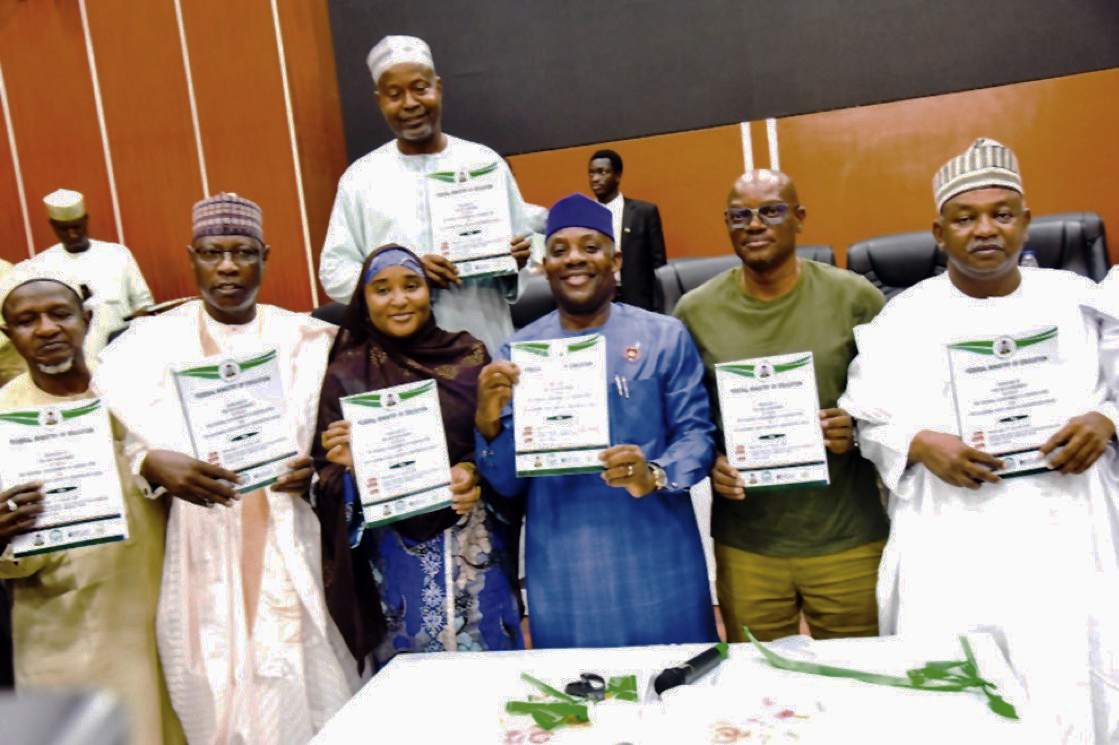
On January 14, 2026, in Abuja, Minister of Education, Dr. Olatunji Alausa and President, ASUU, Prof. Chris Piwuna, signed the agreement, the first in the history of the Nigerian University System (NUS) and it ended 16 years of waiting to reach an agreement after the last one in 2009.
Many stakeholders saw it as a return of peace to campuses and sincerity of the Federal Government to end frequent industrial actions in the universities. At the unveiling of the agreement, the minister asked vice chancellors to use their Internally Generated Revenue (IGR) to pay certain allowances such as the Consolidated Academic Tool Allowance (CATA) and that government would reimburse the universities.
Few months after, signs began to emerge from the universities of difficulties to implement the agreement, specially the minister’s directive. The agreement ought to be funded by the 2026 budget. This is the sixth month, that budget has not been approved.
Presently, there are agitations in universities about the partial implementation of the agreement while some vice chancellors are struggling to use IGR to pay lecturers of the approved allowance.
ASUU mobilises members
At the ASUU’s National Executive Council (NEC) meeting in May, at the Modibbo Adama University, Yola, Adamawa State, branches were briefed on the status of the implementation of the agreement and the union’s engagement with government. The union said it raised questions about the sincerity of governments, federal and state, especially towards the rejuvenation of universities to live up to the much-needed impetus for scientific social and economic development of our country.
ASUU Lagos Zone Coordinator, Prof. Adesola Nassir, said: “One of the low hanging fruits from the agreement is the salary component as captured by the Consolidated Academic Tool Allowances (CATA), Earned Academic Allowances (EAA) and Professorial Allowances (PA). These allowances were supposed to be mainstreamed into the Consolidated Academic Staff Salary Scale (CONUASS) as monthly salary packages from January 2026.
“However, events that unfolded since the celebrated unveiling of the agreement is confirming our members’ suspicion that government is more interested in using the matter to score political points rather than frontally address the damning issues that informed the disruptions that impelled the conclusion and signing of the agreement.
“While appreciating the position of the Federal Government to encourage university administration to implement the salary aspect of the agreement as a stop-gap pending the signing of the 2026 budget, we are perturbed that government failed to take into consideration the strength of each university to adequately cover the shortfall in the salary component of recurrent cost.
“The consequence has been haphazard implementation, which is at variance with governments assertion that it has implemented that aspect of the agreement. Government must not leave the universities in a state where they would be unable to breathe and respond to immediate challenges typical of this recent call to rescue.”
State varsities and the agreement
Nassir alleged: “Many visitors to state-owned universities are playing the ostrich on the implementation of agreement in their respective universities. This is even with the knowledge that representatives of their governing councils and universities actively participated in the entire process leading to the signing of the agreement. This matter if not addressed, has the potential to shatter the industrial peace in the institutions.
“Our zone would, however, place on record the approval by the Olabisi Onabanjo University (OOU), Ago-Iwoye council to implement the agreement fully from January 2026, starting from May 2026. We also equally commend the implementation of the agreement at TASUED, even though it is still in the transition period.
“We commend visitors of other state universities that have implemented or have taken steps to implement. We equally call on the Lagos State Government, to as a matter of urgency, commence the implementation of the agreement without delay.
“We are aware that the three universities belonging to the state: Lagos State University (LASU), Lagos State University of Science and Technology (LASUSTECH) and Lagos State University of Education (LASUED) have reached out to government on the implementation.”
He urged the visitor, Governor Babajide Sawo-Olu, to immediately wade into the matter and arrest any possible staff disenchantment and dispute over the issue: “If any state should be the first to implement the agreement, and even enhance it, it should be Lagos State for many obvious reasons.”
Other contentious issues
Nasir: “Another sore area of concern is government’s failure to inaugurate the Implementation Monitoring Committee (IMC), which is expected to shield the agreement from bureaucratic bottlenecks and guide its strategic actualisation.
Other News
“With this inaction, many areas of the agreement have been kept in the cooler giving the impression that the concern of ASUU is the salary component. Our union would be at peace with government only when these matters are convincingly addressed.
“Many of the outstanding welfare matters that trigged the last strike have remained largely unaddressed, which include payment of arrears of the 25-35 per cent salary award, arrears of promotion, remittances of third-party deductions (check-off dues, cooperative society deductions, pension contributions, etc.), salary shortfalls arising from IPPIS application, and the withheld three-and-half months salaries occasioned by the 2022 industrial action of ASUU.
“We have chosen to present our frustration to the Nigerian public as the fragile peace in the universities have continued to be threatened by government lack of will to keep faith with its responsibilities. Our members are being oppressed by federal and state governments. This cannot be allowed to continue. We appeal to government and the political class to please allow us breathes in the education sector.”
Parents react, call for caution
Mr. Kunle Afolabi, with two wards in the university, said: “I saw the sign-in-ceremony between ASUU and government in Abuja. I thought that is the end of any crisis in the university system.
“I know that currently, the union is engaging the Nigerian public and the political class about the partial implementation of the agreement. Once the union starts this exercise, it is a sign of an impending crisis in the university system.”
Chief Kolawale Adebakin called on President Bola Tinubu to intervene: “Once ASUU begins to call on Nigerians to appeal to the government, it is a sign that something is in the offering. The two parties are trading words. The minister said government has met ASUUs demands and immediately, the union debunked his claim.
“This back-and-forth will not lead us anywhere and the only solution is to implement the agreement. I thought after the conclusion and signing of the agreement early this year, peace will return to the universities. I don’t want any strike to disrupt the education of my children. The education minister should find a way to address the issues in contention before things get out of hand.”
An educationist, Mr. Femi Ayodele, told Daily Sun: “I read ASUU briefing about the partial implementation of the agreement and the subtle threat of an impending crisis. I expect the government to have reacted by inviting the union for discussion on the grey areas.”
He said his son in one of the federal universities told him that his lecturers are agitated: “Government should act fast before the union takes a drastic action, which will certainly disrupt academic activities on campuses. Government should not pretend not to be aware of ASUU’s complaints.”
A business woman, Mrs. Rosemary Esiobu, appealed to the union and government to resolve the impasse before it snowball into an industrial action. She wondered why government did not provide cash backing to the universities to pay lecturers their allowances:
“The education of our children is under threat again. Just six months after the signing of the agreement in Abuja, we are back to square one. The government must implement the agreement it signed with the union.
“This has been the practice in the past and ASUU is going round urging politicians and parents to reach out to government to do the needful. The universities cannot avoid experiencing another strike and this will affect our children.”
Mr. Samuel Arowolo: “It is shocking to hear of ASUU’s agitation just six months after the two parties signed an agreement. Government must keep its promise that no new strike will happen in the university system after the conclusion of renegotiation and signing of the agreement.
“Strike is one of the major reasons parents take their wards to private universities. And those whose children attend public universities are at the mercy of ASUU and government. If ASUU is entitled to the three and a half months salaries as they continued ask for it, government should release funds for the universities to pay the lecturers.
“I am also surprised that university management was asked to pay certain allowance with their IGR. Now the universities are struggling to meet up. It is the responsibility of government to make funds available for the payment. I expect the minister to engage the leadership of the union before things get out of hand.”
Modibbo varsity stops payment of CATA
Modibbo Adama University, Yola, Adamawa State, recently suspended the payment of CATA allowance to academic staff. The decision was conveyed in a circular dated May 18, 2026 and signed by the university Bursar, Haniel Ayuka. The circular, titled: “Suspension of CATA Allowance Payment” is already generating ripples among the university academic staff.
The university recalled that the minister in a letter addressed to vice chancellors directed them to source funds from their respective IGR to pay the CATA allowance to deserving academic staff with effect from January 2026.
It reads: “You are aware; this university has been paying the CATA allowance as directed with effect from January 2026 from its IGR. The cash backing however has not been made available up till this moment.
“Consequently, the university is unable to sustain the continued payment of the CATA allowance and will henceforth suspend the payment till the Federal Government of Nigeria sends the necessary cash backing. The suspension takes effect this May 2026.”
Daily Sun gathered that some federal universities are facing the same challenges with vice chancellors struggling to pay the CATA allowance from their IGR. The failure of the Federal Government to make funds available is one of the major reasons ASUU is agitating.