Follow Us on Google
•Moratorium splits stakeholders on establishment of tertiary institutions
From Fred Ezeh, Abuja
The dust recently generated by the decision of the Federal Government to place a seven-year moratorium on the establishment of new tertiary institutions in Nigeria, notably, universities, polytechnics and colleges of education, is yet to settle.
The National Universities Commission (NUC) had faced lots of criticisms for the proliferation of universities, even when the commission insisted that its responsibility is to grant operational licence to anyone who meets the requirements for establishment of university.
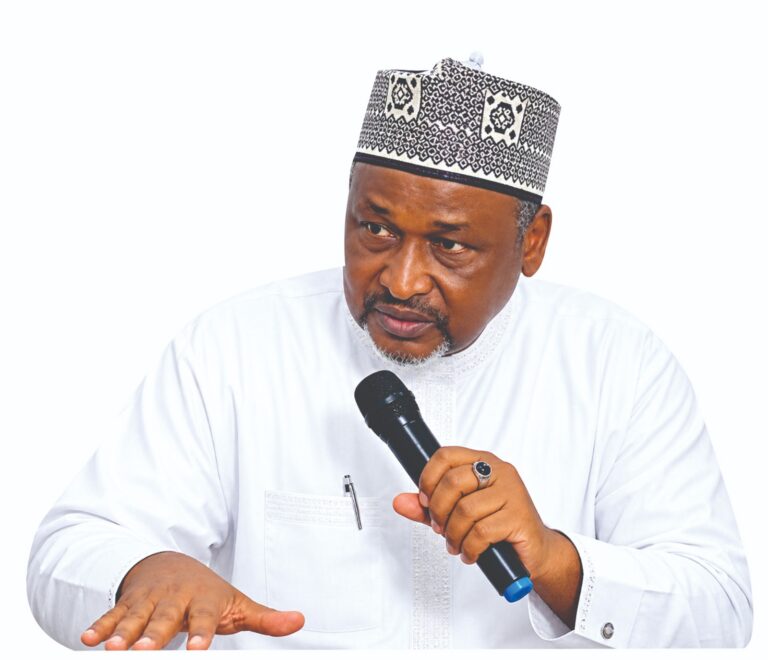
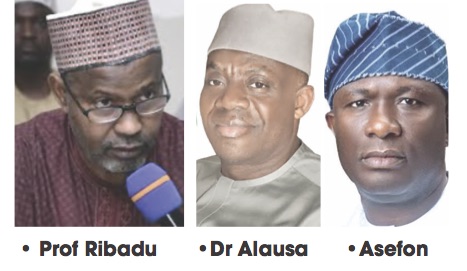
A few weeks ago, Minister for Education, Dr. Tunji Alausa, announced the decision of government not to issue new operational licences to individuals or states for the purposes of establishing new tertiary institutions, public and private, for the next seven years. This, he said, was to pave the way for the intended reforms that would, according to the government, strengthen the tertiary education system for more improved results.
The decision sparked national outrage and mixed reactions from stakeholders. Some said the decision was long overdue to the growing drop in the quality of education and graduates being produced by the universities, particularly the privately owned ones.
Others insisted that the decision was not well conceived, hence it should be reconsidered, making reference to the growing youth population of Nigeria, predicted to double in a few years’ time.
But despite the mixed reactions, government insisted that the steps will enable it review the entire tertiary education system including the existing institutions to ascertain the impact so far; channel resources rightly in upgrading facilities especially in public tertiary institutions, hire qualified staff, and expand the carrying capacity of existing institutions.
Hudu (other name withheld), a senior staff of Federal College of Education, Zaria, Kaduna State, said the decision was good, considering the fact that the institutions including specialised institutions like nursing schools, are springing up faster than expected, with insufficient funds to care for the needs of the institutions and its workforce.
He suggested that the moratorium should be used to audit all the institutions vis-a-vis how well they delivered on their mandate over the years using something that look like visitation panel: “Undoubtedly, all the tertiary institutions, public and private, are facing challenges that might have affected their operations including the quality of the academic.
“For instance, the privately institutions are profit-driven. Their IGR comes from tuition fees from the students and other related activities. So, the depth of their revenue is the function of the number of students they have.”
In 2023, Prof. Abubakar Rasheed, former NUC Executive Secretary, defended the decision to allow investors into the university system by issuing licences to establish new universities: “People who criticised the ‘proliferation’ of universities are just being unreasonable and unfair to the many young Nigerians who are ‘desperately’ seeking university education, and had to resort to foreign institutions for the opportunity. With the population size of Nigeria at over 200 million and growing, the number of enrolment of students is obviously not enough.
“In Nigeria, 70 per cent of the population are below the age of 30. If we compare the statistics with other nations of the world that have less or more population vis-a-vis number of universities and enrolment, we would realise we are not doing well enough.
“For instance, the United States has over 6,000 universities. India has over 4,000 universities. Argentina with 79 million people has over 200 universities. In Nigeria, with a population of over 200 million, we have 265 universities (as of 2023).
“We have licenced lots of private universities that are small in size and focused on a few programmes to meet certain needs. These new private universities are, obviously, not going to be like the first generation universities like UI, UNN, OAU, UNILAG and ABU.
“We have to encourage the investors to run a small, focus universities in few areas, notably, medicine, engineering and technology, sports among several others. I am happy we are achieving that for the benefit of our people.
“Nigerians must know that private universities in Nigeria do not have the number of enrolment of five first old generation universities. What I mean is that the first five old generation universities have more students than all the private universities in Nigeria put together.”
Rasheed maintained that university education shouldn’t be a privilege for few elites, suggesting that anyone with opportunity should acquire university education: “After all, nobody complained that shops, businesses, Churches, Mosques are springing up across the country. But people are easy to complain about universities being established, which is meant to liberate and empower the people.
“Education remains the best means of fighting poverty. We believe that those who are angry with the establishment of more universities are simply showing their ignorance or are doing so out of mischief. Besides, most of these institutions are from the private sector, meaning that no budgetary allocation will come from the government. It simply means that their services are for those who can afford it.
“Notwithstanding, it’s important we encourage the universities to make space and provision, financial, scholarship and other interventions, for indigent students. Many of the private universities have schemes designed to enable indigent persons to acquire education within their system. We have to fight this negative attitude and the spirit of criticising ourselves wrongly.”
National Secretary, National Association of Nigeria Nurses and Midwives (NANNM), Thomas Shettima, led the campaign against growing proliferation of specialised institutions, particularly the nursing schools: “Such action is not the solution to the “japa” challenge currently being experienced in the health sector, but will rather breed official quacks.
“By the time you have produced these nurses that you cannot employ and pay adequately, it becomes a challenge to quality healthcare. These nurses, undoubtedly, have already acquired the knowledge, unable to go outside but remain in society.
Other News
“If they are in the society and are jobless, but they have the knowledge and are approached for any treatment for their services, they will definitely render the services. In rendering the services, some could go outside their ways because they must survive.
“Therefore, if we want to curtail the ‘japa’ syndrome, we must first ask ourselves, why are people going outside the country? If we get the answer, then we will be able to address it. In fact, all professionals are moving outside Nigeria, particularly the nurses, because the welfare, their conditions of service and welfare are not good enough here.”
Former President, National Association of Nigerian Students (NANS), Danielson Akpan, insisted that NUC was on the right track regarding the establishment of more universities: “It’s unfair to criticise the NUC for opening its door to investors who desire to establish new universities, including the state governments.
“Nigerians are in several universities across the world spending huge resources to acquire education. The painful part is the fact that thousands of them are in low standard universities in small African countries, like Ghana, Gabon, Benin, Malawi and Egypt.
“Our population is on the significant increase. Hence, the existing universities are being overpopulated. Close to that is the fact that knowledge taste is changing across the world with technology redefining life and living. Things have changed, and the knowledge that drives the world economy is not the same compared to several decades ago.
“NUC’s decision, though widely criticised, is very much good. This is because it will, among other things, enable us to control what’s happening in the institutions, as against what our students learn and acquire from these foreign institutions many of which don’t consider our peculiarities and uniqueness.
“I have had the opportunity of visiting some countries in Africa. What you see is Nigerian students in universities that are far lower in standard than what we have in Nigeria. And still, they are being treated poorly. This should stop. The only way is to provide more opportunities for students to acquire university education.”
Reasons for the moratorium
Alausa said as at 2023, there were 551 requests for the establishment of tertiary institutions: “The moratorium decision was taken after an extensive deliberations on the merits and demerits of the action. Government noticed some cases of underutilised institutions, overstretched resources, drop in academic quality and poor attention to students, among other challenges.
“Available data indicated that many federal universities operate far below their capacities, with some having fewer than 2,000 students. For instance, in one northern university, there are 1,200 staff serving fewer than 800 students. This is a waste of government resources.
“In the 2024 admission processes, 199 universities received fewer than 100 applications through the Joint Admissions and Matriculation Board (JAMB), with about 34 recording zero applications. Of the 295 polytechnics nationwide, many has fewer than 99 applicants, while 219 colleges of education also posted poor enrolment figures, including 64 with no applications at all in the 2024 admission processes
“If this goes unchecked, it will amount to waste of government resources because all the institutions are entitled to TETFund disbursements. In addition to that, the institutions could risk producing ill-prepared graduates, thus eroding the value of Nigerian degrees internationally and worsening unemployment.”
ASUU’s campaign against proliferation
For some years now, the Academic Staff Union of Universities (ASUU) and other university labour unions championed the campaign for an end to proliferation of universities and other tertiary institutions, stressing that quality of institutions and graduates has significantly dropped. They accused government and politicians of using universities as political compensation, jettisoning all the factors of labour and other considerations necessary in allocating such an institution.
An ASUU official said: “The moratorium is a step in the right direction. It’s good that the government heard us now. Tertiary institutions have been turned to what government officials use to compensate their political loyalists. This government has approved and allocated several universities and other institutions within the last two years. They are just getting to realise that the institutions are not yielding the right result.”
NUC new guidelines for new universities
The NUC announced stricter guidelines for securing operational licences for a new universities: “The proposed new guidelines will help to ensure that licenced private universities are positioned to meet the challenges of the 21st Century.
“Proprietors of all pending active applications yet to undergo NUC approval and onward transmission to the minister are required to pay the non-refundable reviewed processing fee of N25 million within 30-working days failure which their applications shall lapse. Applicants who paid the old processing fee of N5 million are required to pay the balance of non-refundable fee of N20 million within the specified time frame or face the same fate as in above.
“All licenced private universities are required to move to their permanent sites within the first five years. No proposed private universitiy is allowed to designate multi-campuses in different locations.
“Private universities shall not engage in transnational education without the approval of the commission.”