Follow Us on Google
By Doris Obinna
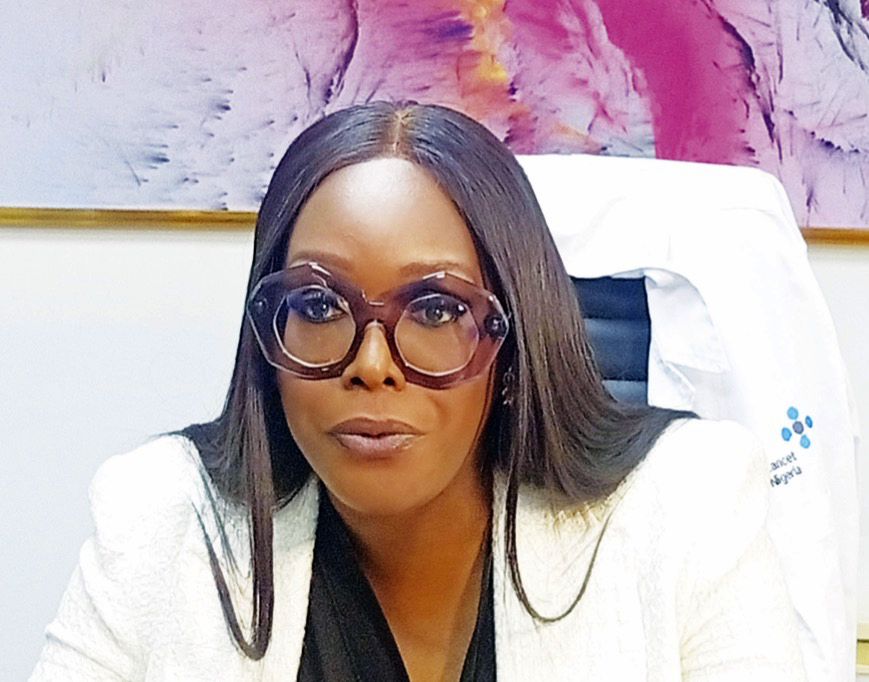
Dr. Olayemi Dawodu is the Managing Director/Chief Executive Officer of Cerba-Lancet Laboratories Nigeria. An anatomic pathologist and laboratory physician, she leads the multi-award-winning multinational pathology and wellness services provider, which recently won the Nigerian Healthcare Excellence Award (NHEA) for the fifth time.
Cerba-Lancet Laboratories Nigeria operates a network of laboratories across several states, providing diagnostic and wellness services nationwide.
In this interview, Dawodu reflects on the experiences that shaped her leadership philosophy, the challenges of managing a multinational organisation, and why competence, preparation and continuous learning remain at the heart of effective leadership.
Looking back, what experiences shaped the leader you are today?
That’s an interesting question. I usually go as far back as my childhood because that’s really where it all began. I am the third of five children, so I grew up as the middle child. My older siblings were six and eight years older than I was, while my younger siblings were much closer to me in age. Naturally, I found myself taking responsibility quite early, both at home and among my siblings.
Leadership came naturally to me. Even in school, I was always drawn to roles that required responsibility. I also participated actively in sports, and although people may not immediately connect sports with leadership, they teach you valuable lessons about teamwork, perseverance, discipline and resilience. I served as class captain in primary school, health prefect in secondary school and later became chief resident during my residency training. As chief resident, I represented residents while working closely with consultants, professors and the management of the Lagos University Teaching Hospital (LUTH). That experience exposed me to administration and decision-making much earlier than I expected.
Looking back now, I can see that every stage of my journey prepared me for where I am today. Those experiences helped shape the leadership style I practise today.
Did you always envision yourself leading a multinational healthcare organisation, or did your career evolve in unexpected ways?
To be honest, my career evolved in ways I never imagined. Although leadership always came naturally, I had a very different career plan. My ambition was to become a lecturer at the College of Medicine, University of Lagos, while serving as a consultant at the LUTH.
Leading a multinational organisation in the private sector was never part of that vision. That said, I have always believed in giving my best wherever I find myself. Excellence has always been a personal standard. Looking back, I realise that every experience along the way was preparing me for a role I didn’t even know was ahead of me.
What has been your experience as a woman leading a multinational organisation?
Honestly, I have never viewed leadership through the lens of gender. For me, leadership is defined by competence, vision, resilience and results not whether you are a man or a woman. My focus has always been on developing myself, building the right competencies and ensuring that I deliver excellence wherever I have the opportunity to serve.
Has your leadership journey shaped the way you see leadership today?
Absolutely. One lesson my journey has reinforced is the importance of preparation. I firmly believe in the saying that luck is what happens when preparation meets opportunity. When I reflect on my career, I know that my background as a pathologist and laboratory physician positioned me for this role. Without that professional foundation, I probably would not have been ready to lead a multinational diagnostic organisation.
Beyond that, every administrative responsibility I took on from serving as Chief Resident to engaging with hospital management and senior professors prepared me for leadership. By the time the opportunity came at Cerba-Lancet, I wasn’t starting from scratch. Everything I had experienced before then had equipped me for the role.
What have been some of the biggest leadership challenges since assuming this position?
Honestly, managing people. Leading people from different backgrounds, with different personalities and perspectives, is probably the greatest challenge any leader faces. Getting people to buy into a shared vision requires patience, wisdom and emotional intelligence. It also requires you to keep learning, adapt your leadership style and sometimes unlearn old habits.
Other News
For me, leadership is ultimately about bringing people together around a common purpose while respecting their individuality.
Cerba-Lancet Nigeria recently won the NHEA award for the fifth time. What does this recognition personally mean to you?
It means a great deal. For me, the recognition validates the work we do every single day at Cerba-Lancet. It reflects our unwavering commitment to innovation, quality assurance and patient-centred care. While it is gratifying to receive external recognition, the award also reminds us that we must continue to improve because every achievement raises expectations.
More importantly, I see this award as recognition of the dedication and professionalism of every member of the Cerba-Lancet team, who work tirelessly to ensure that we consistently deliver accurate, reliable laboratory results that support quality patient care.
As people celebrate this achievement, what do you hope they understand about the work that goes on behind the scenes?
I hope people appreciate that quality doesn’t happen by chance. Behind every laboratory result is a team of highly committed professionals, supported by carefully designed systems, processes and quality assurance protocols. I also want people to understand that Cerba-Lancet operates according to internationally recognised standards.
Those standards guide everything we do and enable us to consistently produce reliable diagnostic results that healthcare providers and patients can trust.
How would you define success beyond awards and recognition?
For me, success is about impact. It is about reaching more Nigerians, helping people detect diseases earlier, preventing complications from non-communicable diseases and encouraging individuals to know their health status before problems become critical. Success also means supporting organisations with health data that enables them to improve the wellbeing and productivity of their workforce. Ultimately, success is knowing that the work we do contributes meaningfully to improving healthcare delivery and health outcomes across Nigeria.
What qualities do you believe women naturally bring to leadership, and what stereotypes do you hope your journey helps to challenge?
Women naturally bring empathy, compassion and a nurturing instinct to leadership. Those qualities are particularly important in healthcare because caring for people is at the heart of what we do. At the same time, I hope my journey shows that women should never allow fear to stop them from accepting leadership opportunities.
Sometimes you have to do it afraid. But courage alone is not enough. It must be backed by competence. You must continue learning, improving yourself and preparing for the opportunities you hope to receive. Learning should be a lifelong commitment for every woman who aspires to lead.
Do you think government can do more to strengthen laboratory services in Nigeria?
Yes, especially in the area of regulation. Nigeria already has many of the necessary policies. The bigger challenge is enforcement. Diagnostics is a highly sensitive area of healthcare because laboratory results directly influence medical decisions. There should therefore be stronger standards governing entry into the sector, as well as stricter oversight to ensure laboratories continue to maintain acceptable quality standards. Government should insist on credible quality management systems across laboratories to protect patients and improve confidence in laboratory medicine nationwide.
Finally, what has Cerba-Lancet Nigeria done to promote public awareness about the importance of laboratory medicine?
Public education is one of our priorities. We regularly organise health talks and use our social media platforms to educate Nigerians during global health awareness campaigns such as World Kidney Day and World AIDS Day. We also organise Continuing Medical Education (CME) programmes for healthcare professionals, where we share the latest innovations and advances in laboratory medicine.
In addition, we run school health initiatives, including our menstrual health education programme, as part of our commitment to improving health literacy.
Ultimately, our goal goes beyond providing laboratory services. We want to empower Nigerians with the knowledge they need to make informed health decisions while expanding access to quality diagnostics that improve lives.