Follow Us on Google
Calls for unified coordination frameworks at EU-funded IIDEA Summit
From Juliana Taiwo-Obalonye, Abuja
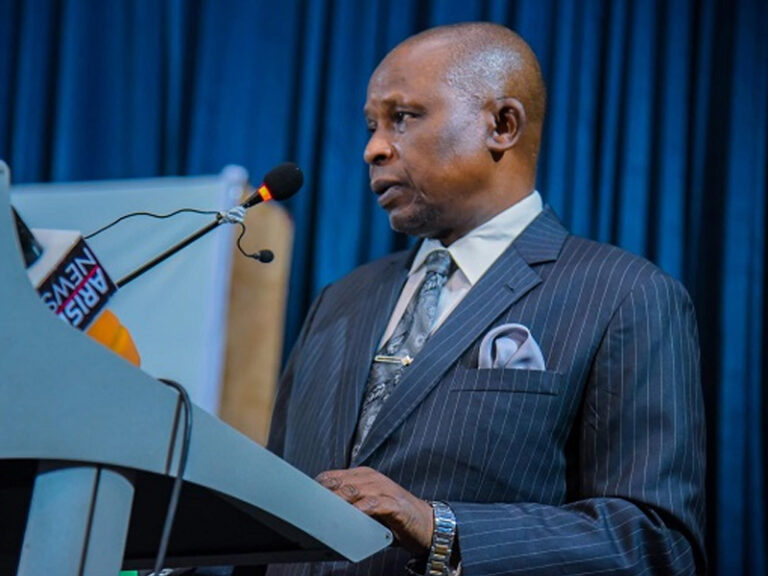
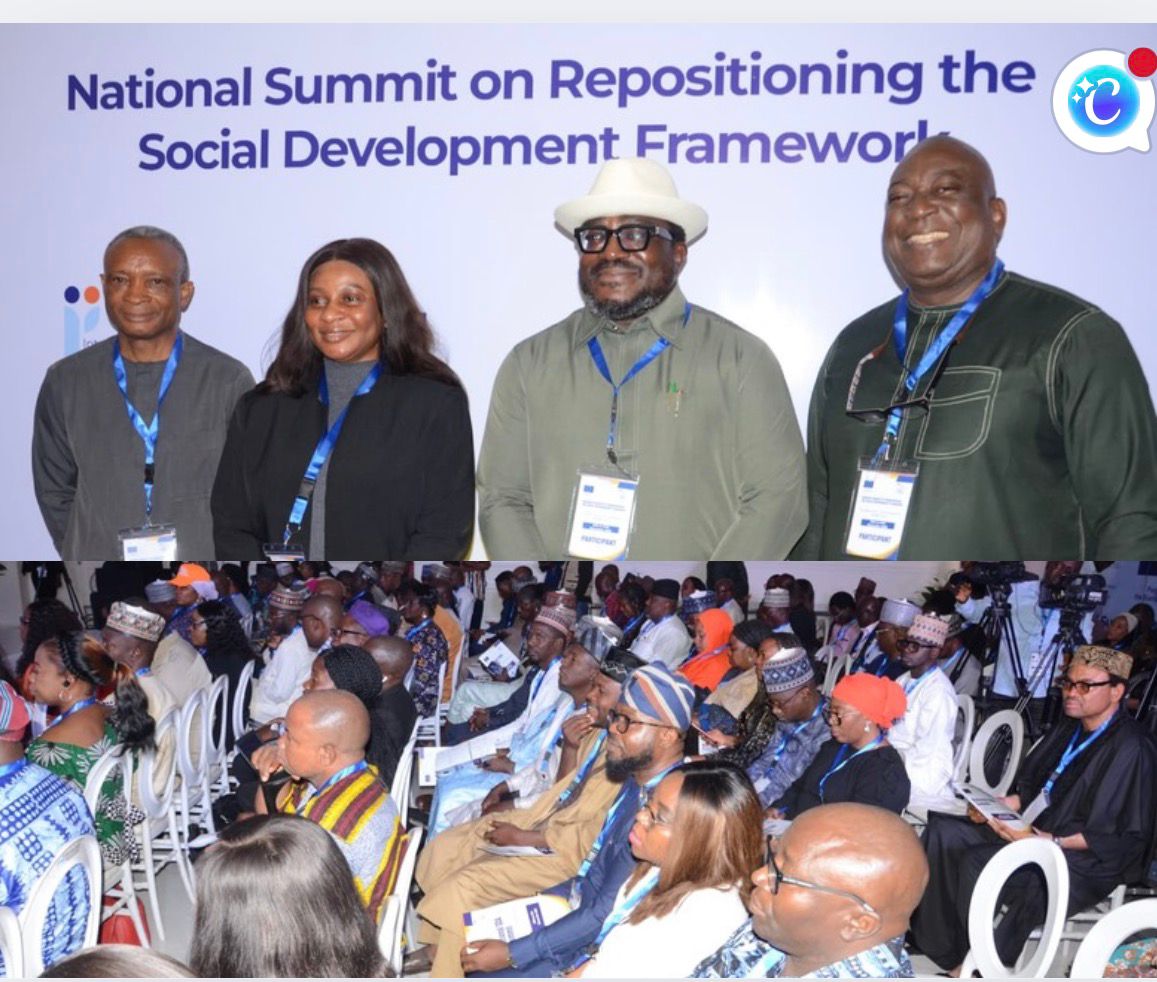
The Chairman of the House Committee on Civil Society and Development Matters, Victor Obuzor, has sharply criticised the persistent disconnect between federal and state social development functions in Nigeria during the opening of the ongoing National Summit on Repositioning the Social Development Act.
Speaking at the summit organised by the International Institute for Democracy and Electoral Assistance (IIDEA) and funded by the European Union, Obuzor called for urgent reforms to establish “clear responsibilities, joint planning, shared reporting, and unified frameworks for civil society registration.”
He lamented that Nigeria’s social development efforts are hampered by fragmented mandates across multiple federal ministries and their state counterparts, resulting in ineffective coordination and overlapping roles. “One of the greatest challenges we face is the disconnect between federal and state social development mandates that weakens our national development goals,” he said. “The revitalised Social Development Act must bring about clarity in responsibilities, coordinated planning, shared reporting structures, and a unified registration and engagement framework for civil society organisations.”
He emphasised the crucial need for a modernised, harmonised approach, stating, “The current fragmentation not only hampers efficiency but also creates confusion among civil society organisations navigating multiple registration regimes.” According to Obuzor, the Social Development Act, originally created in the 1970s, was intended as a backbone for coordination but has become obsolete due to institutional reassignments and regulatory overlaps.
He reaffirmed the National Assembly’s commitment to addressing these issues, revealing that the House Committee is reviewing the Social Development Act’s historical gaps and working on a modernised Civil Society Strengthening Bill tailored to Nigeria’s social and economic realities. “We aim for a law that is rights-based, implementable, and that facilitates collaboration between all stakeholders,” he said.
In contextualising the summit within ongoing national issues, he stressed the importance of integrating gender equality, vulnerability protection, and youth welfare into the framework. “A Social Development Act that fails to address these contemporary challenges cannot meet today’s social development needs,” Obuzor added.
On civil society’s role, he declared, “Civil society is not just a stakeholder — it is a partner and watchdog essential to holding institutions accountable, facilitating government-citizen dialogue, and contributing technical expertise.” He called for their participation to be embedded as a core governance principle in the new legislation.
Looking ahead, Obuzor expressed optimism that the summit would produce a refined amendment bill, a clear national roadmap, improved coordination mechanisms between ministries and states, and a collective Abuja Declaration to commit all parties to coherent social development.
Concluding, he said, “Nigeria needs a stronger social development foundation. This Act is more than legislation—it is a chance to reshape our nation’s approach to equity, inclusion, and sustainable human development.” The summit continues through November 27, signalling a critical step toward harmonising Nigeria’s fragmented social development framework.
In her keynote address, Commissioner of Enugu State’s Ministry of Children, Gender, and Social Development, Valentina Enih, underscored the critical importance of social development as the foundation for Nigeria’s inclusive growth and equity agenda. She defined social development as the system through which Nigeria ensures protection, inclusion, and equal opportunities for its people, emphasising that it guarantees dignity, safety, and hope for all citizens.
Enih highlighted the urgent need for reform of the outdated Social Development Act (LFN 2004), pointing to fragmentation, weak coordination, regulatory ambiguities, and inadequate funding as persistent challenges undermining social progress. “Updating the Act and the national policy is not merely a bureaucratic exercise — it is a national development imperative,” she stressed.
She praised Enugu State’s proactive model in advancing social development through initiatives like establishing a Disability Commission, strengthening child protection laws, advancing gender policy, and institutionalising gender-based violence response mechanisms. These sub-national efforts, she noted, offer valuable lessons for national reforms.
She outlined key summit objectives, including reigniting national focus on social development, facilitating multi-stakeholder dialogue, addressing gaps in the Act, and producing a clear national roadmap and Abuja Declaration for implementation and coordination. She called for prioritising federal-state coordination, sustainable financing, regulatory clarity for civil society organisations, modern data systems, and mainstreaming gender and disability inclusion.
She reiterated the summit’s timing amid the 16 Days of Activism Against Gender-Based Violence as a national call to action. “A revitalised Social Development Act will determine whether children are protected, women and girls are safe, persons with disabilities live with dignity, and grassroots CSOs thrive,” she said. “Let us work together to deliver an Act worthy of a nation committed to inclusive development.”
Earlier, Project Manager of the EU Strengthening Bridge (EU Bridge) Project, Idem Udoekong, in his welcome remarks said, “We are here because there are two ‘siblings’ that were born useful but have since been neglected by the very society they were meant to serve.” He referred to the Social Development Act and the Social Development Policy, explaining that these legal instruments were established to fix issues in sectors like education and health but have not received adequate attention. “We have rediscovered them,” he said, “and we are here to stay.”
He acknowledged the seriousness of the summit’s agenda, saying, “When I looked at the policy copy I saw, it had more grave concerns than originally expected. This is an important moment for Nigeria to re-examine, update, and operationalise these critical frameworks.”
He highlighted the significance of the initiative, emphasising its role in fostering a conducive environment for Civil Society Organisations (CSOs) in Nigeria.
He explained that the EU Bridge is a three-year project implemented by International IDEA and funded by the European Union, aimed at boosting the credibility, operational capacity, and regulatory framework of CSOs across the country.
Udoekong stated, “The purpose of this project is to create a more enabling environment for CSOs to thrive and contribute effectively to Nigeria’s sustainable development. We’ve seen how CSOs are already vital to social progress—contributing to education, health, gender equality, and community security. Our goal is to strengthen their capacity for compliance, accountability, and self-regulation.”
He underscored that the summit and the project are aligned with global standards and Nigeria’s national development goals, advocating for reforms that improve coordination between regulators and CSOs, both at federal and state levels. “This initiative provides a platform for dialogue, partnership, and reform, which are crucial for building trust and ensuring CSOs can fully participate in governance and societal transformation,” he added.
Udoekong highlighted the broader impact of the project on Nigeria’s democracy, resilience, and social cohesion. “By empowering CSOs, we are not only strengthening civil oversight but also enabling grassroots communities to better address their local challenges—whether it’s repairing roads, providing water, or advocating for gender and social inclusion,” he concluded.
The Social Development Act of 2004, originally from the 1974 decree, establishes a division within the Ministry of Employment, Labour and Productivity tasked with coordinating social welfare programmes, overseeing relations with voluntary organisations, conducting research, and promoting legislation on social development at the national level. Despite its broad mandate—including youth activities, social rehabilitation, and international social matters—the Act has suffered from outdated provisions and fragmented implementation, creating an imperative for reform highlighted by summit delegates, including Udoekong.