Follow Us on Google
…Suggests how insecurity can be better managed
From Ogbonnaya Ndukwe, Aba
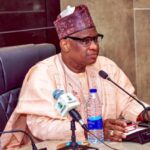
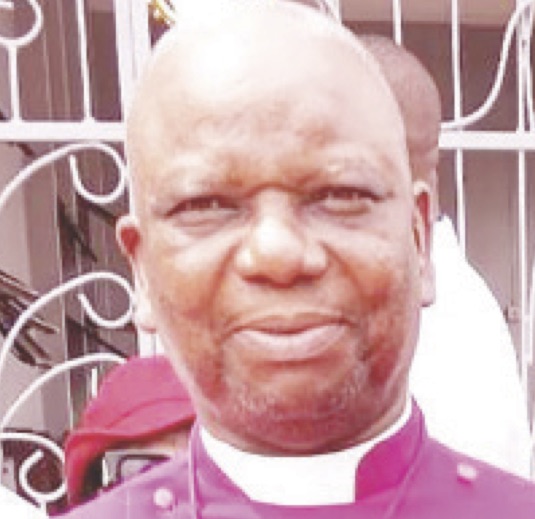
Anglican Archbishop of the Aba Ecclesiastical Province, Most Rev Isaac Nwaobia, has observed that Nigerians’ quest for the right leadership to reposition the economy and bring needed change, got shattered by the Independent National Electoral Commission (INEC) handling of the 2023 elections. He raised concerns about leadership in the Southeast, and the church and suggested what he thinks could make 2024 a better year for all.
Let’s look at the ups and downs of the outgone year, 2023 and the prospects of the New Year, 2024?
Yes, 2023, was the year that shattered the hope of the masses. Not in the context of who became president, whether Peter Obi, Atiku or the current president, but somewhere along the line, most Nigerians lost hope and confidence in the country. The international communities, also lost hope. However, close to the election, people started building hope. The Chairman of the Independent National Electoral Commission (INEC), Prof Mahmood Yakubu, with a clean and innocent face, promised us all the possibilities of having a new country, where rule of law through proper conduct of elections to reflect the people’s will, would take place. He asked for money and it was given to him. Young people were mobilized and people were emotionally attached. Their destinies were their concerns. Somewhere along the line, the hope was shattered. Let me reiterate that my views about this have nothing to do with Obi, Atiku or Tinubu winning, but it is about doing the right things in the right ways. If the elections were properly done, there’d be no need for the tribunals and all those cases that gave a leeway to the judiciary. The judiciary has been captured that they can’t do anything on their own. Even if you’re captured at the tribunal and Court of Appeal, you go to the Supreme Court, which is the final stage, you’ll see them bring out one formula that’s not even in existence and that’s the end. This has sent a wrong signal about the state of our judiciary, cancelling the notion that the judiciary is the last hope of the common man. So, from all indications, the common man has lost hope that the judiciary is capable of rescuing him from whatever calamity that may have befallen him. That affected the nation and changed a lot, because when people who don’t have popular mandates, are in office, they misbehave and rascality takes over the whole area of governance. The economy collapsed because foreign investors were no more coming. The Naira has almost gone below toilet roll and since the Naira is like that, everything we’re buying became costly, including the water we drink. That’s the genesis of our rise and fall in 2023. However, we’re in a new year and Nigerians, must accept that and come together as a people, to solve our major problems. This is where everybody must put in their individual best for the collective good of all. Otherwise, I see a stressful year. It’s not my wish that anyone, or this country, should suffer, but if we don’t collapse our individualistic nature and come together for the good of our country, we will have a very stressful 2024. I’m not in the Bureau of Statistics, but we saw the level of suicides last year, including from educated people. The government, must be more serious in making laws and policies that will affect people positively. Our duty is to support, pay our taxes and be good citizens. We need to see changes, especially in the policies that will affect the economy positively. In 2024, let all hands be on deck so that we can progress.
Looking at the budget proposals of the five Southeast states, do you see any sign of creating policies and programmes that reflect on changing the status quo? What’s your message to the governors?
The Igbo nation is clustered. We’re interwoven and have one culture, one language with minor dialectical issues. The Igbo man is self-made. He wants to progress and build. It’s however, unfortunate that we’re not getting that foundational support from our leadership because I recall that in the early days, the Nkalagu Cement Industry was there for us as a region, the Hotel Presidential, Enugu, the Agricultural Sector, was booming under Michael Okpara and even down to Sam Mbakwe, and Jim Nwobodo, in Imo and Anambra states, when leadership was more about the people. Mbakwe’s and Nwobodo’s investments in agriculture, kept some things alive, but subsequent leaders refused to build on the foundation they met and that led to the emptiness of the current Igbo nation. Right now, we are incurring the wrath of the youths. What should happen henceforth is that we should open up for development, get the necessary money and utilize it for proper investments into developmental projects. I’m saying that whatever amount they have as loans in their budgets must be channelled in the right direction that should yield money for the repayment. Aside from Mbakwe, our children are now paying back loans that they don’t know, can’t explain and can’t even see what they were used for. We must not borrow to feed ourselves and pay salaries. We must borrow for capital expenditure and ensure we invest in things that can easily regenerate the funds for repayment. If the budgets of the states are high, it’s not my worry. I’m happy about it, but I’m more concerned about what they’ll be put into to generate more funds.
What’s your take on the South East Development Commission that just passed it’s third reading in the House of Representatives?
It should, as a matter of urgency, take effect. It’s long overdue. Once it’s in existence, we’ve been able to carve out a niche for the development of this region. We once had a security and economic conference for our region and it is obvious that one state cannot handle the security of this region. But with this Development Commission, we can have a collective will, to do something better for our region, not just gathering together in a conference to score political points. If the South East Development Commission is well funded and deductions are made properly, the states will work together with it just like the NDDC, for the better development of our region.
Many in the society are presently of the belief that the church has failed somehow, in its role of moulding the people and setting the pace in behaviour and discipline; to this end, youths are losing connections with the church, what do we expect in the New Year?
Well, your observation is right. Just like the value system in the Igbo society collapsed. Back then the Ichie (Chief), stood for uprightness and sought the betterment of the people. In the church too, the clergy are expected to come with uprightness and when that is not there, you see the issues you’re raising. A society that’s talking about “Not Too Young to Run,” keeps sending old people to represent them in areas where youths are needed. They have all failed, if they will ignore things like that. I went to a seminar in Port Harcourt and I commended one church leader there, who has taken an interest in the welfare and development of youths around there. That particular church by records, may have started 10 years ago, but today, it’s the Bus Stop for all the youths there. Go to the established churches there, the pews are empty. There may not be space for the established churches again, if the present stance continues, because this particular church in Port Harcourt, is made up of 90 per cent youth population. It means that the man is doing something right. He’s outspoken and has a scheme for them there. I’ve written a memo to the present governor of Abia State and asked that he should do something on youth initiatives. This should go beyond just politics. I want it to be real where these youths can be accommodated. We’ve seen him show interest in Aba and their Enyimba mentality could be properly utilized. These creative youths in Aba, must be properly refocused on the right channels. I must state that the church must sit up as well, on the issues of youths, while our well-to-do individuals need to get involved. When we fail to do that, we’ll face a different problem, again.
What is the partnership between the church and government like in Abia, for development purposes? Is there a coming together in this area to stimulate growth in the right direction?
It is a two-way problem. The government has its own area of error, while the church has failed in some ways as well. Abia is considered a 90 per cent Christian state, but that’s not true in reality, as people who started governance from the return of democracy here didn’t consider that aspect. You’ve mentioned some states, where that partnership worked in the areas of schools and hospitals, so, that it is not working here is not a spiritual problem. It is just a foundational problem that can be corrected. Apart from those who laid the foundation, in recent times, they have nothing to do with the church, including their own individual denominations. The church is not asking the government to give them money, but we’re asking for us to partner together for a better society, because we believe we have the personnel to take care of certain key areas. For example, when schools were returned here, the Catholics asked the Reverend Sisters, who are professionals to enter the classrooms and you should know the positive effects of such. Even some of the churches too that schools were returned to back then couldn’t manage them properly until the government had issues with them. The church needs to take more interest in governance, education and civilization of our people. We’ve not done well. I score ourselves below average here in Abia State.
Sir, every motor road in the Southeast are covered with checkpoints by military roadblocks, yet there are issues of banditary, kidnapping and the likes, leading to insecurity and fear of returning to invest by those in the Diaspora. What’s your view vis a vis, fighting insecurity in the region for better development?
We should be more digital when we talk about security. These days, people are now doing traditional marriages and even burial ceremonies in the cities. Everyone needs to see that we work together towards improving beyond just roadblocks. I strongly believe that digital input in the fight against insecurity, will be more effective. Standing on the road and causing people to come down, raise their hands, walk or crawl to show your strength and security, is not really the most effective. Everyone, all tiers of government from the federal, state, local and even communities, must do better. How can we have development in this kind of environment? We just need to do better than what we’re seeing now. Security agencies, should apply all international standards to secure our people.