Follow Us on Google

…Seeks Africa-wide alliance to strengthen health security
Lagos State Government has unveiled a digital biosecurity system powered by artificial intelligence (AI) and telemedicine to detect and contain emerging disease threats while keeping businesses and economic activities running during public health emergen cies.
The initiative, known as Lagos State Bioshield, is designed to strengthen disease surveillance, identify potential infections early and prevent outbreaks from disrupting livelihoods in Nigeria’s commercial hub.
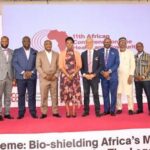
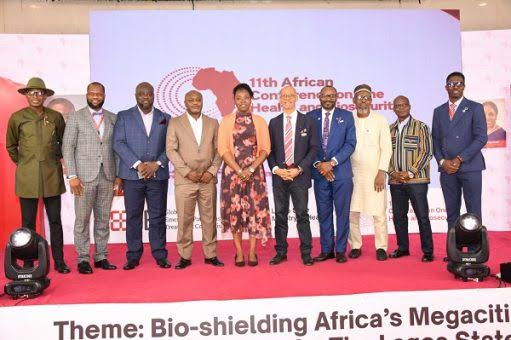
Commissioner for Health, Prof. Akin Abayomi, unveiled the framework at the 11th African Conference on One Health and Biosecurity, organised by the state government in partnership with the Global Emerging Pathogens Treatment Consortium (GET Consortium) at the Civic Centre, Victoria Island, Lagos.
Speaking at the conference themed, “Bio-Shielding Africa’s Megacities Against Emerging Threats: The Lagos State Story,” Abayomi said the initiative was developed from lessons learnt during the Ebola outbreak and COVID-19 pandemic, particularly the need to protect public health without shutting down economic activities.
He said closing Lagos during an epidemic could have devastating consequences, considering that about 70 per cent of residents depend on daily earnings for survival.
According to him, the Bioshield would enable businesses, tourism, social activities and other economic engagements to continue while the government monitors and responds to biological threats.
He identified Lassa fever, dengue, yellow fever, Marburg virus disease and Ebola, as well as emerging and unknown pathogens, as threats requiring stronger preparedness.
Abayomi said Lagos’ estimated 30.1 million population, high population density, rapid urbanisation, migration and international travel exposed the state to heightened outbreak risks.
He disclosed that Lagos receives about 70 per cent of Nigeria’s international air traffic and approximately 1.8 million cattle annually, stressing the need for an integrated approach covering human, animal and environmental health.
Explaining how the system works, the commissioner said its two-layer structure monitors potential biological threats at entry points and tracks individuals who develop symptoms after arriving in the state.
Its Health Radar platform uses WhatsApp, SMS and email to register and monitor travellers and participants at major events, conducting daily health checks for up to 21 days.
Individuals reporting symptoms are connected to telemedicine services for initial assessment, with laboratory investigations, referrals and other interventions activated where necessary.
Abayomi disclosed that the technology was successfully deployed during the recently concluded CANEX WKND, monitoring about 19,000 registered delegates, including 2,298 international visitors, amid concerns over Ebola outbreaks in Central Africa.
The exercise recorded 2,454 telemedicine consultations, 241 clinical referrals and 219 individuals flagged for further attention. He said all identified cases were followed up and closed out, with no severe outcome linked to the suspected high-consequence infections reported.
He said the state was developing Bioshield 3.0 to improve artificial intelligence and telemedicine capabilities, strengthen integration with airports and event centres and establish sustainable financing and legal frameworks.
Special Adviser to the Governor on Health, Dr. Kemi Ogunyemi, described Lagos as a critical gateway for biological threats entering Africa, given its population, seaports, international airport and commercial activities.
She called for an Africa-wide BioShield Alliance involving megacities such as Lagos, Cairo, Kinshasa, Johannesburg and Nairobi to promote data sharing, joint training and common preparedness standards.
Earlier, Permanent Secretary, Ministry of Health, Dr. Dayo Lajide, said lessons from the 2014 Ebola outbreak and COVID-19 had strengthened the state’s commitment to preparedness. She cited investments in a Biosafety Level 3 laboratory and biobank at the Infectious Disease Hospital, Yaba, alongside intensified surveillance and healthcare workers’ training.
In his keynote address, Deputy Vice-Chancellor (Academic), Lagos State University of Science and Technology, Prof. Abiodun Denloye, identified poor sanitation, unsafe water, inadequate housing and environmental degradation as factors worsening disease vulnerability in African cities.
He advocated stronger environmental protection, disease surveillance, resilient urban planning, community protection and One Health governance.
Also, GET Consortium’s Chief Operating Officer, Dr. Ayodotun Bobadoye, called for sustained investment in laboratory infrastructure, border monitoring, workforce development and community engagement.
Director General, Nigerian Institute of Medical Research (NIMR), Prof. John Obafunwa, urged increased local investment in medical research, genomic sequencing, vaccine development and domestic production of essential medical supplies to reduce Africa’s dependence on imports.
The conference brought together policymakers, researchers and health professionals to strengthen Africa’s preparedness against emerging biological threats.