Follow Us on Google
By Lukman Olabiyi
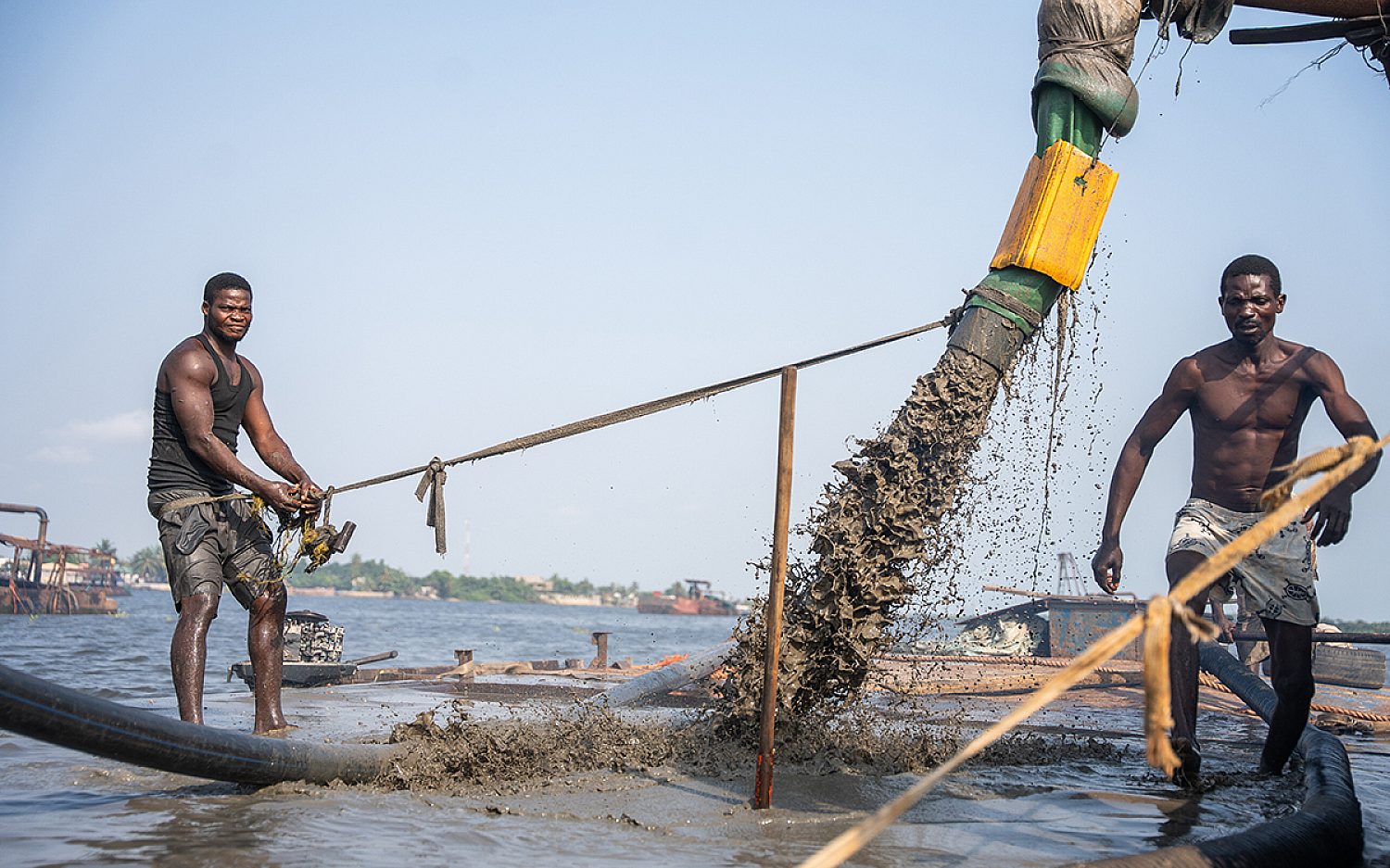
Lagos State Government has raised the alarm over the growing threat posed by indiscriminate dredging activities across the state, warning that worsening sand scarcity and rising costs could trigger serious environmental, construction and food security challenges if urgent measures are not taken.
The state’s Commissioner for Waterfront Infrastructure Development, Dayo Bush Alebiosu, sounded the warning during the annual ministerial press briefing held at the Bagauda Kaltho Press Centre, where he presented the ministry’s two-year scorecard.
Alebiosu said the increasing demand for sand for land reclamation and construction projects, especially within the Lekki-Ajah corridor, has intensified pressure on Lagos’ waterways and coastal resources.
According to him, developers handling reclamation projects in the Lekki-Ajah axis now source sand from communities in Ikorodu, pumping materials across distances of between 10 and 12 kilometres due to depletion of sand deposits in closer areas.
“For me, it confirms my fears. If you are reclaiming land in Ajah and you now have to pump sand from Ikorodu, it means the sand resources within Ajah are gradually running out,” the commissioner said.
He stressed that the development highlights the urgent need for stricter monitoring and proper data collection on dredging activities across the state.
“We need proper data. We need to know how many people are dredging, how much sand is being dredged daily and what is left within those areas,” Alebiosu stated.
The commissioner disclosed that the state government has become more cautious in issuing dredging licences and permits to prevent over-exploitation of available sand deposits.
He warned that unchecked dredging could significantly increase construction and infrastructure costs in Lagos, with direct implications for housing delivery and urban development.
Other News
Beyond construction concerns, Alebiosu linked indiscriminate dredging to growing threats to food security, particularly in riverine communities that depend heavily on fishing for livelihood and sustenance.
According to him, excessive dredging disrupts aquatic ecosystems and destroys marine habitats, forcing fishermen to travel farther before making catches.
“It is putting food security at risk. We are encouraging people to consume more protein, such as fish, but whenever dredging disturbs aquatic life, fishermen are forced to work harder, and naturally, the cost of fish goes up,” he said.
The commissioner also blamed aggressive dredging operations for infrastructural damage in host communities, citing Ibese in Ikorodu as one of the areas where roads and public infrastructure have reportedly been damaged by heavy-duty dredging activities.
Alebiosu reiterated that the Ministry of Waterfront Infrastructure Development remains the agency legally empowered to regulate sand dredging and sand-dealing activities in the state.
He explained that the ministry works closely with the Ministry of Environment and Physical Planning, as well as local communities, to curb illegal dredging through enforcement operations, monitoring and whistleblowing mechanisms.
“We thank the communities that alert us whenever illegal activities take place. Enforcement is continuous because many of these operators try to hide their activities,” he added.
The commissioner further noted that illegal dredging persists partly because of the financial benefits attached to the business, accusing some local collaborators of aiding foreign operators.
“We cannot continue blaming foreigners alone. We must ask ourselves how they got there in the first place. They definitely have the connivance of some locals,” he said.
The Lagos State Government, however, reaffirmed its commitment to tightening regulations around dredging activities in order to protect waterfront communities, preserve the environment and ensure sustainable management of natural resources across the state.