Follow Us on Google
By Bianca Iboma-Emefu

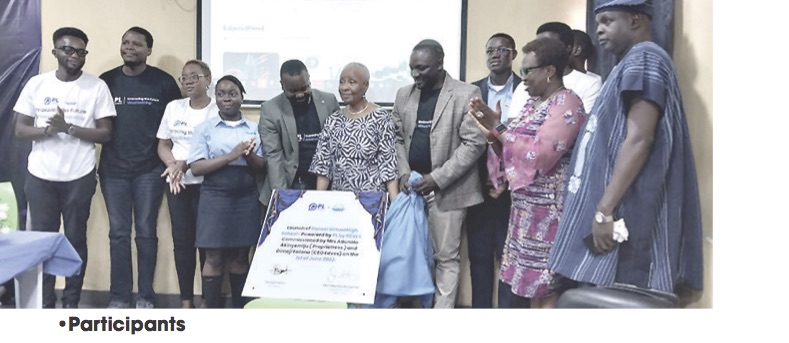
A team of indigenous software engineers, in partnership with Dansol High School, Agindigbi, Lagos, recently launched a digital educational platform called Edves, designed to promote teaching and learning in secondary schools.
The duo unveiled this homegrown, world-class virtual Learning Management System (LMS) for schools, basically for academic progress.
At the launch, the chief executive officer of Edves, Mr. Dimeji Falano, said the software was developed as a next-generation virtual academy platform focused on transforming learning in a uniquely different but interconnected way that was engaging, effective, impactful, fun to use and at the same time useful in community-led learning.
Falano said the platform was built to simplify the management of educational institution, offering a suite of powerful software tools that streamline daily operations, improve students’ outcomes and enhance the overall learning experience.
He explained that tech has made learning easy, though there were certain challenges that need improvement but the concept of incubating tech into education has helped to build data science.
Falano said that physical school anywhere in the world cannot be stopped but the initiative of virtual learning, export education from Africa to world and equally tackle the plight of accessing qualitative education.
Also, the digital solution offers schools, student management systems, online learning platforms, digital libraries and parent communication portals. The digital platform was developed as the next-generation Edves ecosystem, focused on transforming learning for immediate and future generations of students.
“Some of the software application include personalized learning with features such as live classes organized to hold engaging class experiences. Assessment tools set up robust and relevant assessment formats fitted with the Nigerian (WASSCE and NECO) and British (IGCSE), SAT, TOEFL curriculum-aligned.”
Falano said, apart from interesting features of personalized learning, from recorded video content, students would have interactions with teachers where they can make requests, students can learn at their pace as soon as they buy the service or subscribe. They equally do not need to relocate to have access to qualitative education.
In addition, he said the 2.0 quality learning makes the school accessible as it opens opportunities for students to collaborate and exchange knowledge.
Other features of the application are a questions pool, proctored examination system, credible remote academic evaluations, and a suite of personalised video lessons, practice quizzes and games library to support in-class efforts with students at home.
“The LMS proves to be an innovative and solid alternative learning model adopting technology to deliver quality education to students and schools, helping them surmount the challenges of school subject teachers that might have weaknesses.”
Falono stressed that the personalized learning platform equally empowers educators and parents to make a positive impact and difference in their children’s learning journeys and produce more globally-competitive learners and resilient leaders.
“Edves software application has uniquely different but interconnected tools that are engaging, effective, impactful, fun to use and at the same time useful in community-led learning.
“The platform is built to simplify the management of educational institutions, offering a suite of powerful software tools that streamline daily operations, improve students’ outcomes and enhance the overall learning experience. You experience interactive and seamless learning on the go when you use the application. Unrestricted and borderless access allows learning beyond classroom walls.
“The digital solution is able to offer schools, student management systems, online learning platforms, digital libraries and parent communication portals.”
Executive director of the school, Mrs. Omotara Olanitori, disclosed that her school was committed to sharpening the skills of her students to prepare them for challenges.
“Launching a virtual learning platform opens the school to the world. We are moving from our little catchment area in Lagos to the world. It’s a way of giving back to the society, especially out-of-school children, once you pay for our services,” she said.
Olanitori said, if they dropped out from school, the platform could assist in shaping them once they have access to the Internet: “Actually, we need to work in partnership with government to tackle the out-of-school children menace.
Although there are vocational schoold for out-of school-children where they can develop other skills. This was set up by the government to meet this need.
“On our part, we have been able to make certain contributions to reduce the number. We have built two schools in northern Nigeria, to be precise, Taraba and Yobe, and the other one at Badagry, Lagos State, as part of our charity work.
“We built the schools for quality and to ensure that students have proper buildings for them to acquire knowledge. If a child is learning under an open roof and it rains, they can’t learn.
“These are some steps we have taken to ensure that students get good quality education. There would be constant monitoring, upgrades and improving quality. Teachers and students would be engaging constantly and we would maximized our resources,” she said.