Follow Us on Google
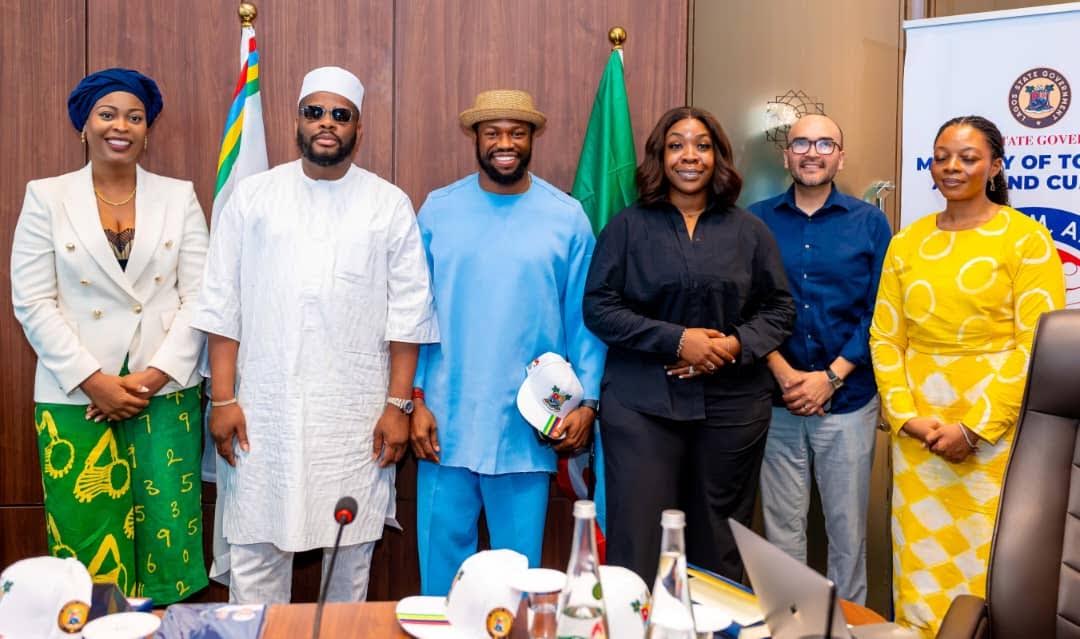
The Lagos State Government has called for a council-led campaign to identify, develop and promote tourism attractions across the state, as part of efforts to transform Lagos into a year-round destination for local and international visitors.
The Special Adviser to Governor Babajide Sanwo-Olu on Tourism, Arts and Culture, Idris Aregbe, and Canada’s Deputy High Commissioner, Carlos Rojas-Arbulú, made the call at a stakeholders’ meeting with representatives of local councils and grassroots communities in Lagos.
The meeting, tagged “Experience The Best of Lagos,” was held in the Victoria Island area of the state.
Aregbe said the government was determined to unlock the tourism potential embedded in communities across Lagos by creating a more conducive environment for the tourism, arts and culture industry and encouraging councils to take ownership of attractions within their jurisdictions.
He described the councils as critical drivers of the state’s tourism strategy, urging officials to identify attractions that could be developed, packaged and marketed to visitors.
“You are the keys to the door of tourism in your councils,” Aregbe told the stakeholders.
He noted that Lagos had a broad grassroots network, comprising 20 local governments and 37 Local Council Development Areas (LCDAs), which could be leveraged to discover and promote lesser-known destinations.
According to him, attractions that residents may consider ordinary or insignificant could become commercially viable tourism products if properly developed and promoted.
Aregbe cited the experience of other countries where communities had transformed local attractions into internationally recognised destinations, stressing that Lagos could replicate such successes.
He urged councils to collaborate with the state government and private-sector operators, assuring stakeholders that the government was willing to support partnerships capable of expanding the state’s tourism economy.
The Special Adviser said Lagos could no longer rely primarily on the December festive season to attract visitors, stressing the need to build a tourism economy that operates throughout the year.
He observed that visitor activity was already increasing outside the traditional peak period, with some tourists booking accommodation months ahead of the ember season and others extending their stays beyond the festive period.
Aregbe said the 2026 ember season should mark the beginning of a new phase in Lagos tourism.
“We need to make the 2026 ember season the beginning of a massive turnaround in the country, particularly Lagos tourism,” he said.
He added that the objective should be to provide visitors with memorable experiences that would encourage them to extend their stay or return to Lagos during subsequent seasons.
Aregbe also called for continuous innovation in the tourism sector, saying visitors were more likely to return when destinations offered fresh experiences.
He stressed that tourism went beyond entertainment, describing it as a broad economic sector encompassing commerce, food, culture, arts and other creative activities capable of generating employment and investment.
Aregbe also advocated a deliberate strategy to reshape perceptions of Lagos through film, social media and digital storytelling.
He said outdated portrayals of Lagos persisted in some quarters despite the significant transformation that had taken place across the state.
Other News
According to him, films and visual storytelling have considerable power to influence how cities and countries are perceived internationally.
He therefore urged the state to work with filmmakers, content creators and digital platforms, particularly YouTube, to showcase Lagos’ attractions and tell its story to a global audience.
“Lagos has a lot to show now,” he said, adding that the government was ready to collaborate with stakeholders committed to promoting the state’s tourism potential.
Rojas-Arbulú supported the council-led strategy, saying Lagos possessed enormous tourism assets but needed to package them in ways that would make them attractive and accessible to international visitors.
Drawing from his two years of living and working in Lagos and Nigeria, the Canadian diplomat described his experience as “transformational”, noting that foreigners often discovered value in places and experiences residents might take for granted.
He said Lagos needed to identify those assets and convert them into organised tourism experiences that visitors could understand, appreciate and pay for.
The envoy identified value, structure and narrative as key elements required to build a competitive tourism industry.
“It’s understanding that you hold value; you have to find a way to package it in a way that speaks to that international visitor,” he said.
Rojas-Arbulú said tourists were more likely to spend money on experiences when adequate organisation, coordination and infrastructure were in place.
He recommended the creation of a comprehensive catalogue of tourism destinations and experiences across Lagos, supported by reliable transportation and service providers.
He said such a system would make it easier for international visitors to navigate the city and enjoy its attractions.
The diplomat also urged Lagos and Nigeria to take greater control of their international image by deliberately promoting positive stories about the country.
He said international audiences were frequently exposed to negative narratives about Nigeria, arguing that greater attention should be paid to showcasing the country’s entrepreneurship, Afrobeats, food, fashion, creative industries and tourism assets.
“If we speak about the amazing entrepreneurship of this country and the city, we speak about Afrobeats, about the food, about the fashion, about the things that can connect you emotionally to an experience, then we’re telling a different narrative,” he said.
Describing Lagos as “a whole world to be discovered,” Rojas-Arbulú said the state had the talent, culture and experiences required to attract significantly more international visitors.
He expressed his willingness to support efforts to improve Nigeria’s image among Canadians, particularly through stronger links between Lagos and Toronto’s creative, tourism and investment ecosystems.
According to him, such partnerships could stimulate increased tourism, investment and broader economic and cultural engagement between the two destinations.
He further emphasised the importance of film and the creative industry in projecting Lagos globally, saying visual storytelling could help international audiences experience the city beyond existing stereotypes.
The stakeholders’ meeting underscored the need for stronger grassroots participation, better packaging of local attractions and strategic storytelling if Lagos is to fully harness its tourism potential and establish itself as a competitive year-round destination.