Follow Us on Google
• Health experts warn of looming organ failures, cancer, other diseases
By Ngozi Nwoke
In Lagos markets, a sinister trade of widespread adulterated palm oil, a staple cooking ingredient in Nigerian households, has become a death trap for consumers.
Nutritionists, health experts, and even some market traders are sounding the alarm over the health risks posed by the toxic oil, which is often disguised as pure and natural.
“I’ve been buying palm oil from the market for years, but lately, I’ve noticed it’s becoming too colourful and sticky,” said Bethel Ayew, a mother of two. “I thought maybe it was just my imagination, but when I used it to cook, my family and I would always feel nauseous, with itchy throats and experiencing stomach pains. I can’t stop using it, but I wonder how many others are being destroyed by this poison.
“I’ll begin to prepare my palm oil and never buy from the market again. I can’t put my family’s health at risk. I’ll rather take the stress to make it myself. That way I’m sure of the source,” she stated.
Ayew’s story is just one of many. Several consumers interviewed by Saturday Sun complained about the poor quality of palm oil in the market, citing issues with colour, texture, and odour.
“My palm oil is always too thick and gloopy,” said Ify Agbor, a student who was seen purchasing the palm oil at the Mushin market. “I thought maybe it was just the brand I was buying, but my mum has noticed the same problem. I have wondered what’s going on.”
Nutritionists say the adulteration of palm oil is a ticking time bomb, threatening the health of millions of Nigerians who rely on the oil for cooking.
“Adulterated palm oil is a health hazard,” said Jane Olowookere, a registered nutritionist in Akerele Street, Surulere. “These oils often contain harmful substances like Sudan dyes, which are carcinogenic, and other contaminants that can cause liver damage, cancer, and other health problems. The sticky, colourful oils are often signs of adulteration with cheaper, unhealthy ingredients.”
Olowookere’s concerns are echoed by other health experts, who warn that the consumption of adulterated palm oil can lead to serious health complications, including cardiovascular diseases, kidney damage and reproductive problems.
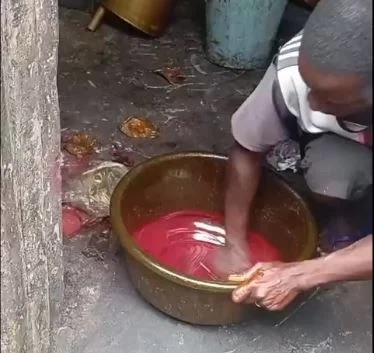
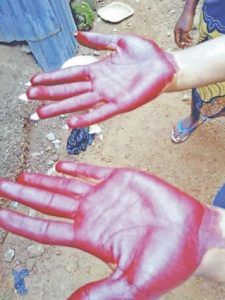
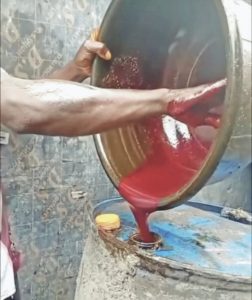
Another popular health influencer and medical doctor, Chinonso Egemba, known online as Aproko Doctor, reacted to a viral video on social media where a man was seen mixing dye with palm oil.
Egemba described the act of mixing dye with palm oil as ‘wickedness’ and emphasised that it’s a serious health risk.
He stated: “What do you mean you’re putting dye inside palm oil just so that it will look red? And then you’re selling it to people, knowing that what people are actually drinking or putting in their food is not actual palm oil but something mixed with dye?”
He highlighted that some of these dyes are carcinogenic, which can lead to cancer, and linked this practice to Nigeria’s low life expectancy.
The Aproko doctor also criticised the lack of regulation in the informal market, saying that enforcement agencies are underfunded and unable to track unregistered vendors.
He demonstrated a simple home test to detect adulterated palm oil, mixing it with water, but cautioned that this method isn’t fool proof, especially with lipophilic dyes that dissolve only in oil.
Ogheneochuko Irerih, a renowned diet consultant, raised the alarm over the devastating effects of adulterated palm oil on the health of Nigerians, citing increased risks of cardiovascular disease, liver damage, and reproductive problems.
Sharing his perspective with Saturday Sun, Irerih disclosed that consuming adulterated palm oil can lead to a host of health issues, including liver cancer, hormonal imbalances, nutrient deficiencies, and gastrointestinal problems.
The diet expert noted that identifying safe and healthy palm oil alternatives requires vigilance, urging consumers to look out for NAFDAC certification, reputable brands, and characteristic reddish-orange colour and aroma of genuine palm oil.
Irerih called for collaboration between nutritionists, health experts, and regulatory agencies to combat the scourge of adulterated palm oil, advocating public awareness campaigns, training for market traders, and stricter regulations.
He also urged Nigerians to support local farmers and producers, promoting sustainable agriculture and quality standards, saying, “We can make a difference and ensure access to safe, healthy, and genuine palm oil for all.”
The question on how these fake oils are making their way into the markets was answered when Saturday Sun visited several markets in Lagos such as Oyingbo, Idumota, and Iponri, where oil traders revealed the disturbing truth.
“Of course, there are fake palm oils in the market,” said Mrs Fatima, a palm oil trader at Lagos Island Market. “Some traders mix the good oil with other substances like dyes, water, and even sand to increase profit margins. But I can spot the difference. The good oil is usually darker, less sticky, and has a distinct aroma.”
Mrs Fatima explained that genuine palm oil is typically extracted from the fruit of the oil palm tree and has a characteristic reddish-orange colour.
“To differentiate between the original and fake palm oil, look for the colour and consistency,” she advised. “The fake ones are often too bright, too thick, or too thin. Also, check the aroma; the good oil has a distinct, pleasant smell.”
However, some traders confessed to selling adulterated oils, citing economic pressures, and lack of regulation.
“We have to make ends meet,” said a trader at Oyingbo market, who wished to remain anonymous. “The prices of genuine palm oil are too high, so we mix it with other things to keep costs low. But we’re not ignorant; we know it’s not good for our customers.”
The National Agency for Food and Drug Administration and Control (NAFDAC) has been urged to crack down on these unscrupulous traders and ensure that only safe, genuine palm oil reaches our markets.
The National Agency for Food and Drug Administration and Control (NAFDAC) has issued a stern warning to Nigerians about the dangers of consuming adulterated palm oil, citing the risk of cancer and other health complications.
In a statement, NAFDAC warned that some palm oil products in the market contain harmful substances like azo dyes, which are carcinogenic and can cause cancer.
The agency lamented that some unscrupulous individuals are mixing palm oil with dyes to enhance its colour and texture, putting the health of unsuspecting consumers at risk.
NAFDAC advised Nigerians to be cautious when buying palm oil, urging them to purchase from trusted sources, check for NAFDAC registration numbers, and inspect the colour and texture of the product. Genuine palm oil, the agency said, is deep orange-red in colour and has a fruity aroma.
The agency has also taken enforcement actions against those found to be involved in the adulteration of palm oil, including shutting down shops and prosecuting offenders. NAFDAC urged Nigerians to cooperate with the agency by reporting any incidents of adulterated palm oil.
The development has raised concerns about the safety of food products in the country, with many calling for stricter regulations and enforcement to protect consumers.
NAFDAC assured Nigerians that it is working tirelessly to ensure that food products in the market are safe for consumption.
Meanwhile, consumers are advised to be vigilant and take steps to protect themselves. When purchasing palm oil, look for reputable brands, check the colour and consistency, and be wary of suspiciously low prices.
As for Ayew and countless others, the message is clear: it’s time to prioritise health and safety in the kitchen.