Follow Us on Google
…As Ilera Eko coverage becomes law
By Doris Obinna
The Lagos State Health Management Agency (LASHMA) is responsible for implementing and regulating the social health insurance programme, ILERA EKO.
At its core, LASHMA was set up to tackle one of Nigeria’s most pressing healthcare challenges: heavy out-of-pocket spending. For decades, many families have had to pay directly for medical services at the point of care, a system that often pushes households into debt or poverty when unexpected illness strikes.
LASHMA’s mandate is to replace that uncertainty with a structured, pre-paid insurance system that pools resources and spreads financial risk across the population.
Through ILERA EKO, the agency enrolls residents, accredits healthcare providers, sets benefit packages, regulates service standards and ensures that premiums are subsidised; particularly for public servants and vulnerable groups. A key component of its work is the Equity Fund, financed from one per cent of the state’s Consolidated Revenue Fund, which provides coverage for indigent and vulnerable residents who cannot afford premiums.
Intensifying calls for residents to embrace the state’s social health insurance scheme, ILERA EKO, Permanent Secretary of the Lagos State Health Management Agency (LASHMA), Dr. Emmanuella Zamba, described it as a vital pathway to universal health coverage and financial protection against rising medical costs.
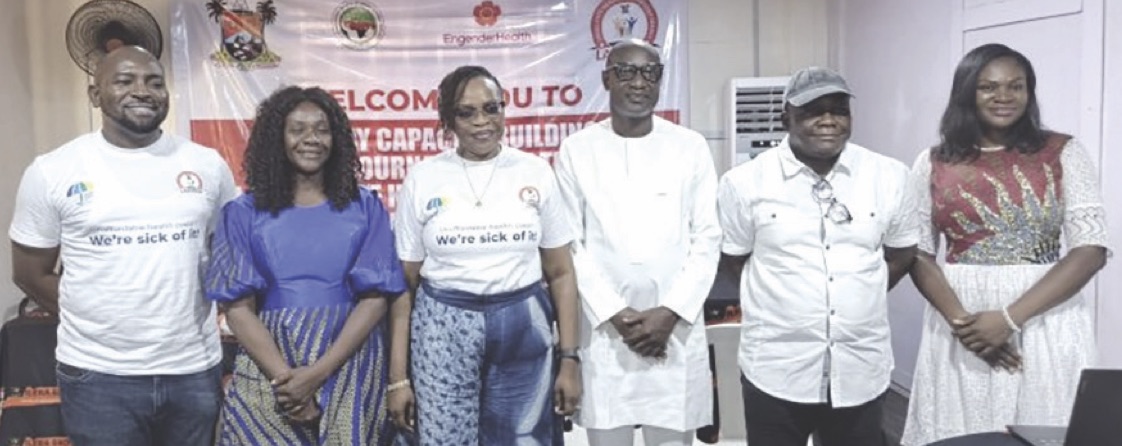
Speaking during a two-day stakeholder engagement and media capacity-building workshop held in collaboration with the International Society of Media in Public Health (ISMPH) in Lagos, Zamba framed the scheme as both a social responsibility and a legal obligation under Lagos State law.
She stressed that accurate public information is critical to dismantling misconceptions about health insurance.
Making health insurance mandatory
At the heart of the renewed push is the state government’s firm commitment to mandatory health insurance. Referencing the Executive Order signed on July 16, 2024, by Governor Babajide Sanwo-Olu, Zamba reiterated that enrollment under ILERA EKO is now compulsory for all residents of Lagos State.
According to her, enforcement has already commenced within Ministries, Departments and Agencies (MDAs), following a circular from the Office of the Head of Service. “All public servants in Lagos have now been enrolled, with the state government covering 75 per cent of their annual premiums, while employees contribute the remaining 25 per cent.
“In a megacity like Lagos, health insurance is no longer optional; it is essential. The scheme is designed to reduce out-of-pocket spending and prevent families from sliding into poverty due to medical bills.”
Zamba noted that Lagos is pioneering the implementation of mandatory social health insurance in Nigeria, with other states closely monitoring its model.
Also, LASHMA’s Coordinator of Regulations, Mr. Tosin Awosika, emphasised that the Lagos Health Scheme law makes insurance compulsory for every resident.
“The beauty of insurance is in the numbers. The more people that we have on board, the more the services grow,” he said, explaining that wider enrollment would translate into better funding for healthcare facilities, improved equipment and enhanced training for health workers.
Expanding the equity fund, protecting the vulnerable
In a major boost to healthcare financing, LASHMA announced the expansion of its Equity Fund from N1 billion to N3 billion. The fund, which draws one per cent of the state’s Consolidated Revenue Fund, is dedicated to providing insurance coverage for vulnerable and indigent residents.
Describing the increase as a “bold demonstration” of government’s commitment to inclusivity, Zamba explained that the fund has now been approved as a one-line charge, a move that strengthens its sustainability and shields it from budgetary uncertainties.
Other News
“The fund has been increased from N1 billion to N3 billion and approved as a one-line charge, reinforcing government’s determination to ensure inclusivity,” she said.
The scheme, which places strong emphasis on maternal and child health, Zamba highlighted that ILERA EKO covers antenatal services, deliveries and heavily subsidised caesarean sections procedures that could otherwise cost between N500,000 and N1 million in some facilities.
She added that expectant mothers are required to attend antenatal care for at least five months to enable early detection of high-risk pregnancies and improve outcomes for both mother and child.
The Head of ILERA EKO Medical, Dr. Olugbenga Fadipe, listed services covered under the scheme to include primary healthcare, specialist consultations, and surgeries, dental and eye care, physiotherapy and annual wellness screenings. “Cancer care, dialysis and certain advanced screenings become accessible after the second year of continuous enrollment.
“We are just one illness away from extreme poverty. We plan for houses and travel, but we don’t plan to go to the hospital. ILERA EKO is an opportunity for us to put this in place.”
He also highlighted the newly introduced LASHMA Aid Programme, which guarantees stabilisation of patients within the first 48 hours of presentation at any health facility in Lagos, including ambulance services for emergency transport.
Media, accountability and push for universal coverage
The workshop underscored the critical role of the media in strengthening health-financing reforms. On her part, ISMPH Executive Director, Moji Makanjuola, described the engagement as “more than a training, but a call to action.”
She emphasised that journalists have a responsibility to simplify complex budgetary processes, spotlight gaps between policy promises and realities, and promote evidence-based reporting on domestic resource mobilisation, insurance coverage and primary healthcare funding.
“Clear, accurate and persistent reporting can help ensure that investments in healthcare delivery are adequate, efficient and transparently managed,” she said.
Zamba, While acknowledging the technical support of ISMPH and the EngenderHealth Consortium Partnership, stressed that universal health coverage requires shared responsibility among government, healthcare providers, development partners, residents and the media.
Meanwhile, the Head of Sales and Agent Coordination, LASHMA, Ms. Uche Igweoniya, outlined multiple registration channels including the agency’s head office in Alausa, divisional offices across the five IBILE divisions, kiosks, hospitals, community pharmacies and virtual platforms.
She cautioned residents against fraudsters, reiterating that the agency operates a strict cashless policy. “We don’t accept cash payments. Please don’t transfer money to anyone. The agency doesn’t recognise that,” she warned.
Widespread participation critical
As Lagos deepens enforcement of mandatory enrollment and triples its equity fund, officials insist that widespread participation in ILERA EKO is critical to building a resilient healthcare system. For a state grappling with the complexities of a megacity, the message from LASHMA is unequivocal: health insurance is no longer a choice, but a collective investment in security, dignity and the promise that no resident will be denied quality care because of inability to pay.
Officials further disclosed that beyond enrollment, LASHMA also oversees compliance with the state’s mandatory health insurance policy, monitors quality of care across participating facilities, coordinates emergency response initiatives such as the LASHMA Aid Programme, and drives public awareness campaigns to counter misinformation about health insurance.
In essence, LASHMA is the institutional backbone of Lagos State’s push toward universal health coverage working to ensure that every resident, regardless of income level, can receive timely, affordable and quality healthcare.