Follow Us on Google
…Billions spent as stakeholders demand transparency, accountability
By Adewale Sanyaolu
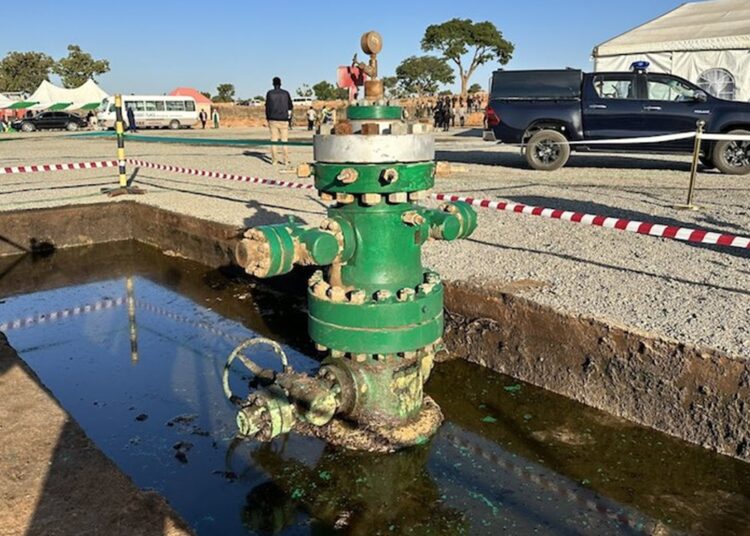
Four years after its high-profile inauguration, the Kolmani oil field in Bauchi state remains stuck in appraisal mode, with commercial production yet to begin despite millions of dollars in projected and sunk investments.
Once celebrated as a breakthrough that would extend Nigeria’s hydrocarbon frontier beyond the Niger Delta, the project is now facing growing scrutiny from industry stakeholders demanding transparency over costs, timelines and viability.
While the Nigerian National Petroleum Company Limited (NNPC Ltd) insists work is ongoing, critics argue that prolonged delays, rising capital requirements and limited public disclosure have deepened concerns about whether the ambitious inland oil venture can deliver meaningful economic returns.
Launched in November 2022, Kolmani was projected to hold more than one billion barrels of crude oil and about 500 billion cubic feet of gas.
Officials at the time described it as a breakthrough that would catalyse industrialisation in Bauchi and Gombe States, generate thousands of jobs and attract roughly $3 billion in integrated investment spanning upstream drilling, refining, gas processing and power generation.
There have been renewed assurances of a restart after earlier slowdowns, but Kolmani remains in the appraisal and planning phase rather than a producing field contributing barrels to Nigeria’s daily output. In practical terms, the project is still searching for commercial momentum.
According to experts, a key setback stifling the project is infrastructure. Kolmani is landlocked, far from the established export terminals and processing hubs of the Niger Delta.
There are no pre-existing crude evacuation pipelines, no nearby refining capacity and no legacy midstream network to plug into. Everything, pipelines, storage, processing facilities and possibly new road networks, must be built largely from scratch. That significantly inflates capital expenditure and lengthens the timeline to first oil.
Second is cost. Early industry projections placed total integrated development investment at about $3 billion. While exact, audited figures of cumulative spending have not been fully disclosed publicly, frontier exploration allocations under the Petroleum Industry Act have reportedly run into hundreds of billions of naira in recent years, with Kolmani accounting for a notable share of inland drilling, seismic work and logistics expenditure. Conservative industry estimates suggest that hundreds of millions of dollars have already been sunk into appraisal drilling, site development and associated exploration activities in the Kolmani area alone.
Beyond Kolmani specifically, Nigeria’s broader frontier basin programme, spanning basins such as Sokoto, Bida and Chad, has consumed substantial public resources over decades with limited commercial output to show for it.
That history inevitably fuels scepticism about continued spending without clear returns.
Third is commercial competitiveness. Developing an inland field with no supporting infrastructure pushes up the projected cost per barrel. In a global oil market increasingly focused on capital discipline and lower break-even thresholds, frontier projects must compete against offshore deepwater assets and brownfield expansions that often offer clearer economics and shorter payback periods.
Fourth is security and logistics. Operating in parts of northern Nigeria introduces additional risk premiums, insurance costs and operational constraints that can further erode margins. These factors must be priced into any realistic feasibility assessment.
The debate over whether Kolmani is truly worth it has therefore intensified, particularly as NNPC Ltd seeks to recalibrate its capital expenditure, streamline operations and distance itself from projects widely viewed as financially inefficient. As a commercially-driven entity, NNPC is under pressure to justify every dollar of investment against measurable returns.
The Group Chief Executive Officer of NNPC Ltd, Mr. Bayo Ojulari, reiterated NNPC Ltd’s commitment to the Kolmani field: “We will continue with the oil drilling in Kolmani and other places. The projects are critical in boosting the economy and the impact will be felt by all Nigerians.”
His comments, stakeholders note, reflect an institutional viewpoint that Kolmani is part of a long-term strategy to expand Nigeria’s hydrocarbon base beyond the Niger Delta.
Energy policy analyst and Partner at Bloomfield Law Price, Mr. Ayodele Oni, argues that frontier exploration cannot be sustained on symbolism alone. While he acknowledges the strategic value of diversifying Nigeria’s hydrocarbon geography, he maintains that Kolmani must pass strict commercial and regulatory tests.
According to him, attracting serious private capital will depend on transparent reserve certification, regulatory certainty under the Petroleum Industry Act and a fiscal framework that makes risk-sharing attractive to investors. Without those fundamentals, he suggests, continued public funding could become difficult to justify.
Other News
Given cost implications on the project, Oni said available data suggests that developing the Kolmani project could cost between $1.9 billion and $3.7 billion for both capital and operational expenses.
“In 2022, the late President Muhammadu Buhari stated that the government managed to secure investments exceeding $3 billion for the project’s development.
Nevertheless, the total amount spent to date remains undisclosed. This lack of transparency has led industry stakeholders and local community members alike to call on NNPC to account for the funds already invested, emphasising the need for clarity regarding the current financial status of the project,’’.
Petroleum Economist, Professor Wunmi Iledare, emphasised the need for commercial and economic scrutiny of Kolmani saying: “Economic choices must be unsentimental. If continued exploration and production in the North fails to deliver measurable value to NNPC, then the investments must be reconsidered.”
He stressed that while the project has symbolic and strategic importance, the market realities and commercial viability must guide further development decisions, not just political enthusiasm.
Academic analysts from the Emerald Energy Institute at the University of Port Harcourt, including Tolulope Elekula, Toyin Olabisi Odutola and Professor Joseph Atubokiki Ajienka, noted that while Kolmani’s geological promise is credible, infrastructure deficit, fiscal burdens and operational risks materially affect viability.
Their research findings indicate that unless these constraints are addressed through targeted incentives, improved security and technology deployment, frontier basins may struggle to transition from discovery to profitable production.
Industry stakeholders such as Bank Anthony Okoroafor, former Chairman of the Petroleum Technology Association of Nigeria (PETAN) and Tajudeen Adigun, the Chief Executive Officer of NCGAP Limited, took a more optimistic stance, arguing that successful development could stimulate economic activity in northern Nigeria and reduce overdependence on the Niger Delta.
For them, Kolmani represents not just barrels of oil but a broader industrial opportunity.
The core question, however, remains financial: how much has been spent so far, and will it deliver commensurate value?
Although precise cumulative expenditure figures remain opaque, the combination of appraisal drilling, seismic surveys, mobilisation of rigs and preliminary infrastructure suggests that substantial sums, likely running into several hundred million dollars, have already been committed. If full development proceeds, total investment could easily reach or exceed the originally cited $3 billion mark.
For a country grappling with fiscal constraints, subsidy reforms and competing infrastructure priorities, that is not a trivial commitment.
On the viability of the project or otherwise, supporters argue that Kolmani can unlock commercially viable reserves, attract credible private partners and create a new production corridor that diversifies national risk.
In that scenario, early sunk costs could be justified as the price of opening a new basin with decades of output potential.
Critics counter that unless break-even costs are competitive and timelines realistic, continued heavy spending could mirror past experiences where ambitious energy projects consumed public funds without delivering sustainable returns.
In a period of energy transition and tighter capital markets, they argue that Nigeria must prioritise projects with clearer and quicker revenue pathways.
Four years after its celebrated launch, Kolmani remains a frontier bet, neither a proven success nor a confirmed misadventure. It is a project suspended between geology and economics, between national aspiration and commercial calculation.
Whether it ultimately becomes a transformative inland oil hub or a costly lesson in frontier risk will depend on transparent cost accounting, disciplined capital allocation and the ability to attract partners willing to invest not on sentiment, but on sound, bankable numbers.