Follow Us on Google
In recent years, conversations around gender equity and child development have rightly highlighted the historical disadvantages faced by girls. Yet, within this evolving discourse, a quieter reality has persisted: the struggles of the boy child have often remained under-acknowledged.
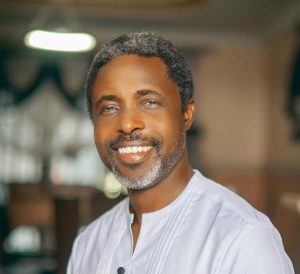
It is this gap that the Odushu Foundation, led by its founder Mr. Karinate Odushu, seeks to address through a deliberate and structured focus on the wellbeing, education, and future prospects of boys.
According to Odushu, the timing of this initiative is not accidental. Across cultures and continents, boys have long been shaped by rigid expectations of masculinity that discourage emotional expression and vulnerability.
From an early age, many are socialized to suppress fear, sadness, and anxiety, often being told to “be strong” or “act like a man.”
While such messages are frequently intended to foster resilience, they can inadvertently deprive boys of the emotional literacy and support systems necessary for healthy psychological development. Over time, the consequences can manifest as anger, disengagement from school, substance abuse, or conflict with authority.
Research has increasingly drawn attention to these patterns. Studies indicate that boys generally receive less emotional affirmation than girls from caregivers and teachers. They are also more likely to be disciplined harshly in educational settings, sometimes for behaviors linked to developmental or learning differences.
Boys are disproportionately diagnosed with attention-deficit/hyperactivity disorder (ADHD), and many struggle in school environments that prioritize compliance and prolonged sedentary focus. The cumulative effect can be alienation from learning, diminished self-esteem, and a higher risk of dropping out.
These educational disparities often echo later in life. Globally, men make up an overwhelming majority of prison populations, estimated at around 96 percent, while women account for roughly 4 percent. In the United States, men are about ten times more likely to be incarcerated than women.
Analysts attribute this disparity partly to differences in crime patterns: men are statistically more likely to commit violent and high-risk offenses, while women are more often imprisoned for property or non-violent drug-related crimes.
However, criminologists also emphasize the role of socialization, economic marginalization, limited educational attainment, and untreated mental health challenges in shaping these outcomes.
Other News
The trend begins early. Boys are heavily overrepresented in juvenile justice systems, with estimates suggesting that about 85 percent of incarcerated youth are male. For Odushu, such figures are not simply statistics; they are warning signs of systemic neglect. “When a society ignores the emotional and developmental needs of its boys,” he argues, “it risks producing men who struggle to find constructive paths in adulthood.”
Addressing this imbalance, therefore, is not a matter of competing with the gains of girls, but of ensuring that both genders receive the support necessary to thrive.
The Odushu Foundation’s approach centers on four pillars: education, innovation, orientation, and scholarship. Through educational programs, the foundation aims to improve academic engagement among boys by promoting learning methods that recognize diverse cognitive and behavioral styles. Workshops and mentorship initiatives introduce boys to practical skills, creative expression, and problem-solving opportunities designed to restore confidence in their abilities.
Innovation programs seek to connect boys with emerging fields such as technology, digital entrepreneurship, and vocational crafts. By exposing them to constructive outlets for curiosity and ambition, the foundation hopes to counter the sense of stagnation that often accompanies academic struggle. Orientation initiatives, meanwhile, address the social and psychological dimensions of boyhood.
These sessions encourage healthy emotional expression, conflict resolution skills, and positive models of masculinity that balance strength with empathy and responsibility.
Scholarship schemes form the fourth pillar, targeting boys from disadvantaged backgrounds who risk dropping out due to financial hardship. Odushu believes that economic barriers often intersect with gender expectations, pushing boys prematurely into labor markets or survival activities that interrupt schooling. By sustaining their education, scholarships can help break cycles of marginalization that otherwise extend into adulthood.
Underlying all these efforts is a broader awareness campaign. The foundation seeks to reframe public perception of the boy child, not as inherently troublesome or privileged, but as a demographic with specific developmental needs.
This reframing, Odushu insists, complements rather than contradicts ongoing advocacy for girls. “Supporting boys does not diminish girls,” he notes. “Equity means understanding the different challenges each child faces and responding appropriately.”
Experts increasingly echo this integrative perspective. Gender-sensitive child development research emphasizes that boys and girls experience distinct pressures shaped by biology, culture, and environment.
While girls may face structural barriers in some societies, boys often encounter social expectations that restrict emotional growth and increase exposure to risk-taking behavior. Effective policy, therefore, requires attention to both trajectories.
The Odushu Foundation’s mission resonates particularly in communities where economic hardship and limited educational infrastructure intensify these dynamics. In such settings, boys may be drawn toward street life, informal labor, or peer groups that normalize aggression and delinquency. Early intervention through mentorship, schooling support, and positive role models can redirect these pathways toward productive adulthood.
Ultimately, Odushu frames his work not only as social intervention but as societal investment. When boys receive adequate emotional support, quality education, and constructive opportunities, they are more likely to become men who contribute positively to families, workplaces, and civic life. Conversely, neglect carries collective costs, manifesting in crime, unemployment, and fractured social cohesion.
By focusing on the boy child through education, innovation, orientation programs, and scholarships, the Odushu Foundation seeks to close a long-standing gap in child development advocacy. Its message is both simple and profound: every child, regardless of gender, deserves the resources and understanding necessary to realize his or her potential.
In elevating the needs of boys, Karinate Odushu is not shifting attention away from girls but expanding the vision of inclusion, ensuring that no child’s struggles remain unseen and no future remains unnecessarily constrained.