Follow Us on Google

From Desmond Mgboh, Kano
Kano state Deputy Governor, Nasiru Yusuf Gawuna, has tasked policy makers and other stakeholders in the country to evolve home-grown mechanisms that will deal with the factors responsible for incessant farmers-herdsmen conflict in parts of the country.
He stressed that the timely intervention in such conflicts by traditional leaders was strategic in preventing the breakdown of law and order, thus, saving lives and property from being destroyed.
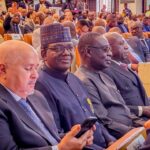
The Deputy Governor made the assertion in a message to the opening of 5-day training on Conflict Management and Resolution for Kano State Stock Routes Demarcation Committee organized by Kano State Agro-Pastoral Development Project, KSADP, and SMAKAIYA Agricultural Consult Limited at The Afficent, in Kano city.
Represented by the Permanent Secretary, Ministry of Agriculture, Malam Balarabe Hassan Karaye, Dr. Gawuna said: “This issue of farmers-herdsmen conflict is a very serious national security matter which must not be treated with levity. Managing the conflict is necessary for peace and stability, without which developmental activities cannot be executed by the government”.
“There is competing demand for diminishing land resources between farmers and herdsmen and this has often resulted in disagreements, with unfortunate social, food security and economic implications”.
He said to efficiently manage farmer-herdsmen conflict in Kano, the state government initiated the Kano State Agro-Pastoral Development Project, designed as a multi dimensional poverty alleviation, food security and conflict mitigation strategy, adding that establishing Dansoshiya grazing reserve, under the project, would serve as a model for settling herdsmen in one location, thus ensuring promoting peace.
The State Project Coordinator, Kano state Agro-Pastoral Development Project, Ibrahim Garba Muhammad, stated that the conflict mitigation intervention was vital towards achieving the overall development objective of the project, stressing that “no one can go to farm or look after cattle or sell milk if there is no peace”.