Follow Us on Google
From Noah Ebije, Kaduna
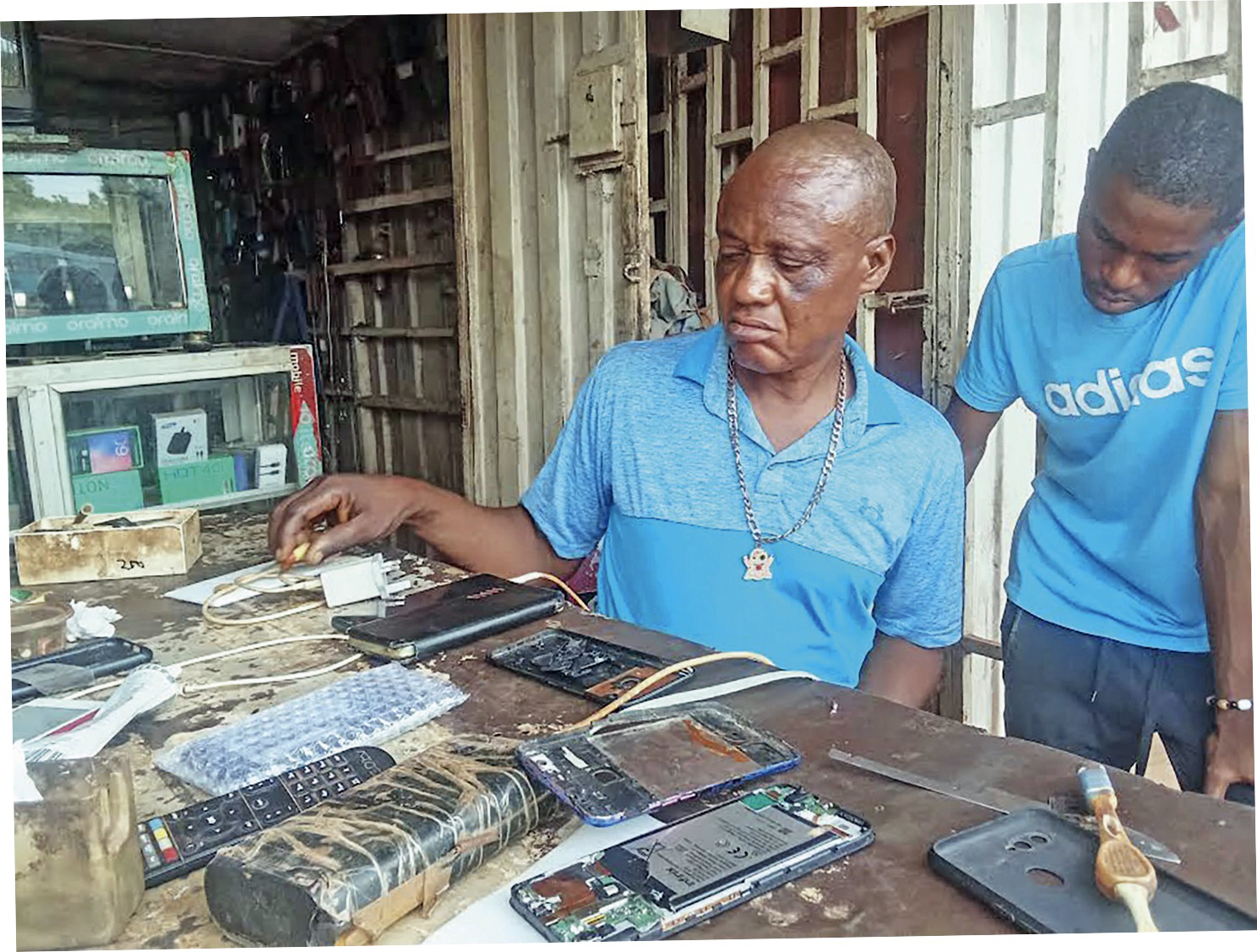
In the bustling commercial hub around Unguwan Television Garage in Kaduna city, where traders, commuters and artisans jostle daily for space and survival, one phone repairer says his workshop has become more than a business centre; it has also turned into an unofficial checkpoint against stolen mobile phones.
Ahmed Emuwahen Oscar, 60, a Kaduna-based Edo State born communication equipment technician, phone dealer and trainer of young technicians, says over the years he has recovered more than 50 stolen phones and handed more than 20 suspects to the police.
Speaking during an interview with our correspondent at his workshop in Kaduna, Oscar said experience in the phone business has taught him how to detect suspicious sellers and identify stolen devices.
“My name is Ahmed Emuwahen Oscar. I work on communication equipment, sales and services. I sell and repair phones,” he said.
According to him, his years in the business have exposed him to different categories of customers and helped him build a reputation that attracts clients from across Kaduna and beyond.
“I have trained a lot of boys, a lot of apprentices that are scattered all over Kaduna metropolis in the business of phone repairs and accessories,” he said.
Oscar disclosed that he has been in the business for over a decade, tracing his journey to the early years of the GSM revolution in Nigeria.
“I’ve been in the business since 2013. That’s about 13 years now,” he said.
He explained that his background in electrical engineering gave him an advantage when mobile telephony was introduced into Nigeria during the administration of former President Olusegun Obasanjo.
“At that time, I graduated in electrical engineering. So when GSM was introduced, I already had the theoretical aspect of it and decided to go into the practical side,” he recalled.
“That was around 2007. I went into practical training until 2009 when I was doing apprenticeship with somebody in town. Around 2011, I started on my own, but I fully established myself in 2013 after getting a shop and a vehicle.”
Since then, he said, the business has not only sustained him financially but has also enabled him to mentor younger people interested in phone engineering.
“As I speak with you, I have trained more than 30 engineers scattered all over Kaduna State. Some of them are in Abuja,” he added proudly.
Oscar described phone repairs as a lucrative business, especially in a country where many consumers patronise low-cost devices that are easily damaged.
“We Nigerians love cheap things. We don’t like original products; we like things that are cheap,” he said.
“Most of the phones shipped into Nigeria are China phones. They are shiny and attractive, but once they fall small or touch water, they get damaged easily. That is why you see many people going to repair shops.”
According to him, substandard phones dominate the market because many consumers cannot afford premium brands.
“The expensive ones don’t spoil quickly, even if they fall into water. But these cheaper phones stop working easily once they fall or touch water,” he explained.
Despite the profitability of the business, Oscar said one of the greatest challenges facing phone dealers is the influx of stolen devices into the second-hand market.
Other News
“Some people genuinely want to sell their phones because they have problems, while others steal phones and bring them for sale,” he said.
“As I speak to you, I have recovered more than 50 stolen phones from thieves and I have handed more than 20 suspects to the police outpost in this community.”
Oscar said identifying stolen phones requires experience, patience and careful questioning.
“If you bring a second-hand phone to me, there are two questions I will ask you. From your answers, I will know whether you are the owner of the phone or not,” he stated.
“If I’m not satisfied with your answer, I will open the phone, scrutinise it and determine whether you are truly the owner.”
He explained that he hardly buys used phones from strangers unless there is verifiable proof of ownership.
“The fairly used phones I sell are mostly phones bought from me by customers who later return to upgrade or resell them,” he said.
“If you want to sell a phone to me, you should come with the carton and receipt. If you don’t have them, then you must provide evidence that you truly own the phone.”
According to him, one of the easiest ways to verify ownership is through personal photographs and usage history stored on the device.
“If I check your gallery and see photographs dating back one year or more, it gives evidence that the phone belongs to you,” he explained.
“But if you wipe the phone clean before bringing it to sell and you don’t have receipt or carton, I begin to suspect you.”
He added that whenever he detects inconsistencies, he does not hesitate to involve the security agencies. “Sometimes I call the police and hand such suspects over for investigation,” he said.
Oscar also warned Nigerians against buying second-hand phones from roadside traders, saying many unsuspecting buyers have landed in serious trouble after purchasing stolen devices.
“People buying second-hand phones by the roadside don’t know the risk they are taking,” he warned.
“Somebody may steal a phone during robbery or kidnapping and then sell it cheaply. Even if you buy it innocently, the phone can still be tracked.”
He said several individuals are currently in correctional centres because they could not explain how they came into possession of stolen phones.
“A lot of people are in prison today for something they know nothing about, simply because they bought a phone without knowing its source,” he said. “When a phone is tracked and you cannot provide evidence of ownership, you will have serious problems.”
For Oscar, the growing trade in stolen phones remains a threat not only to legitimate businesses but also to public safety.
As mobile phones increasingly hold sensitive personal and financial information, he believes both buyers and dealers must become more vigilant.
“People should stop patronising roadside sellers,” he advised. “Buy from trusted shops and always collect receipts. That is the safest way.”