Follow Us on Google
•Calls for regional collaboration to end insecurity
From Sola Ojo Abuja
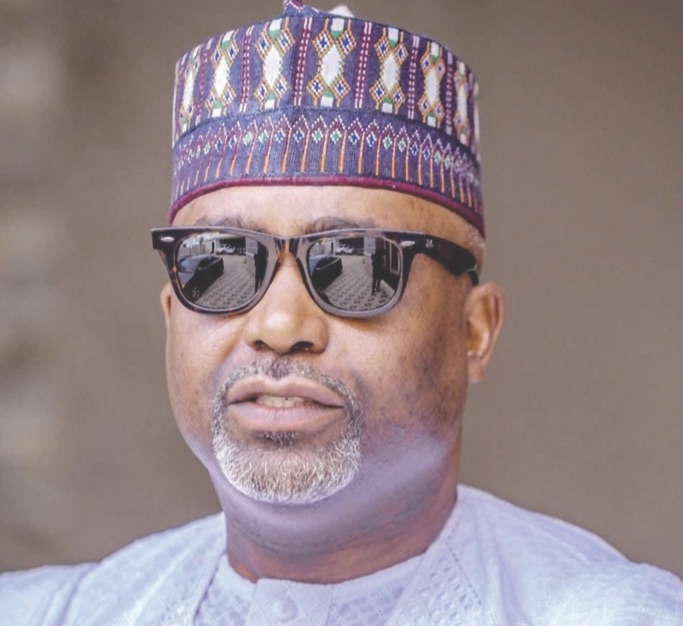
In this interview with Daily Sun, Commissioner, Ministry of Information, Kaduna State, Alhaji Ahmed Maiyaki, declared that political opposition in Kaduna State exists largely “in name only. ”
He explained that Kaduna has made significant strides in reversing insecurity, restoring essential services and promoting socio-economic development. He said over 500 schools have reopened, 200 health facilities have been brought back into communities, over 500 hectares of farmland have been recovered and more than 300,000 children have returned to classrooms.
He warned that, while Kaduna has made significant progress, insecurity along border communities remains a challenge, stressing that regional collaboration is essential, calling on neighbouring states to adopt similar proactive security strategies to prevent spillover and consolidate stability.
Ten years ago specifically under the administration of former governor of Kaduna State, Nasir El-Rufai, the information ministry was scrapped. Now you’re here to start from the scratch; how has it been?
Thank you. The mandate of the Ministry of Information is public policy communication. In the past, communication was mostly top-down, where the ministry issued statements to inform the public of government activities. That approach was largely reactive responding only after issues arose or misinformation spread.
Today, our approach is both top-down and bottom-up, focusing on inclusion and engagement. We proactively inform the public about what the government is doing, what has been achieved, and what is planned. While we sometimes respond to incorrect information, much of our work is pre-emptive, ensuring transparency before questions or confusion arise.
It’s important to note that the Ministry of Information had been scrapped by a previous administration, so for over a decade, Kaduna State lacked a dedicated communication structure. When we came on board, we had to rebuild from scratch, establishing a workforce, systems, and processes that are replicable and verifiable.
Over the last ten years, the media landscape has evolved dramatically. Social media is now widely used, and citizens themselves often act as journalists. News is instantaneous, and information spreads faster than mainstream media can verify. This shift has brought new challenges, particularly fake news, which can mislead the public. Our ministry works closely with critical stakeholders, development partners, and the media to ensure that the public receives accurate information. Our goal is to reduce misinformation, disinformation, and malinformation and to help citizens make informed decisions. Strategic communication is therefore central to governance, public trust, and the peaceful coexistence of communities.
How are you addressing the issue of fake news in Kaduna?
It’s important for all stakeholders to understand the different layers of fake news. There is misinformation, disinformation, and malinformation, and each poses a threat to peaceful coexistence. Fake news can create chaos, spark conflicts, and even lead to loss of life. It is a key driver of instability, both globally and locally. For example, during the Kajuru incident, initial reports claimed 177 people had been kidnapped, but the accurate figure was 183. Some names had been incorrectly reported, creating confusion. Despite this, the government remained focused on working with security agencies to ensure all victims were safely returned.
You were a development journalist before your appointment last year, how has strategic communication so far helped the state?
Strategic communication is proactive, not reactive. It goes beyond media publicity, which is just about creating awareness or attracting attention. With strategic communication, the government deliberately plans how to engage the public in every sector like health, education, security, and more. This approach allows us to set the agenda for the public and media, rather than reacting to misinformation or fake news. It ensures that government initiatives are clearly understood, reducing confusion and misrepresentation.
The issue of kidnapping remains a major concern. How has Kaduna handled it , and what areas need further work?
Two to three years ago, Kaduna was an epicentre of kidnapping. Travelling from Kaduna to Abuja, Birningwari, Giwa, Kajuru, or Kauru was extremely dangerous. A trip that should take about an hour and a half could take nearly nine hours, as travellers had to take long detours to avoid unsafe areas.
Today, the situation is much improved. Travel between Kaduna and Abuja, as well as to places like BirniGwari, is significantly safer. People can move more freely without fear, although incidents still occur in fringe areas. Kaduna’s large landmass borders eight states and the Federal Capital Territory, so while we have reduced kidnapping significantly, continued vigilance is necessary.
Can you tell us about the government’s strategy in addressing insecurity in Kaduna communities?
Our approach is designed to be effective and replicable. It has been built around community participation, with traditional institutions leading the way. All stakeholders including religious leaders, youth groups, and other critical actors are engaged to ensure communities are safeguarded proactively. This strategy has already yielded positive outcomes. Take BirniGwari as an example. In the past, farmers could not access their farms, women struggled to reach health facilities, and children had no access to schools. Today, I am happy to report that over 500 hectares of farmland have been recovered, and farmers are back to their farming. Schools have reopened in key, previously high-risk LGAs, with over 500 schools resuming operations. Similarly, more than 200 primary healthcare centres and other health facilities are now functioning, improving access to maternal and general healthcare services. This progress has also helped reduce maternal deaths and increase school enrollment. Over 300,000 children who were previously on the streets are now back in school. These are concrete outcomes showing that a focused, community-led strategy works.
Does Kaduna’s strategy have potential for adoption in bordering states of Nassarawa, Plateau, Niger, Katsina, Kano, Zamfara and FCT?
Absolutely. Kaduna is bordered by several states, and a unique, integrated security strategy is essential. What we are doing in Kaduna can be replicated across other states, especially those that share borders with communities prone to insecurity, like parts of Kajuru and Kachia. While there are still isolated incidents of kidnapping in these border areas, we have recovered over 90 percent of the affected zones, though we have not declared complete victory. Kaduna is open to sharing its strategy with neighbouring states. For instance, during the North- West Regional Security Summit held here a few months ago, the senate committee and other stakeholders were presented with Kaduna’s approach, which can serve as a model to reduce insecurity across the region.
Other News
The principle is simple: unless strategies are replicated regionally, challenges like insecurity or children roaming the streets will spill over from one state to another. So, as a nation and a region, we need coordinated, replicable strategies to protect citizens and ensure development spreads across all communities.
But opposition parties are saying that the governing All Progressives Congress (APC) has ran out of ideas to secure the country with particular reference to Kaduna…
(Cuts in)…Of course, opposition parties exist in name. They are officially registered, but their influence is limited. For context, out of the 36 states in Nigeria, the PDP controls just two, which is the highest any opposition party holds. Other parties, like the ADC, barely have any formal structures in the states. Even within PDP, there are internal leadership challenges at both state and national levels.
In Kaduna, the government’s inclusiveness has been key to its success. Regardless of religious, ethnic, or political affiliation, the administration focuses on delivering development across the state. For example, the road project in Romi Karatudu, which had been abandoned for over 16 years by successive administrations because the community was politically opposed, was revived under the current government.
The governor demonstrated leadership by prioritising development over politics. Today, infrastructure is being delivered even in communities that historically voted against the ruling party. This approach has won broad support. In recent by-elections, APC won seats in areas like Chikun-Kajuru, Zaria, Basawa, and Sabon Gari, areas where they had never previously been successful. This is a clear indication that when the government carries everyone along and provides tangible development, people recognise and support it, regardless of their political affiliation. Even former opposition members serving in the National Assembly have shown appreciation for the government’s inclusive policies and development initiatives, with some aligning back with the APC. So, while opposition parties exist on paper, I have yet to see a formidable opposition in Kaduna that is prepared to challenge the government effectively. The people of Kaduna are very familiar with the governor’s achievements, and there is growing confidence in his leadership and the direction of the state. So, rural development and inclusive governments offer practical ways of solving the problem of inherited insecurity in the state.
On rural electrification, the governor had promised to distribute transformers to communities across the state. Where are we on that?
Before the recent reforms that allowed states to participate more directly in power generation and distribution, state governments had very limited roles in the power sector. But now that the sector has been liberalised, Kaduna State has begun to take proactive steps. The state government has entered into a partnership with the Rural Electrification Agency of the Federal Government to ensure that communities are provided with adequate electricity supply that can support development. Power has remained one of the major challenges delaying industrialisation and economic growth, not only in Kaduna State but in Nigeria as a whole. Because of this, the state government has been working closely with key stakeholders to improve electricity access, especially in underserved communities.
Part of this effort is the distribution of transformers to communities that either do not have transformers or where existing ones have become faulty. In many cases, electricity distribution companies tactically ask communities to contribute money to purchase or repair transformers. What the government is trying to do is to reduce that burden on citizens by providing this critical infrastructure.
In clear terms, the state government is working towards distributing about 6,000 transformers across communities. In addition, about 10,000 solar-powered streetlights are being installed. These solar lights are also part of the government’s strategy to address insecurity by eliminating dark spots in communities that criminals may exploit.
Distribution has already started, and the government remains committed to ensuring that no community is left behind in the effort to improve electricity access and public safety across Kaduna State.
Is the state doing anything that will benefit rural areas directly in addition to the rural electrification you just spoke about?
One of the key things we have done in the 2026 budget is to allocate N100 million to each ward in the state. Kaduna has 255 wards, and each of these wards has been provided with N100 million for community-prioritised development. We expect communities to see this as a deliberate strategy to promote inclusion and grassroots development. It is no longer fashionable for the government to sit in offices and decide everything from there.
Now, with an increase in pump price due to unrest in the Middle East, what are you doing to ease mass movement in Kaduna State?
Yes, before this time, the introduction of the CNG buses has proven very effective in addressing that. These buses were provided mainly to cushion the effects of the removal of fuel subsidy. When the subsidy was removed, the price of petrol increased significantly, and that affected transportation. This also led to a rise in the cost of living because people had to spend more money to move from one place to another. To address this challenge in our dear state, the government of Senator Uba Sani introduced 100 CNG buses operating across about 200 bus stops to enable people to move around more easily and at no cost. That has been on now for about ten months.
So, how has it helped productivity especially concerning civil servants and those in the informal sector of the state economy?
We are happy to report that the initiative is already yielding positive results. Within five months, between July and November last year alone, the buses transported over 1.4 million people free of charge. This saved residents about N1.39 billion that they would have otherwise spent on transportation.
This intervention has particularly helped civil servants. Before now, many of them spent a large portion of their salaries on transportation to work. In some cases, whatever they earned went back into expenses related to commuting. This also affected productivity because some workers found it difficult to come to work regularly due to the high cost of transportation.
Today, you can see a large number of people using the buses daily. It has eased movement for many residents and helped them save more of their income. Initially, it was for a target period of about six weeks. But when Governor Uba Sani saw the positive side of it, he increased the free transport indefinitely.
So, I want to remind our people in Kaduna State that they have a governor, a government that is deliberate in running inclusive government for even development across the 23 local government areas of the state. Of course, as citizens and residents of the state, we have a role to play in making Kaduna great again. Let us be law abiding, peaceful, positively productive. Let us work together and to build Kaduna that coming generations will be proud of.