Follow Us on Google
• How climate shocks, rising costs, falling prices multiply struggles
From Sola Ojo, Abuja
Across Kaduna State and beyond, women farmers are confronting a wave of crises.
Unpredictable rainfall, crippling insecurity, labour shortages, declining soil fertility, and a market system that keeps the cost of production high. At the same time, prices of produce continue to crash.
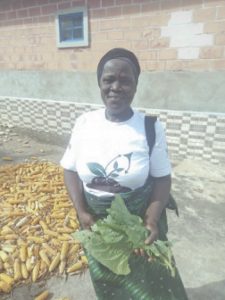
Women farmers are not only witnesses to climate change, but they are also knowledge holders, innovators, and frontline responders who understand the land more intimately than any policy document ever could.
A 2022 World Bank study noted that rural women in Nigeria make up 75 per cent of the agricultural workforce and are integral to production, processing, and marketing; yet, they don’t have significant representation while discussing issues that affect them at a high level.

From North to the middle belt down to the south, the challenges are similar – high cost of farm inputs, scarce labour, low market price, impact of climate change, weak technology, difficult access to finance and general insecurity among others.
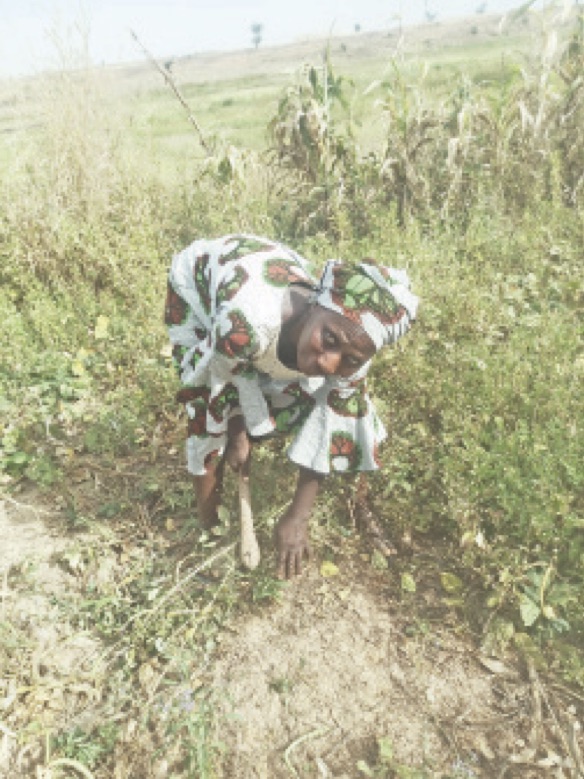
When this correspondent visited some of the women farmers in Chikun Local Government area of Kaduna State right inside their farms, they shared their good and sad moments as they tilled the ground to feed their families and others, thereby helping to ensure food security.
For Mrs Elizabeth David Hassan, the labour crisis is crippling,
You may have the money, but no labour
“One of our biggest challenges now is labour. You may have your money ready to pay workers, but you will not find anyone to do the job.
“Many labourers prefer to focus on their own small farms and, by the time they come to you, it is already too late. And we all know that timing is very important in farming.
“Again, many labourers refuse to go to certain locations because they are afraid. I have a very big farm that I cannot even access.
“The insecurity has pushed me to remain around the small portions of land close to my house,” she decried.
Like many rural farmers, Elizabeth used to plant without weather information until climate shocks became impossible to ignore.
“With the challenges of this year, I have started paying attention to climate information, something I never used to do,” she said.
For Mrs. Martha Banki, who grew into farming from her mother’s backyard garden, shifting fully into organic farming is both a passion and a struggle.
“Truly, it is not easy. Pest and weed control are major challenges. Another difficulty is identifying which soil is best for which crop,” she said.
She uses natural pest-control mixtures, but weeding remains her toughest hurdle.
To her, “Like you rightly said, we really hope research will focus more on weed control. Pest control is manageable, but weed control remains a very serious challenge for those of us committed to organic farming.”
At 69 years old, and 40 of that as a farmer, Mrs Mary Justina Dominic continued to farm with unbroken determination, yet the realities she faces are overwhelming.
“One of the major challenges I face is weed control. Another serious issue is labour. I am about to harvest my maize now, but I am still struggling to find labourers.
“I used to have a big farm along the Abuja Road, but due to insecurity we had to abandon that land since 2014.
“Also, the rain patterns we used to know are no longer the same. Sometimes the rain that should fall over a week falls in one day, washing away the topsoil and our crops. It affects our yield badly,” she decried.
For Mrs Talatu Adamu of Mararaban Rido, climate impacts were directly linked to insecurity and youth vulnerability.
“Climate change is making the young people easy recruits for terrorism because rivers that keep them busy during the dry season are drying up fast, floods, during the rainy season are destroying farms, and our voices are hardly heard,” she lamented.
She blames the overuse of inorganic fertilisers for worsening soil degradation.
Other News
“The more we apply these inorganic fertilisers, the more they destroy the land and the more you need more. It is a capitalist’s scandal.
“Another challenge worth mentioning is that we now have migration of strange black birds with long beaks, drought, wildfire, and unpredictable rainfall.
“In addition to those challenges I mentioned, the cost of production is far above what we sell.
“I’m afraid many farmers will not be able to repay their bank loans,” she hinted.
Mrs Asibi Hassan, the Chairperson of Sabon Gari Peace Women Multipurpose Cooperative, is a symbol of persistence amid adversity.
“I cultivated one hectare of beans, expecting seven to ten bags. But all the beans were stolen.”
For her, the denial of women’s land ownership is a silent but powerful injustice.
What bothered her most was the denial of women to own vast land, especially in rural areas. “If we have access to vast farmland, we will work hard for more yield.”
If she had the opportunity to speak at COP30, she noted: “I would advocate for women’s involvement in mechanised farming.
“A man’s physical strength on the farm can only be matched by a woman who has machines,” she stated.
She also emphasised climate-smart timing, “Women should cultivate crops timely and on good soil to retain moisture, especially for beans when rain stops early.”
Asibi called on the government to partner with grassroots NGOs to reach rural women on climate change and bring back monthly sanitation so waterways can be cleared to prevent floods.
But a local NGO called Women Initiative for Sustainable Environment (WISE), is prioritising helping rural and semi-urban women to understand climate change and how to mitigate it through aggressive tree planting and regenerative agriculture.
In an interview, the Executive Director, WISE, Mrs Olanike Olugboji-Daramola, explained that the organisation’s mission is to transform women from victims of climate change into frontline champions.
According to her, “Beyond raising awareness, WISE is building capacity and putting resources directly in women’s hands.
“We equip them with knowledge, information, and skills to drive climate solutions.”
She highlighted the Regenerative Agriculture Accelerator Programme, where farmers are trained to revive the soil through farm fallowing and adopt climate-friendly organic methods.
“Our Clean Cooking Training and Entrepreneurship Project has produced over 2,000 women entrepreneurs.
“One of the women from our pilot programme is now one of the biggest producers of energy-efficient cook-stoves in Nigeria.
“We discuss live experiences of farmers, their production challenges, their local adaptation strategies, and the practical proposals they offer for improving resilience and productivity,” she added.
She lamented that the COP has been hijacked by big players, who only attend as tourists, thereby neglecting the real people whose livelihoods are being affected daily by the impact of climate change.
Joanne Kobuthi-Kuria, a Kenyan, from the Association for Women’s Rights in Development (AWID), noted that there was no major difference between East Africa and Kaduna’s climate change issues.
“There are many similarities. The women farmers here said that many years ago they could predict the weather, but now they cannot. This unpredictability has had a severe impact on farming.
“Something that surprised me is the issue of insecurity in Kaduna. We do not experience that kind of insecurity in Kenya. Unfortunately, women cannot farm or live without fear,” she said.
On what Kenya is doing to salvage the situation, she said, “There has been a strong push for afforestation and tree-planting after massive deforestation.
“Let me also say that, farmers want to use local seeds, but we are being forced to use GMO seeds. This is part of a capitalist system that enriches a few at the expense of farmers.”
In their mini COP 30, these voices were gathered through the Farmers’ Interactive Cycle, a practical knowledge-sharing approach adopted by the Women Initiative for Sustainable Environment (WISE).