Follow Us on Google
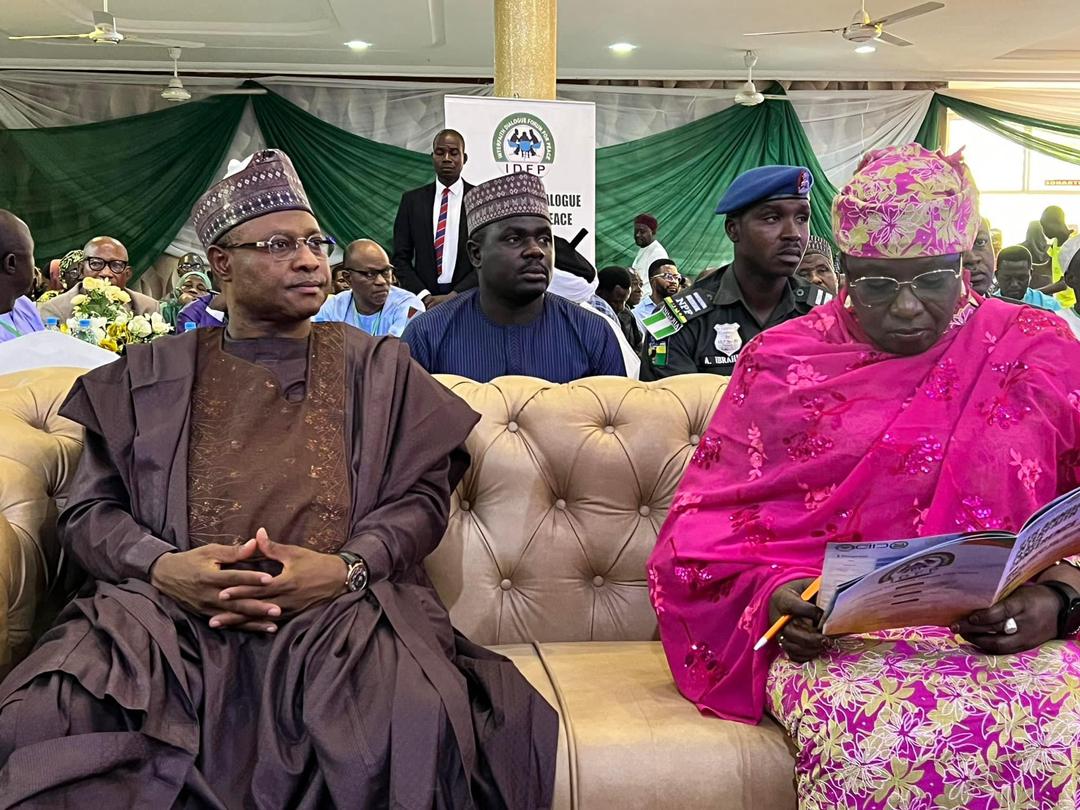
From Noah Ebije, Kaduna
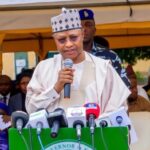
Kaduna State Governor, Uba Sani, the Secretary General of Jama’atu Nasir Islam (JNI), Prof. Khalid Abubakar Aliyu, as well as the President, Christian Association of Nigeria (CAN), Archbishop Daniel C. Okoh, yesterday, bemoaned the increasing rate of hunger and worsening insecurity in the country.
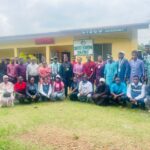
They spoke at the sixth annual inter-faith peace conference in partnership with the Kaduna State Government. While declaring open the event themed, “Tackling Poverty and Insecurity in Nigeria: Our Collective Responsibility,” Governor Sani noted that poverty and insecurity were the biggest challenges facing the country. Ge added that the challenges were the major sources of worry to political leaders in the country.
“The increasing poverty level is a major source of worry for political leaders. Addressing the issue of poverty is critical to restoring the people’s faith in our democracy. We are still struggling to address developmental challenges, especially in the areas of infrastructure, education, health, agriculture, and security.
“This is the time for all stakeholders to join hands to tackle our security and development challenges. We must, however, approach our problems from a position of knowledge. Our approach must be evidence-based. The starting point towards addressing insecurity in Nigeria is to carry out a comprehensive diagnostic review of the causes of insecurity in Nigeria.
“Research has a key role to play in our search for workable solutions to the seemingly intractable challenges of insecurity. If you know the causes of the problem, you will be able to fashion effective and immediate short term and long term strategies towards addressing it. Our actions have been ad-hoc and reactive. They do not flow from research. Our compass is faulty. We must get the correct compass.
“To make progress in the area of security, we must ask the critical questions, and fashion out the appropriate strategies. How can we reset our security architecture in such a way that the proactive instead of reactive approach will be adopted in tackling insecurity in Nigeria? This is where strategic thinking comes in. Security leaders and forces are more adept at tactical thinking. They want to deal with situations quickly and decisively. But, the nature of our current and emerging security challenges requires deeper thinking and planning. You must study the nature of a given environment; the topography, the people, culture, politics and changing dynamics.
“You must consult widely to know the best approach to tackling conflicts. You must engage in scenario building. This will enable you to systematically spell out the key steps to take, as well as counter measures that would equally be taken in case your actions are made ineffectual. There is, therefore, the need to balance tactical thinking with strategic thinking. The right balance can make our security agencies to be more effective in the fight against terrorists, insurgents, separatists, kidnappers, and other criminal elements.
“To overcome insecurity in Nigeria, there is need for effective intelligence gathering and surveillance, so that law enforcement agents can be proactive, and reasonably predict potential crime with near perfect accuracy, rather than being reactive. We must modernise the security agencies with training, intelligence sharing, advanced technology, logistics, motivation and change of orientation by security personnel.”
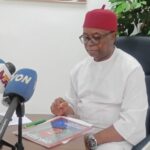
For Prof. Aliyu of JNI, Nigeria is passing through trying times of hunger and starvation, abject poverty, insecurity, breakdown of law and order, dwindling morality, diminishing family values, dilapidation of infrastructure, bad governance and monumental corruption. “All these are indices of looming problems, which result in societal decay and chaos. Something urgent must be done by those in whose hands Allah has entrusted leadership at various levels and capacities to address these myriads of problems. Poverty and insecurity are intertwined social phenomena that pose significant challenges to Nigeria’s development and stability. Despite being endowed with human and natural resources, as well as cultural diversity, Nigeria continues to grapple with high levels of poverty and insecurity, which invariably, affects its steady economic growth as a nation.
“Nigeria’s diverse ethnic and religious landscape has, sometimes, led to conflicts, which further exacerbate poverty and insecurity, as funds that should go for development and health care delivery would be used for rebuilding of state institutions destroyed by ethnic and religious conflicts.
“Religious leaders could play crucial roles in promoting peace and tolerance, thereby reducing tensions that contribute to insecurity. Islam provides a comprehensive framework for addressing poverty and insecurity, emphasising the importance of social justice, honesty, and community support.
“By adhering to these principles and working together in a spirit of cooperation, we can overcome these challenges and build a more prosperous and secure Nigeria for all its citizens.”
The CAN President, who was represented by Bishop Sunday Onuoha, said there was too much hunger in the land and nobody was safe. “We are all responsible for our challenges in this country. Not too long ago, a full loaded warehouse was taken over by hungry Nigerians in Abuja, and the Federal Government issued a statement and said they were criminals. Well, whether they were criminals or whatever you called them, the truth is that they were Nigerians fighting for survival. Nigerian leaders should off load all the warehouses wherever they are because Nigerians are hungry and they need food. If we can solve the problem of hunger, we have solved the problem of insecurity.”