Follow Us on Google
How witchcraft claims fuel torture, banishment, killings in Nigeria
From Jude Chinedu, Enugu
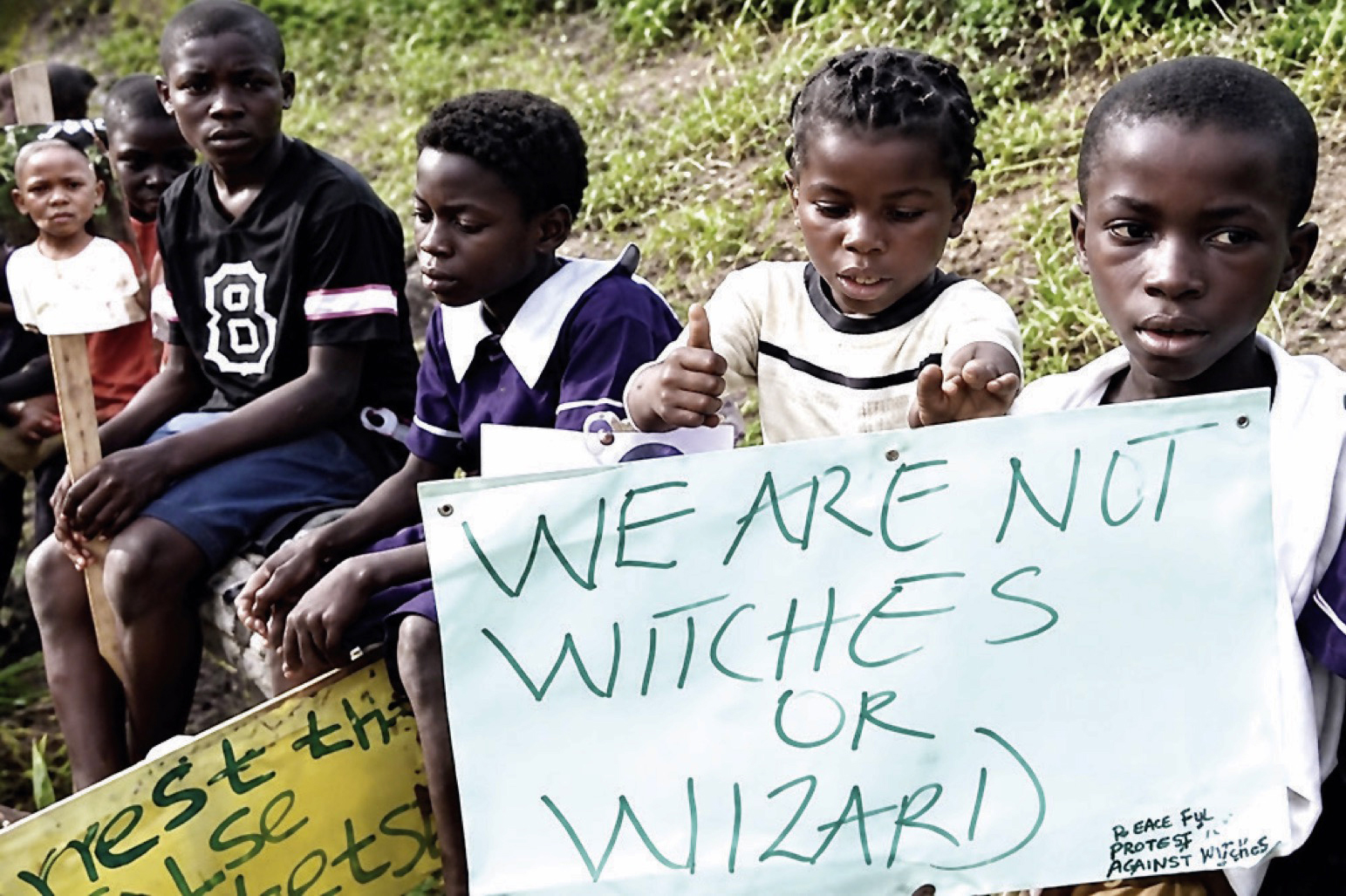
In communities across Nigeria, an accusation of witchcraft can turn an ordinary person into a target of violence almost overnight.
A dream, an illness, a death in the family, a failed business, infertility or simply a suspicion can be enough to trigger an allegation.
For those branded witches, the consequences can be devastating. Some are beaten by mobs, tortured, publicly humiliated, banished from their communities or killed.
The victims are often the most vulnerable – elderly women, children, people living with disabilities and poor or socially isolated members of society who have little power or resources to defend themselves.

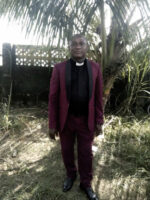
For the Ominyi family of Aguebele community in Ohaukwu Local Government Area of Ebonyi State, the accusation has turned their lives into a prolonged nightmare.
Sunday Ominyi, a 30-year-old farmer, said his father, Thomas Ominyi, was repeatedly assaulted, publicly humiliated and eventually banished from the community after being accused of witchcraft.
The family believes the allegation was fabricated and linked to a dispute over inherited family land.
According to Sunday, the trouble began after the killing of his elder brother during a wake-keep in November 2020.
Rather than seeking justice over the death, he alleged, some relatives turned against their father and accused him of witchcraft.
“My father was attacked with machetes and clubs by youths mobilised by one of our uncles. He nearly died,” Sunday said.
He alleged that the accusations were fuelled by disputes over land inherited from their grandfather.

“My father’s half-brother was unhappy because our grandfather gave him some land. He convinced people that my father had bewitched members of the community,” he said.
Thomas reported the attack to the traditional ruler, who summoned some of the alleged attackers. But the family said the summons was ignored because the person allegedly behind the accusations was influential in the community.
Although the traditional ruler reportedly acknowledged that Thomas had committed no offence, the pressure against him continued until he was eventually banished.
The persecution, Sunday said, has affected the entire family.
“My mother has also become isolated because of the false allegations. She has no friends and lives in constant fear,” he said.
The violence did not end with the banishment of their father.
On July 4, 2026, Sunday said he and his younger brother, Chinedu, were attacked shortly after returning from the farm.
“I saw a crowd beating my younger brother. When I tried to rescue him, the attackers turned on me with knives, bottles and other dangerous objects. We were only saved because some women intervened,” he recalled.
The brothers said they continue to live in fear. They also alleged that although the palace ordered Sunday to receive medical attention after the attack, the family has been left to bear the cost of his hospital treatment.
They are now appealing for justice and protection, insisting that the witchcraft allegation was a cover for a family dispute over property.
The Ominyi family’s experience is not an isolated case.
In January 2025, a man identified as Uromchi Okorocha was allegedly lynched and burnt to death in Enohia Itim village, Afikpo North Local Government Area of Ebonyi State, after local youths accused him of practising witchcraft.
The police subsequently arrested 17 suspects in connection with the killing.
According to the Force Public Relations Officer, ACP Olumuyiwa Adejobi, the youths accused Okorocha of causing the deaths of several people through witchcraft.
The suspects allegedly apprehended him and, instead of handing him over to the authorities, killed and burnt him.
“The suspects mobilised, apprehended the deceased and, instead of handing him over to lawful authorities, took the law into their own hands, becoming judge, jury and executioner,” Adejobi said.
The Inspector-General of Police, Kayode Egbetokun, condemned the killing and urged Nigerians to report suspected criminal activities to the police rather than resort to jungle justice.
But in many cases, the violence does not stop with adults.
Children, including those living with disabilities, have also been branded witches and subjected to horrific abuse.
In Cross River State, a child with Down Syndrome was allegedly branded a witch by a pastor who claimed the child could transform into a snake. The child was reportedly tortured and later died.
Another case involved 16-year-old Deborah Bassey, also living with Down syndrome.
A High Court in Calabar sentenced Pastor Ubong Bassey, 51, to life imprisonment for the murder of his daughter. T on ohe case revealed years of abuse suffered by the teenager after she was allegedly branded a witch.
Deborah attended the Government Special School along Ibom Layout in Calabar and lived with her father and two siblings following the separation of her parents.
Her mother, Uduak Bassey, had left the marriage about a year before Deborah’s death, citing domestic violence. She later became suspicious when her former husband called to inform her that their daughter had died.
When she arrived at the family home, she was told that Deborah’s body had already been taken for burial at Hawkins Cemetery in Calabar.
Suspicious of the circumstances surrounding the death, Uduak and some friends intercepted the vehicle conveying the corpse.
While examining her daughter’s body, she noticed blood flowing from Deborah’s nose.
The Basic Rights Counsel Initiative subsequently petitioned the police to investigate the circumstances of the death.
Investigators interviewed Deborah’s siblings, who alleged that their father had kept her locked in a small, windowless room where she slept and defecated. They also alleged that she was often denied food.
According to their account, Deborah had not eaten the day before her death.
On the day she died, her siblings were reportedly asked to take food to her room. They found her shaking and alerted their father, who entered the room and later announced that she was dead.
Following the petition, Deborah’s body was exhumed and examined by a pathologist from the University of Calabar Teaching Hospital.
The autopsy reportedly revealed a fractured skull, multiple bodily injuries, loss of two teeth and fatal blunt-force trauma.
Although Pastor Bassey pleaded not guilty, the court found him guilty and sentenced him to life imprisonment.
For rights advocates, the judgment was more than justice for one child. It was a warning that an accusation of witchcraft cannot be used to justify the abuse or killing of vulnerable people.
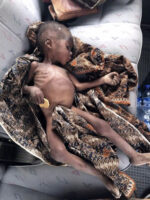
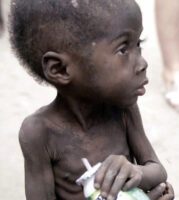
But perhaps one of the most remarkable stories of survival is that of Hope, the Akwa Ibom boy whose image became known around the world after he was rescued in 2016.
Hope was only two years old when Danish aid worker, Anja Ringgren Lovén, found him severely malnourished after he had allegedly been branded a witch by his family and abandoned.
Other News
He had reportedly wandered the streets for months before Lovén received a distress call and led a rescue team, including her husband, David Emmanuel Umem, to save him.
He was taken to the Children’s Education and Development Foundation, popularly known as Land of Hope.
Hope survived. More than survival, he thrived.
In 2025, Lovén announced that Hope had graduated from primary school with one of the highest grades and was preparing to enter secondary school.
She described him as intelligent, artistic, warm, caring and an excellent dancer.
But Hope’s survival also reminded her of the countless children who never get the opportunity to escape.
“Once a child is accused of being a witch, it’s the end,” she said.
Her message was a reminder of the devastating consequences of witchcraft branding on children, particularly those who are poor, disabled or otherwise considered different.
In Enugu State, a widow in Imezi Olo, Ezeagu Local Government Area, also became a victim of a witchcraft-related accusation.
The woman had been paraded by village elders after allegedly being accused of causing the death of her 22-year-old son.
The report claimed that she had confessed to killing her son because he confronted her over the sale of his father’s properties.
But investigations by the Advocacy for Alleged Witches (AfAW) found a different picture. Local sources told the organisation that the young man had died in a motorcycle accident and that the allegations against his mother were false.
The woman was allegedly subjected to “Iti Ajame”, also known as “Iya Omu,” a traditional form of public disgrace and humiliation.
According to the information gathered by AfAW, ash mixed with water was rubbed on her body before she was paraded around the village and allegedly forced to confess to a crime she was said to have committed.
Local sources reportedly linked the allegation to a family property dispute. Sọ, the organisation contacted the police, the National Human Rights Commission and other relevant institutions over the incident.
The case illustrates how witchcraft allegations can sometimes become weapons in disputes over property, family disagreements and longstanding community tensions.
For the victims, however, the consequences are real.
It is against this backdrop that Dr Leo Igwe, a scholar of religious studies and founder of AfAW, has spent years campaigning against witchcraft accusations and the violence associated with them.
Igwe’s doctoral research focused on witchcraft accusations, and during his fieldwork in Ghana, he studied communities commonly referred to as “witch camps.”
He said the description itself was misleading.
Hẹ said: “They are not camps for witches but refuge centres where people accused of witchcraft flee for safety. The term ‘witch camp’ itself reflects the persistence of harmful stereotypes.”
According to Igwe, many accusations originate from dreams, suspicions or claims made by traditional healers and religious leaders.
“Many accusations stem from dreams, suspicions or consultations with traditional healers or religious leaders,” he said.
“Someone dreams that another person is pressing on their chest at night, wakes up convinced that person is a witch, and attacks them. Others are told by a pastor or traditional practitioner that a particular individual is responsible for their suffering, after which the accused is assaulted.”
He said elderly people were particularly vulnerable because symptoms associated with dementia and other age-related conditions are sometimes interpreted as evidence of witchcraft.
“Many victims are elderly women suffering from dementia or other age-related conditions. Instead of recognising these as medical issues, communities often interpret confusion, memory loss or unusual behaviour as evidence of witchcraft,” Igwe said.
“They are beaten, humiliated or even killed.”
Igwe founded AfAW in 2021 to defend people accused of witchcraft and challenge abuses committed against them.
He said the organisation’s work is often misunderstood because some people assume that defending alleged witches means supporting witchcraft.
“Some assume we support witchcraft simply because we defend those accused. That is not the case. We are defending human beings whose rights are being violated,” he said.
Asked whether AfAW believes witches exist, Igwe said the organisation’s concern was not to settle a theological or metaphysical argument.
“There are different ways the word witch is understood,” he explained.
According to him, the word has a different historical meaning in Western societies, where some people identify themselves as witches and regard witchcraft as a religious or spiritual tradition.
“But that is completely different from the way the word is used in many African communities.
“In many African communities, people are accused of possessing supernatural powers that enable them to cause illness, death, poverty, infertility or other misfortunes. These accusations are usually made without evidence and often rely on dreams, rumours, fear or claims by self-styled prophets and traditional healers,” he said.
For Igwe, the central issue is not whether people believe in witchcraft, but what happens when that belief is used to justify violence.
“Our concern is the persecution of people based on unverified accusations. Every person is entitled to the presumption of innocence and to protection under the law,” he said.
“Nobody should be beaten, tortured, banished or killed because someone claims to have dreamt about them or because a religious leader or traditional practitioner pointed a finger at them.”
The organisation’s interventions, he said, go beyond awareness campaigns.
AfAW intervenes in cases, works with the police, supports legal action and helps victims navigate the justice system.
In one case, Igwe said, a victim who had previously been attacked was assaulted again by vigilante members despite an ongoing court case against his attackers.
“We have spent close to one million naira pursuing justice in that matter, including supporting police investigations into an interior community in Ebonyi State,” he said.
The victims, he noted, are usually disadvantaged.
“Many victims do not know their legal rights or even how to access the police or the courts. Our role is to empower them, provide legal support and ensure they are not abandoned.”
He also believes traditional rulers have an important role to play in ending witch hunts.
This year’s World Day Against Witch Hunts campaign, observed on August 10, focuses on the role of traditional rulers under the theme, “Chiefs and Ending Witch Hunts in Communities”.
Igwe said chiefs are often the first authority people approach when witchcraft allegations arise, particularly in rural communities.
“Traditional rulers have enormous influence. If they publicly reject witchcraft accusations and insist on due process, they can significantly reduce violence in their communities,” he said.
He acknowledged that some chiefs have reinforced witchcraft allegations in the name of culture and tradition, sometimes presiding over community trials or supporting the banishment of accused persons.
But he insisted that culture should never be an excuse for persecution.
“Our message is simple: tradition should never be used to justify injustice. African culture is rooted in compassion, respect for elders and communal support — not in persecuting vulnerable people because they are old, sick or different.”
The media, Igwe added, also has a responsibility. He warned that sensational reporting can reinforce the beliefs that fuel witchcraft-related violence.
He cited headlines such as “witch crashes from tree” and “bird woman caught” as examples of reporting that presents allegations as facts.
“Journalists should report verified facts, not superstitions or rumours designed merely to attract attention,” he said.
Responsible reporting, he argued, can expose abuse, encourage victims to seek help and put pressure on authorities to act.
For victims of witchcraft accusations, the battle is not about proving or disproving the supernatural; it is about survival, dignity and justice — an elderly woman needing medical care instead of a beating, a child needing protection instead of a witchcraft label, and families like the Ominyis seeking the safety of the law instead of the brutality of mob action.