Follow Us on Google

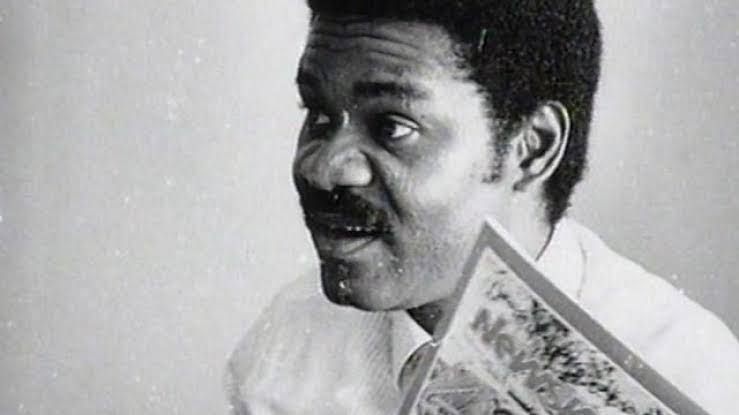
Forty years after the assassination of the founding Editor-In-Chief of Newswatch Magazine, Dele Giwa, the Nigerian Guild of Editors (NGE) has called for justice for the renowned journalist, urging relevant authorities to revisit the unresolved case. Giwa, co-founder of Newswatch magazine, was killed by a parcel bomb delivered to his home on October 19, 1986. He was 39 years old at the time of his death. Four decades after the incident, no one has been brought to justice for his murder.
NGE made the demand in a statement on last week to mark the 40th anniversary of Giwa’s death. The NGE described the unresolved killing as a painful test of Nigeria’s commitment to press freedom, public accountability and the rule of law. The Guild said the case should not be allowed to disappear into history.
“Forty years is a long time to wait for justice. It is an unconscionably long time for a nation that claims to uphold the rule of law,” it said. The Editors urged relevant authorities to examine credible evidence that might still be available, preserve relevant records and pursue every lawful avenue to establish the truth about Giwa’s death.
However, the Guild cautioned against trial by the media, stressing that its demand was for a credible investigation rather than the condemnation of anyone without evidence. The NGE described Giwa as a journalist of uncommon audacity, intellectual rigour and literary elegance, whose work demonstrated that Nigerian journalism could interrogate those in power while maintaining high standards of professional excellence.
The call by the NGE is in order. Nigeria has a worrisome history of violence against the Press, with dozens of reporters losing their lives under mysterious, politically charged, or highly controversial circumstances. The unresolved killings of journalists remain a central threat to press freedom and public accountability in the country.
Apart from Giwa, there were other victims of undeserved attacks against media practitioners in the country. The only difference was the novel and bizarre manner of his death at the time. While data from the Centre for Journalism Innovation and Development (CJID) lists nearly 30 journalists killed since 1986, the country had witnessed instances of brutal attacks and assassinations of journalists since then. Among these was the disappearance of Bagauda Kaltho of The News Magazine, between 1996 and early 1997. Suspicions were high at the time that he might have been murdered. There were other journalists killed in controversial circumstances.
In 1998, a senior political correspondent for The Guardian newspaper, Tunde Oladepo was shot dead by five masked gunmen who broke into his home in front of his wife and children. In 2006, the chairman of the editorial board for ThisDay newspaper, Godwin Agbroko, was shot dead in his car in Lagos. Three years later, Bayo Ohu, an Assistant News Editor and political reporter for The Guardian, was shot dead at his front door by gunmen as he prepared for a church service. Suspects arrested in connection with the murder were later acquitted, leaving his murder unresolved. In 2010, Edo Sule Ugbagwu, a reporter for The Nation, was tracked and gunned down at his home just outside Lagos.
Some journalists were killed in crossfires and protests. In 2012, Enenche Akogwu, a 31-year-old camera operator and reporter for Channels TV, was shot dead while covering the deadly bomb blasts by Boko Haram insurgents in Kano. In 2020, Alex Ogbu, an editor for the independent outlet Regent Africa Times, was killed while covering a protest by the Islamic Movement of Nigeria (IMN) in Abuja. Eyewitnesses reported he was hit by a live bullet fired by police dispersing the crowd.
Apart from media practitioners, other Nigerians had been killed in questionable manners and their killers not brought to justice. On December 23, 2001, former Minister of Justice and erstwhile Oyo State governor, Chief Bola Ige, was shot dead at his home in Ibadan. Two years later, 2003, Marshal Sokari Harry, former National Vice-chairman (South-South) of the then All Nigeria People’s Party (ANPP) was assassinated in Abuja. On February 6, 2004, National Vice Chairman (South-South) of the Peoples Democratic Party (PDP) and a strong advocate for the Niger Delta region resource control and oil royalties, Aminasoari Kala (A.K.) Dikibo, was assassinated on his way to an official meeting. In Lagos, a strong contender for the PDP governorship ticket, Anthony Olufunsho Williams, was killed on July 27, 2006, at age 58. Earlier on October 6, 1995, accomplished businessman and civil society activist, Alfred Rewane, was murdered at his residence in Ikeja, Lagos.
The unresolved murders do not speak well of the nation as one guided by rule of law. The delay in investigating the cases and bringing the perpetrators to justice is equally an indictment on Nigeria’s criminal justice system and will continue to haunt the country. They reinforce the maxim that justice delayed is justice denied. The Federal Government should rise to the occasion and resolve the heinous murders. There is need for justice for Dele Giwa and other victims of unresolved murders.