 Follow Us on Google

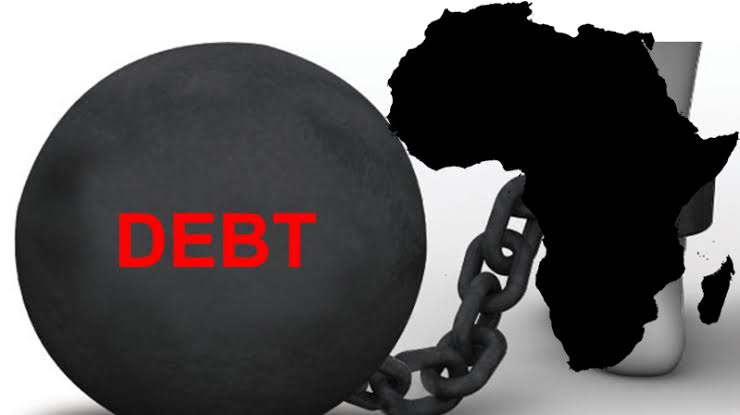
There are concerns about the Federal Government’s ability to fund critical infrastructure and other essential services. This is because Nigeria’s debt servicing is fast becoming an albatross. According to the latest report by the Debt Management Office (DMO), the official custodian of the country’s public debt, about three-quarters of government’s revenue will be spent on debt-servicing by 2030, representing 72 per cent of total income generated. The worrying disclosure, contained in the DMO’s 2024 Debt Sustainability Report, also showed that, under the baseline scenario, the amount to be spent on debt servicing may reach an all-time high of 97.3 per cent if the economy deteriorates further.
This has exceeded the recommended threshold of 50 per cent. This comes amid recent fresh borrowing requests by President Bola Tinubu, which the National Assembly has yet to approve. The projection on debt repayment by the DMO means that, for every N100 earned by the government, about N72 could go into paying interest and repaying borrowed funds from both domestic and external lenders, leaving only N28 for other obligations. This appears to be the worst-case scenario that Nigeria would be in for decades if there is no immediate moratorium on borrowing.
Besides, the DMO has projected that Nigeria’s debt-to-revenue ratio will rise to 72 per cent in the next four years. This will put the economy in a cliffhanger and mortgage the future of millions of Nigerians. DMO projections show that the debt ratio, which stood at 60.6 per cent in 2024 dropped to 45 per cent in 2025, before rising again to 51 per cent in the first half of 2026. It is expected to increase further to 57 per cent in 2027, 57.4 per cent in 2028, and 67.53 per cent in 2029 before reaching 72 per cent in 2030.
This is attributed to increasing pressure in debt servicing costs growing faster than government revenues. With the present depreciation of the naira against major foreign currencies such as the US dollar and the British pounds/Euros, Nigeria’s public debt and servicing costs would reach unacceptable proportions, and repayment would be unsustainable. The DMO report is scary. But it reflects the unfortunate reality of Nigeria’s debt servicing situation. And contrary to president Tinubu’s claims that Nigeria is out of the “emergency ward”, the economic reforms have not yielded the expected results.
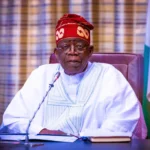
The grim debt servicing picture points to an economy still in crisis. It is, therefore, not surprising why many financial analysts and critics of the government, including opposition leaders have strongly condemned Tinubu’s recent external borrowing requests from the World Bank. It points to the administration’s wrong fiscal approach and unsustainable borrowing binge. For instance, on November 4, President Tinubu asked the Senate to approve a $7.7 billion (N10.79 trillion) external loan from the World Bank to finance the 2026 Budget deficit.
Other News
The loan request replaced a much earlier, larger $20.5 billion and €1.045 billion supplementary borrowing plan he submitted and later withdrew from the Senate. There is also a fresh World Bank negotiation and another separate $500 millio World Bank facility reportedly scheduled for consideration on May 25, 2027 – just some days before the presidential inauguration.
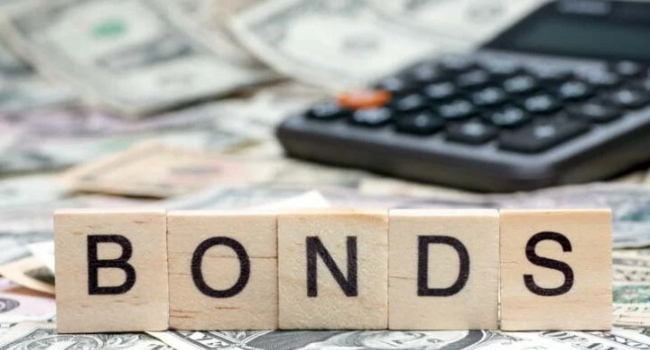
This will pile pressure on Nigeria’s debt servicing. Government must place a moratorium on fresh loans and use borrowed funds to revamp the economy towards growth. There must be an end to mindless borrowing. According to data from DMO and other reports tracking Tinubu’s administration since inauguration in May 2023, Nigeria’s total public debt has reached approximately N166.79 trillion (about $120.9 billion) due to currency fluctuation and new borrowings as of June, 2026 from N87.38 trillion in June, 2023. External debt reached $54.5 billion (up from $43.6 billion in June, 2023). Domestic debt hit N66.4 trillion ($66.4 billion), including loan bonds and treasury bills.
A significant part of the headline rise in total public debt includes legacy obligations such as the securitization of roughly N22.7 trillion in CBN “Ways & Means”, that is, overdrafts inherited from previous administrations- alongside the impacts of the Naira float early in the administration’s tenure. In the last 3 years and 4 months of the administration, Tinubu has secured over $11.6billion World Bank Group approvals, for health, education and job acceleration initiatives.
The latest loan request awaiting the Senate’s nod is packaged to target climate change, early childhood development and household prosperity. Although the presidency has pushed back on the criticism trailing the borrowing spree, the DMO report is not good for the economy. It is most unfortunate and disturbing that the National Assembly has failed to halt the borrowing spree even when the potential consequences of debt overhang stare it in the face.
The interest of the country should supersede personal or group interests. It bears repeating that no country survives for long on unrestrained borrowing. The government should exploit potential areas of revenue such as agriculture, tourism, maritime and solid minerals rather than the present import dependence that is taking a sizeable chunk of our external reserves.