Follow Us on Google
From Bimbola Oyesola
The Nigeria Labour Congress (NLC) has charged the judiciary to defend workers against exploitation in a rapidly changing world of work.
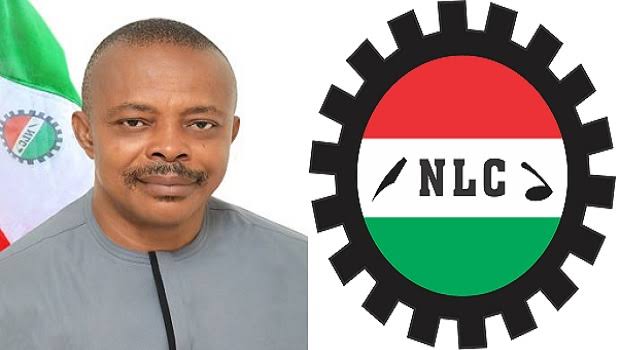
President of the Nigeria Labour Congress (NLC), Joe Ajaero, delivering his goodwill message at the fourth International Labour Adjudication & Arbitration Forum (I-LAAF), in Abuja, declared that labour justice in Nigeria “sadly bends towards employers”
The forum, organized by the Nigeria Employers’ Consultative Association (NECA) at the weekend, brought together representatives of labour, employers, government officials and members of the judiciary under the theme “Access to Labour Justice in a Rapidly Changing World of Work.”
Addressing the gathering, Ajaero said he brought “warm greetings from the millions of workers in factories, fields, offices and streets whose sweat builds our nation but whose rights are too often trampled upon.” He added pointedly that workers are the ones who “create wealth and generate the surplus values which get appropriated as profits.”
“We must be clear,” Ajaero declared. “In a rapidly changing world of work increasingly defined by exploitation, precarious gigs, union-busting and a relentless race to the bottom by capital, the very concept of justice is always in contestation.”
He warned that in nations like Nigeria, “labour justice sadly bends towards the employers, whether public or private,” stressing that the rhetoric of “justice for all actors” often rings hollow for workers. “When the scales are perpetually tilted against us, such phrases become pacifying slogans,” he said.
According to him, workers remain “constantly at the receiving end of gross injustice,” both in the workplace and in wider society. “True labour justice is not a gift from the powerful. It is not charity. It is a right wrested through struggle,” Ajaero emphasized.
Quoting Afrobeat legend Fela Kuti, he reminded participants: “As Fela would say, ‘They wan give us human right… human rights na my property.’ Workers’ rights are human rights, and they are not negotiable.”
Other News
The NLC president urged NECA to ensure that its members are fully conversant with workers’ rights and that employees are equally educated about them. “Ignorance is one of the greatest impediments to access to labour justice,” he said. “Well-informed workplace actors create rule-based environments that guarantee equity and harmony.”
Turning to the judiciary and arbitrators present, Ajaero said justice must not be “blind in the wrong way.” “The judiciary must have 20/20 vision for justice. It must clearly see the power imbalance between the lone worker and the conglomerate,” he argued.
He cautioned that when courts rely on “delay, technicalities and judgments that punish workers for organizing,” they breed distrust. “Workers are forced to ask: Is this temple of justice also a tool of our oppressors?” he queried.
Ajaero rejected criticism of what some describe as “shortcuts” taken by labour. “What you call shortcuts, we call direct action, mass mobilization and the legitimate collective power of the working class,” he said. “When the doors of justice are barred, workers will find, and have always found, their own door.”
He reminded the forum that historic labour victories were achieved not merely through court rulings but through collective struggle. “From the eight-hour day to safety standards, history shows that rights are written in the records of strikes, protests and steadfast solidarity,” he noted.
Calling on judges and arbitrators to breathe life into international conventions, Ajaero urged them to uphold principles enshrined in ILO Conventions 87 and 98 on Freedom of Association and Collective Bargaining. “Your gavels must defend the weak against the strong,” he charged, adding that the right to strike must be treated as “fundamental and inalienable.”
He proposed parity in judicial interventions, arguing that if courts can restrain workers from striking, they should also be willing to order employers to retain workers whose dismissals are being contested in court. “Justice must not operate one-sidedly,” he said.
To workers across the country—from Port Harcourt to Kaura-Namoda, Enugu, Lagos and Abuja—Ajaero declared that their struggles are interconnected. “Capital is global; our resistance must be too. Our solidarity is our strength,” he affirmed.
Addressing NECA directly, he described the relationship between labour and employers as an “adversarial yet necessary dance of industrial relations.” However, he warned that “a system where workers have no faith in justice is a system primed for crisis. Unresolved grievances become strikes. Suppressed rights become unrest.”
In closing, the NLC president commended NECA for consistently organizing the forum and reaffirmed labour’s commitment to constructive engagement. “Let this not be a mere talk shop,” Ajaero concluded. “Let us build a justice system that workers can approach not with trepidation, but with confidence that their rights as creators of wealth will be fiercely protected.”