Follow Us on Google
By Doris Obinna
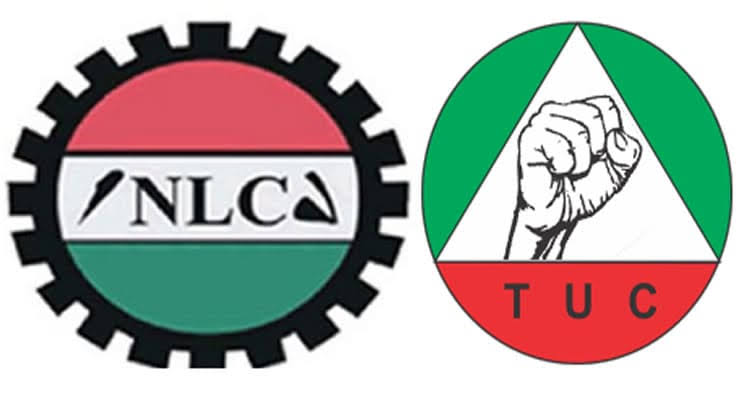
The Joint Health Sector Unions (JOHESU) has issued a note of caution in response to a joint ultimatum by the Nigeria Labour Congress (NLC) and the Trade Union Congress (TUC) to the Federal Ministry of Health (FMoH), accusing elements within the medical profession of distorting facts around salary relativity in the health sector.
In a statement reacting to a recent press release by the National Association of Medical and Dental Academics (NAMDA), JOHESU said it was concerned by what it described as a renewed attempt to undermine long-standing demands for equity and fairness in health sector remuneration.
JOHESU, in a statement issued on Monday and signed by its National Chairman, Kabiru Minjibir, and National Secretary, Martin Egbanubi, reiterated that NAMDA is one of the two unions approved by the Federal Ministry of Labour and Employment during the final stages of the Buhari administration in 2023.
JOHESU faulted NAMDA’s claim that labour centres should have consulted it or the Nigerian Medical Association (NMA) before issuing an ultimatum to the FMoH insisting that the NLC and the TUC are empowered to take positions on workers’ welfare without seeking approval from professional bodies.
Other News
JOHESU rejected NAMDA’s opposition to parity in health sector pay, arguing that existing public service structures already favour physicians through higher entry points and grading. The union maintained that the 2014 adjustment of the Consolidated Medical Salary Structure (CONMESS) was based on a Memorandum of Understanding (MoU) between the Federal Government and the NMA, not a binding collective bargaining agreement, and therefore cannot apply to JOHESU members.
It said the continued reliance on that 2014 agreement to justify disparities between CONMESS and the Consolidated Health Salary Structure (CONHESS) including a relativity circular issued in July 2025, was procedurally flawed. JOHESU pointed instead to its 2009 collective bargaining agreement with the Federal Government, which it said recognises parity as the benchmark for salary adjustments.
The union also dismissed historical arguments on salary differentials, noting that the health sector has expanded beyond physicians and pharmacists to include many highly trained professionals. It stressed that medical officers enter the public service on Grade Level 13, while other health workers enter at lower levels and may take up to 16 years to reach the same grade, yet remain disadvantaged by additional pay ratios favouring physicians.
JOHESU argued that CONMESS remains significantly higher than CONHESS in both structure and earnings and accused NAMDA of exaggerating claims of imbalance. It disclosed that negotiations on the matter were close to resolution in December 2025 before being reopened.
The union challenged NAMDA to publicly present salary figures to support its claims and called on the Federal Government to immediately adjust CONHESS as a first step toward addressing what it described as longstanding injustice in the health sector.