Follow Us on Google
By Abdulkabir Muhammed
A professor of refugee and migration studies at the Lagos State University, Olawale Iskil Lawal, has revealed ways in which illegal migrants can regularise their stays in developed countries.
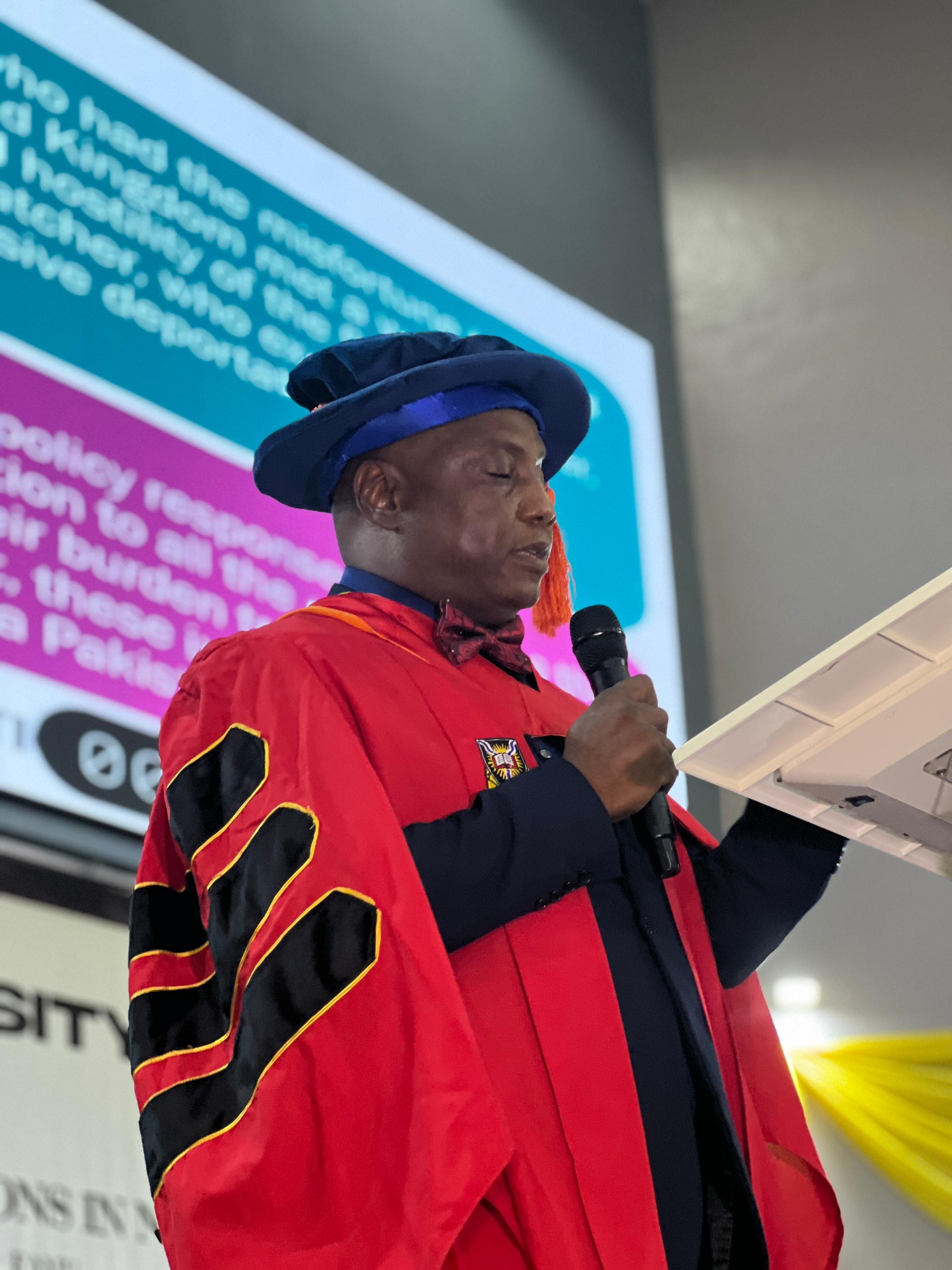
Speaking at the 110th Inaugural Lecture of the university, held at the Buba Marwa Auditorium on August 26, 2025, the migration scholar noted that the policy implementation of some developed countries allows for the stay of illegal and/or irregular migrants.
Lawal noted that some illegal migrants leverage the laxity in the policies of some host countries to apply for protection of their illegal stay.
“Some states allow for time incubation before declaring a migrant as illegal or legal. This is because, regardless of how an individual enters a state, some countries have implemented policies that allow such an individual to regularise his stay and even apply for legal protection of his erstwhile illegal stay,” Lawal said.
Other News
The university don attributed the anomaly to the legalisation process of countries, noting that the delay in the determination of migrants’ status as prescribed by the constitution of some countries creates an avenue for an illegal immigrant to regularise his stay in such countries.
“In the same vein, an illegal migrant originally can still regularise his stay in what is called the legalisation process, in the long run. This simply shows the crucial role of time in the determination of migrant status in international migration studies,” he cautioned.
Contexualising the Nigerian emigration trend, the refugee and migration scholar argued that the exodus by Nigerians to developed countries dates back to the colonial period. He noted that, at independence, Nigerians were travelling to the United Kingdom based on recommendations and referral letters from prominent people. But due to the unprecedented surge in emigration to the UK in the 1980s, Nigerians faced mass deportation by the UK Prime Minister, Margaret Thatcher.
According to him, “the policy response to this was the visa imposition to all the countries that emptied their burden to the British government including Nigeria, Ghana, India, Pakistan, and Bangladesh.”