Follow Us on Google
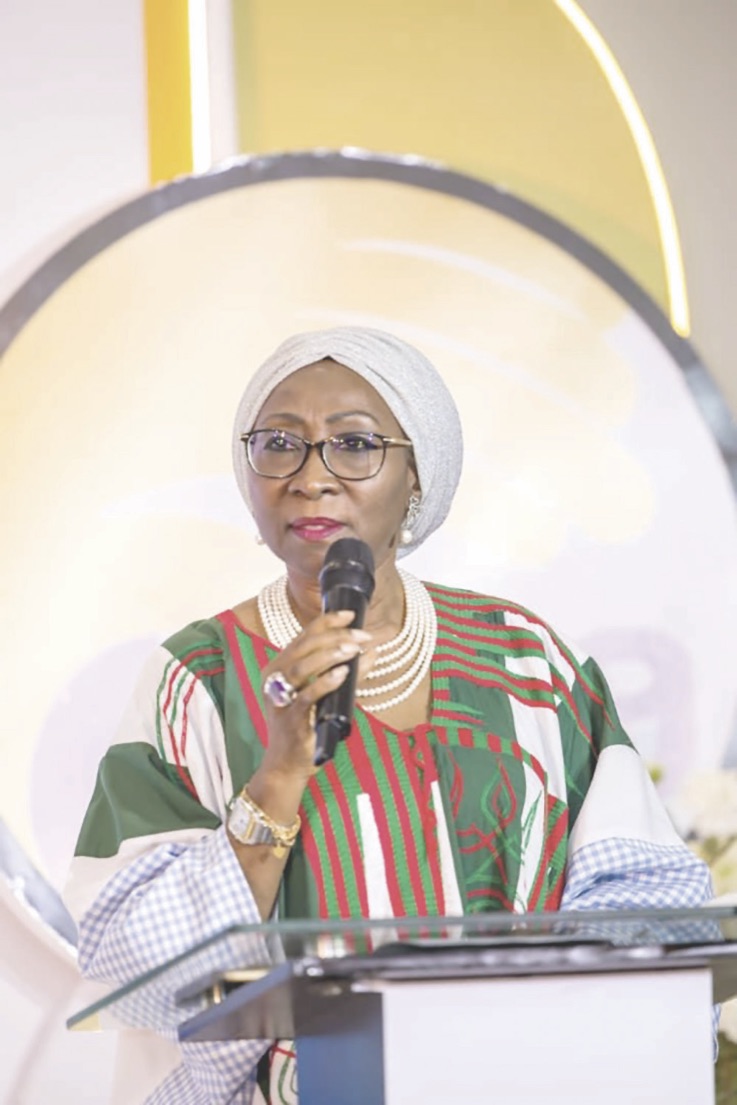
By Henry Uche
Mrs. Amina Oyagbola is the First Vice President, Chartered Institute of Directors Nigeria (CIoD), a legal practitioner, global HR thought leader, corporate governance professional, business advisor, and gender advocate, the Managing Consultant of AKMS Consulting Limited, Senior Partner at Oyagbola Chambers, and Founder of Women in Successful Careers (WISCAR).
In this interview with Daily Sun, she spoke on the notable progress made in developing policies and raising awareness on gender equality and a significant gap that still exists between policy intentions and the everyday realities faced by women, hence the need for advocacy that delivers measurable outcomes in empowerment, safety, education, and leadership opportunities for women and girls, among other issues affecting women.
The theme for this year’s International Women’s Day is “Rights. Justice. Action. For ALL Women and Girls”.
In the Nigerian context, how far have we come?
Nigeria has made important progress in policy development and awareness. However, the gap between policy intention and the lived reality of women remains significant. Recent Afrobarometer findings show that while about half of Nigerians support women having the same chance as men to be elected into public office, nearly the same proportion still believe men make better political leaders. This illustrates that the challenge is not only structural but also perceptual. True advocacy must therefore move beyond dialogue and rhetoric to measurable outcomes, ensuring that rights translate into economic empowerment, safety, education, and leadership opportunities for women and girls across all regions. Inclusive leadership is not a social aspiration—it is a governance and economic performance imperative.
What structural or cultural barriers still limit women in corporate leadership?
Persistent barriers include unconscious bias, institutional and structural processes, limited access to leadership networks, unequal mentorship and sponsorship opportunities, and cultural expectations around caregiving responsibilities.
Organizations must move beyond symbolic inclusion by embedding diversity into leadership pipelines, succession planning, performance metrics, and board composition strategies. Sign on to the UN Women Empowerment Principles (WEPs) and develop a gender agenda. Inclusion must be intentional, measurable, and sustained. My strong commitment is to ethical leadership, institutional strengthening, capacity building, and advancing inclusive governance across both the public and private sectors. I am passionate about building sustainable institutions and creating pathways for women and young professionals to lead with competence, integrity, and impact.
What is the impact of female CIoD members spread across different sectors of the country?
Female members of CIoD are making meaningful contributions across finance, law, public administration, energy, technology, manufacturing, and the development sector. Their presence strengthens governance culture, enhances ethical decision-making, and promotes balanced leadership perspectives. Women directors often bring collaborative leadership styles, long-term strategic thinking, and heightened accountability. These qualities contribute to stronger institutions and improved governance outcomes across sectors. “Diversity in leadership is not about optics; it strengthens board effectiveness, improves decision-making, and drives institutional resilience.”
You rose to the top in a highly competitive corporate environment. What defining moments shaped your leadership philosophy?
My leadership philosophy has been shaped by experiences that required navigating complex institutional environments while maintaining integrity and professionalism. It has also been shaped by exposure to leadership and capacity building programmes such as the Africa Leadership Initiative – West Africa programme and the amazing programmes deployed by the CIoD and WISCAR. I learned early that leadership is not about authority but stewardship. Moments where collaboration achieved more than hierarchy reinforced my belief that sustainable leadership must be anchored on accountability, empathy, competence, service to others and continuous learning.
There is growing evidence that gender-diverse leadership improves financial performance. How does inclusion translate into results?
Inclusive leadership improves decision quality, strengthens risk management, drives innovation, and enhances stakeholder trust.
Diverse boards challenge assumptions, broaden market understanding, and strengthen corporate reputation. Organizations that embrace diversity tend to demonstrate stronger resilience and long-term value creation because their leadership reflects the markets and societies they serve.
From a governance perspective, diversity strengthens board effectiveness, strategic oversight, and risk management, all of which ultimately translate into better institutional performance.
What strategies are you implementing to groom the next generation of female executives and Directors?
Through governance education, mentorship platforms, leadership development programmes, and advocacy within CIoD, its Women’s Group and other professional platforms, we are intentionally ensuring readiness by preparing women for executive and board leadership. Exposure, mentorship, and access to governance education remain critical. Our focus at CIoD is on equipping Directors (male and female) and aspiring Directors not just to participate, but to lead effectively and responsibly at executive and board levels. CIoD membership should be a pre- requisite in executive searches for Directors and Board nominations.
What role should corporate leaders play in influencing national conversations on gender equity?
Corporate leaders must move from observers to active influencers that institute gender programmes as a priority and support their effective deployment in the organisation. Leaders shape employment practices, investment priorities, and policy dialogue.
By adopting inclusive hiring practices, supporting women entrepreneurs, investing in skills development, and advocating for evidence-based policy reforms, corporate leaders become catalysts for national economic inclusion.
How do you balance political expectations and accountability in public service?
Other News
Balancing these interests requires clarity of purpose and adherence to strong governance principles.
Transparency, data-driven decision-making, stakeholder engagement, and respect for institutional processes help maintain credibility. Leadership in public service demands patience, collaboration, and an unwavering commitment to public value above personal or political considerations.
What policy reforms are necessary to accelerate women’s participation in public decision-making?
Key reforms include enforcing gender representation targets, such as the 35% affirmative action benchmark, strengthening access to political financing for women, developing supportive care policies, institutionalizing leadership and mentorship programmes, and embedding gender impact assessments in policymaking.
These reforms are particularly important because women remain significantly underrepresented in Nigeria’s political leadership. Women currently occupy only about 4% of seats in the National Assembly, highlighting the scale of the participation gap. Sustainable change occurs when participation becomes systemic rather than discretionary.
How can governance standards translate into measurable outcomes for women and girls?
Governance principles such as transparency, performance measurement, risk oversight, and accountability can significantly strengthen public policy implementation. Applying these standards ensures that programmes designed for women and girls move from intention to measurable impact and that resource deliver defined social outcomes.
How can compliance and enforcement mechanisms be strengthened?
We must institutionalize monitoring frameworks supported by reliable data, independent oversight, and transparent performance reporting.
Accountability improves when institutions measure outcomes rather than activities, and when leadership is held responsible for measurable progress.
How can government leverage private-sector partnerships to accelerate inclusion?
Government and the private sector must collaborate on skills development, digital inclusion, entrepreneurship financing, and innovation ecosystems. Public-private partnerships can scale opportunities faster, expand employment, and integrate more women into high-growth sectors of the economy.
How can the urban-rural gender gap be addressed?
Key priorities include expanding digital infrastructure, strengthening mobile financial services, improving access to education, expanding legal aid, and supporting community-based empowerment programmes. True inclusion requires deliberate policies that reach rural women who often face compounded economic and social disadvantages.
What systemic barriers still limit women’s ascent?
Key barriers include limited mentorship and sponsorship opportunities, structural bias, unequal economic access, and insufficient leadership exposure.
Sustainable policy solutions must therefore focus on strengthening leadership pipelines, expanding mentorship access, and ensuring equitable institutional practices.
Five years from now, what indicators will prove real transformation?
Progress should be measured through increased female representation in executive and governance roles, improved economic participation rates, stronger access to education and finance, measurable reductions in gender inequalities, and demonstrable institutional accountability outcomes. Equally important will be a shift in societal perceptions about women’s leadership, because sustainable transformation requires both structural reform and cultural change.
Your message to women as the world marks International Women’s Day
To every woman and girl: your voice matters, your leadership is needed, and your potential is limitless. Invest in your growth, build competence, support other women, and never underestimate the power of preparation and resilience.
When women rise, institutions strengthen, economies grow, and societies become more just and prosperous. “When women participate fully in leadership and the economy, institutions perform better and nations grow stronger.”