Follow Us on Google
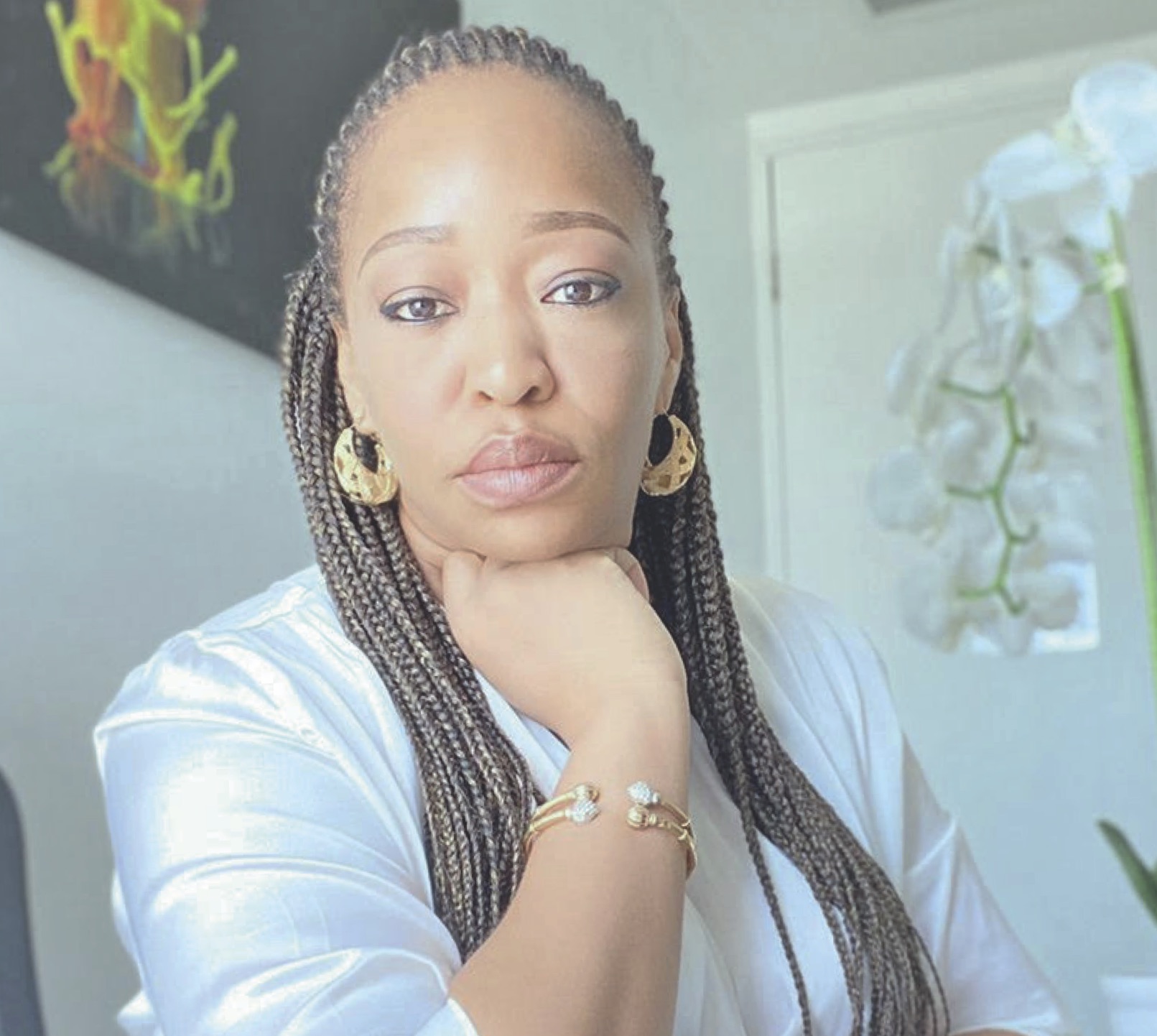
By Christy Anyanwu
Ifemena Oji became the 69th president of the International Women’s Society (IWS) Nigeria in March 2026. Beyond corporate roles, Ify, as she is popularly known, served on the 2022 Anambra State Government Transition Committee (Economic Transformation Task Team), focusing on inclusive growth, regional integration and economic growth poles, as well as the 2023 Enugu State Government Transition Committee (Investment, Trade and Enterprise Development). She has also participated in Federal Government stakeholders’ roundtables on economic reform.
She holds a law degree from the University of Bristol and is a barrister and solicitor of the Supreme Court of Nigeria.
As the world celebrates International Women’s Day tomorrow, March 8, she spoke with Saturday Sun about her new assignment in IWS and other issues concerning women.
What inspired you to take on the role of president of IWS and what do you hope to achieve in terms of how women are perceived, especially in leadership?
There’s so much to be done in Nigeria in terms of how we perceive women, especially in leadership roles. Yes, a lot has been done so far. We have women in different sectors that are doing amazing things. But more than before, there’s so much more to be done. I think just the general perception that the more we do, the more volume in terms of how we engage as women will, hopefully, change that perception of women as less than or not able to do as much as men.
What do you hope to achieve in your tenure?
We hope to build momentum in this regard. We are doing so much already as women. Women have more leadership roles than ever before, in terms of COOs, and for corporate entities that are larger than SMEs.
For SMEs, the figures are staggering. At this point, we are about 60 per cent, up from about 55 per cent a decade ago. So, that means more women want to own their own businesses. They don’t want to be working in a typical corporate structure, which is fine, but it also tells you that women who decide they want to go on the corporate ladder are climbing and gaining heights within their own individual fields.
In this one-year tenure, how do you plan to address the challenges facing women and girls in Nigeria?
I think the only thing to do is let us be tactical, let us not let us not bite off more than we can chew. Let us be very smart and strategic. Let us try and aim for global engagement. Right now, we have partnerships, NGOs that are willing to engage with us across Africa.
There’s global engagement if we can connect with our sisters in Southern Africa, in Eastern Africa and even in Saharan Africa and also within the rest of West Africa and with similar-minded women and just engage them in terms of having that spread and reach around board readiness, about market readiness.
Right now, we’re in the age of AFCFTA, that’s the African Continental Free Trade Agreement. Having those partnerships is key to getting us to the next level, what women can attain in Nigeria and, of course, the rest of Africa.
But how do you respond to the criticism that women’s organisations are not doing enough to drive change in society?
What are these women organisations for? If you as a woman can find a way to better other women within the organisation, the chances of us propagating each woman in another part of the world and that part of the sector in their offices are higher. So, even if you say all women are not doing enough within the organisation, think about it: if you’re empowering one woman, you still have to go to her house. If she gets empowered in her house, she has enough time to talk to her maid, to talk to her daughter and talk to other people around her and change their livelihoods just because she’s financially more engaged. At the end of the day, all of these add up and you see changes on an annual basis. The data is there and we can actually pull up that data for you.
But I am not naive in terms of women wanting to have their own limelight and spotlight. I still believe in the purity of the cause and knowing that women can get themselves a better financial position and a sustainable place to grow and nurture women in leadership and women empowerment.
What advice would you give young Nigerian ladies aspiring to leadership positions, especially in politics?
You know 2027 is around the corner. There are many women out there, me included, that really want to help, that have pure intentions, they are there. They want to genuinely help, but you also have to come from a position of power as well. Older women want to know that you have done all the work, you have done as much as you can do and all you need is a leg up. So, if they see your profile, they know that all you need is an introduction to somebody, make sure you do the work, make sure you find out, do all your research. AI is here now, there’s nothing you cannot research, but in terms of that human connection, that is what I think the future is for mentoring. Just making those introductions, because all the information is out there in the open, in open source, on the web and in AI and every other form on the Web.
International Women’s Day’s theme for 2026, ‘Give to Gain,’ what do you have to say about it?
‘Give to gain’ champions the right for opportunity. What I will say is that little girls with dreams become women with vision. If you basically take a girl with a dream and you empower her and nurture her, she has that vision, she sees what you’re up to, she sees that you have earnest intention.
She will gain from that interaction. That is, just going back to that mentorship again, if you have a little girl, she has dreams, and you somehow are an addition to her life, how are you going to tell her that this woman does not have vision? Because there’s nothing she has seen other than big aspirations. And she’ll obviously follow suit. There are no two ways about it.
Did your growing up have anything to do with who you are today?
Yes, I was named after a very influential woman that was detailed in terms of politics at the grassroots levels in Umuahia, Abia State, even though she was originally Itsekiri. She’s my paternal grandmother. I was named after her.
I don’t even think there are many people with that name, ifemena. It’s a very unique name.
Other News
I think as they named me after her, they saw the potential to be like her and that was their aspiration for me. To the glory of God, that dream for me has given me the vision to want to pour into others and to serve in organisations like the International Women’s Society.
I also served on the Anambra State Transition Committee and the Enugu State Transition Committee from a non-partisan and non-political point of view. It was a very technical role but I was able to serve on those two committees and it really inspired me. My mum, of blessed memory, was very quiet. She was a very back-behind-the-scenes kind of woman.
But everything I do right now is to honour her. She had roughly about 80 godchildren, but nobody really knew her name outside her sector. She was the chairperson of the board of trustees for the Society of Industrial Hygienists in Nigeria.
And, actually, she even passed away during her tenure as the chairman. Watching women like her, my paternal grandmother, and just all the strong women around me, has given me a lot of inspiration. And it tells me never to give up, to continue to persevere, continue to just trust God, and to just submit to His will.
I know that whatever is coming forward, be it good or bad, it is to His glory. And, ultimately, we will always win as women.
What lessons have you learned about life?
Life is tough. But life is beautiful. In its imperfection, life teaches you so much that it makes you want to get up each day and be better. At a point, if you stop dreaming, you lose your vision.
You lose your will to be better. That’s a bad thing. So, continue to dream. Never give up. Never, never, never give up. And continue to learn.
Continue to understand that even at any age—60, 70, 80—that we are just students of life. and we are in a state of humility. We can learn so much from even the younger generation.
See how much—see the big learning gap between the Gen Z and the Millennials, and even the Gen X. There’s just so much—the gap is very wide. So, we have to find a way to bridge those gaps and know that we may even have to learn with humility from people who are younger than us.
This is probably the first time in the course of history that this has happened. And what they call it is reverse mentorship. Put ourselves in a place of humility to learn from whoever can give us that information.
You’re a good dresser. What’s your kind of style?
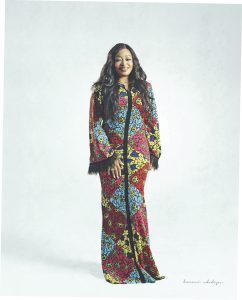
I love sustainable fashion. I love Nigerian fashion, African fashion. I believe that African fashion is the future. I believe sustainability is the future. I love the fact that Nigerians won the Earthshot Prize because of sustainable fashion. I would buy Nigerian. I mix a little with maybe foreign bags sometimes.
But when I look at my wardrobe every single year, the percentage of clothes that are made in Nigeria increases exponentially. It just keeps increasing. Nothing really is made abroad.
We don’t go abroad to shop anymore. People come to Nigeria to shop. And that’s what I think my own fashion invites. Simplicity. I like monotone colours. Monotone hues with a pop of colour.
I love natural fibre. And I love slow fashion. Sustainable fashion.
Your favourite holiday destination?
It’s a shame that Nigeria and South Africa have the issues they do. But I love Cape Town. I’ve always loved Cape Town. I’ve been around the world.
I plan on going to Brazil. But Cape Town right now, within Africa, you know, travelling within Africa, Cape Town is it, and Egypt. These are probably my best, favourite destinations.
In a nutshell, tell us a bit of your work experience?
Ifemena “Ify” Oji is a senior government relations and strategic engagement professional with over 18 years of experience across technology platforms, financial services, trade, energy, and public policy in Africa. As a trained lawyer and seasoned executive, I support regulated and high-growth organisations in navigating complex policy environments, building institutional relationships, and aligning innovation with public-sector priorities.
I operate at the intersection of policy, technology, and economic development, with a strong focus on Nigeria’s digital financial and payments ecosystem. My work centres on regulatory alignment, stakeholder engagement, and strategic advocacy to support inclusive growth, market stability, and innovation-led development.
In 2025, I played a visible role at The Deal Room Africa, a business platform for partnerships, supporting high-profile tech startup launches, including WillMoon.ai (“Scaling your business for hard economic times”), Estate Books (“Maximising returns on real estate assets”), and Urban Fleet, where I advised on company demos, market positioning, and external communications.
Previously, as Chief Commercial Officer at JobbersNest (AIIKII), I drove rapid platform scale, growing the user base by over 700% in three months. I also devised revenue growth strategy by expanding service verticals and creating two plug-in products, including financial services offerings. Earlier, at CAX Africa (An Afreximbank-backed initiative), she managed multi-country tech-enabled trade partnerships, and at Konga.com, I held senior leadership roles during a critical growth phase.