Follow Us on Google
• Onaiyekan spoke out of concern for Nigeria not malice for Tinubu -Catholic Laity
• Cardinal spoke truth about Nigeria’s hardship, insecurity, Arewa youths, COSEYL
By Beifoh Osewele, Jude Chinedu, Enugu and Sola Ojo, Abuja
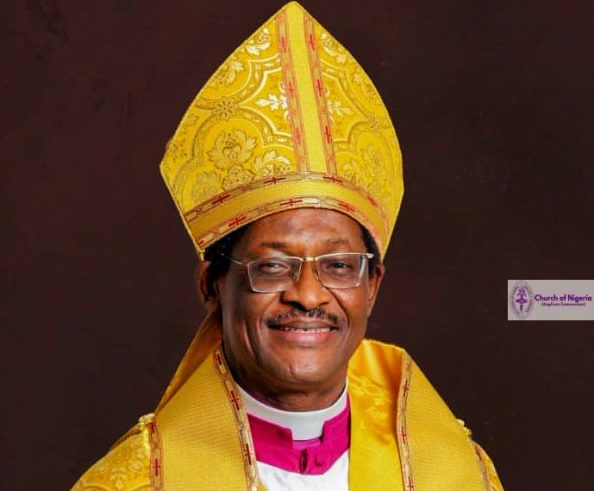
Primate of All Nigeria (Anglican Communion), Most Rev. Henry Ndukuba, has condemned what he described as the double standards of politicians who keep their own children far away from electoral violence while recruiting the children of poor families with money, drugs and other inducements to intimidate opponents and disrupt the democratic process.
He said no politician who truly values human life would ask another person’s child to undertake assignments they would never entrust to their own sons or daughters, urging Nigerian youths to reject every attempt to make them tools of political violence.
Speaking with journalists on the sidelines of the 15th Anglican Chancellors, Registrars and Legal Officers Conference (ACRLOC) in Abuja, yesterday, Ndukuba lamented that widespread poverty and hunger had become convenient weapons in the hands of desperate politicians seeking to buy votes and recruit vulnerable young people for electoral thuggery.
“None of these politicians send their own children to carry out violence. Their children are in London, Europe and America.
“What they will not send their own children to do, they are sending our young people to do. Our youths must shun every thuggery and act of violence,” he said
The Anglican leader warned that no political ambition was worth the bloodshed and destruction often associated with elections and appealed to politicians to conduct their campaigns with restraint, decency and respect for human life.
“We want to plead with our politicians that this is not a do-or-die affair. Let us play politics with a human face and campaign on issues, so that when elected, citizens will know what to hold them responsible for.”
Ndukuba noted that although poverty had made many young Nigerians vulnerable to manipulation, they must refuse to mortgage their future for temporary financial inducements or become instruments in the hands of desperate politicians.
He also urged Nigerians, particularly Christians, to participate actively in politics by joining political parties, engaging in internal party democracy and demanding accountability from electoral and security agencies.
This is the Catholic Laity Council of Nigeria (CLCN), the Northern Youth Council of Nigeria (NYCN) and the Coalition of South East Youth Leaders (COSEYL), in separate reactions, backed the Archbishop Emeritus of Abuja, Cardinal John Onaiyekan, insisting that his recent remarks on the state of the nation and President Bola Tinubu’s meeting with Catholic bishops were motivated by genuine concern for Nigeria rather than any intention to embarrass the Federal Government.
The Catholic Laity Council of Nigeria (CLCN), in its reaction, insisted that Cardinal John Onaiyekan, in his recent comment on the state of the nation and President Tinubu’s meeting with Catholic bishops were motivated by genuine concern for Nigeria rather than any intention to embarrass the Federal Government.
The council maintained that Onaiyekan’s intervention was consistent with the Catholic Church’s long-standing moral responsibility to speak truth to power, defend the poor and vulnerable, and hold public office holders accountable in the interest of justice and the common good.
Meanwhile, COSEYL has insisted that any attempt to intimidate or discredit the Catholic cleric would amount to an attack on the conscience of Nigeria.
The defence comes amid a growing public debate triggered by Onaiyekan’s comments after a recent meeting between President Tinubu and members of the Catholic Bishops’ Conference of Nigeria (CBCN).
Reflecting on the discussions, the cardinal had expressed concern that the current administration appeared determined to secure victory in the 2027 general elections “by all means,” a remark that drew a sharp response from the Presidency.
Presidential spokesman, Daniel Bwala, Special Adviser to the President on Policy Communication, accused the respected cleric of introducing politics into what he described as a private engagement between the President and Catholic bishops.
The exchange quickly assumed national significance after former Vice-President Atiku Abubakar criticised the Presidency’s response, arguing that rather than attacking Cardinal Onaiyekan, the government should address the substantive concerns raised by the Catholic bishops on the country’s worsening economic hardship, insecurity and governance challenges.
Rising in defence of the cardinal, the Catholic Laity Council, in a statement jointly signed by its National President, Ambrose Obioha and Secretary-General, Francis Olayinka Ojo, described Onaiyekan as “a man of peace, dialogue and integrity” whose comments were intended to awaken the nation’s conscience.
“We know Cardinal Onaiyekan to be a man of peace, dialogue and integrity. His intervention was not to embarrass government, but to call the nation to conscience.”
The council stressed that differing interpretations of what transpired during the meeting should not be mistaken for hostility towards the government. “A disagreement over facts, as the Presidency rightly noted, should not be read as arrogance. Neither should a pastoral reflection be read as a breach of trust.”
The council further argued that the Catholic Church has a moral obligation, rooted in the Gospel and Catholic social teaching, to engage national issues by defending the vulnerable, promoting justice and speaking truth to those in authority.
According to the council, such interventions should never be construed as an abuse of privilege but as part of the Church’s pastoral mission to guide society according to moral principles.
It also rejected suggestions that the cardinal breached the confidentiality of the meeting, explaining that discussions bordering on national welfare cannot remain permanently behind closed doors.
Other News
“When national issues of economy, security and justice are discussed, the people have a right to know the direction of leadership.
“Cardinal Onaiyekan did not reveal secrets. He shared the moral concerns of the Church and the response of government, which is in the public interest.”
The council noted that throughout Nigeria’s democratic history, religious leaders have often provided moral guidance on issues affecting governance, accountability, corruption, security and social justice, insisting that constructive engagement between government and faith-based organisations strengthens democracy rather than weakens it.
It, therefore, urged both the Presidency and the Catholic Church to sustain constructive dialogue in the interest of national unity and development.
Declaring its support for Cardinal Onaiyekan and the Catholic Bishops’ Conference of Nigeria, the council also called on Nigerians to continue praying for the nation’s leaders while supporting policies capable of restoring security, economic stability, justice and hope. “CLCN believes that government and Church must continue to work together for the common good. We urge both the Presidency and the Church to sustain the channels of dialogue. Nigeria needs moral voices now more than ever.”
The Catholic Laity Council of Nigeria is the umbrella body representing lay members of the Catholic Church across the country’s dioceses. While distinct from the Catholic Bishops’ Conference of Nigeria, the council works closely with the hierarchy in promoting civic responsibility, social justice and active participation of Catholic faithful in national development.
COSEYL, in a statement by its President-General, Goodluck Ibem, yesterday, criticised Bwala over remarks suggesting that the Cardinal was speaking only for Catholics and not for Christians or Nigerians.
According to the group, Bwala’s position diverted attention from the substance of the Cardinal’s message rather than addressing the pressing issues confronting Nigerians.
“Rather than address the grave concerns he raised about the hardship, insecurity, hunger, unemployment and declining living standards confronting millions of Nigerians, the presidential spokesman chose to attack the messenger. That approach does not answer the issues confronting the country.”
COSEYL maintained that Cardinal Onaiyekan spoke as a respected elder statesman, moral voice and patriotic Nigerian whose views reflected the concerns of citizens across religious, ethnic and political divides.
“The pain of Nigerians does not discriminate between Catholic, Protestant, Pentecostal, Muslim or traditional believer. Hunger has no denomination. Poverty carries no religious identity. Insecurity does not ask for one’s church membership before striking.”
The group argued that reducing the cleric’s intervention to partisan politics was unfair and counterproductive, adding that his comments resonated with millions of Nigerians seeking responsive leadership, economic relief and accountable governance.
It also warned against what it described as attempts to intimidate, discredit or silence religious leaders and other patriotic Nigerians for speaking on national issues.
The group stressed that democracy thrives when leaders listen to constructive criticism rather than branding critics as political actors.
COSEYL further noted that religious leaders have historically played significant roles in promoting justice, peace, national unity and good governance, insisting that they have both constitutional and moral rights to comment on matters affecting citizens’ welfare.
The group urged the Presidency and its spokespersons to focus on addressing the concerns raised by the Catholic Bishops, including inflation, insecurity, youth unemployment, declining purchasing power and the rising cost of living, instead of engaging in what it described as personality disputes.
It added that Nigeria’s progress depends on leaders embracing sincere counsel and constructive criticism, while calling on Nigerians, irrespective of religion or political affiliation, to defend truth, justice, free expression and the constitutional right of citizens to participate in national discourse without fear of intimidation.
On its part, the NYCN, in a statement by its National President, Isah Abubakar, described Onaiyekan as a respected elder statesman and moral voice, who had demonstrated courage by speaking truth to power.
It said Onaiyekan merely spoke the unvarnished truth about the economic hardship, rising cost of living and insecurity confronting Nigerians. “What exactly did Cardinal Onaiyekan say that is not the present reality of our country? Isah queried.
To him, attempts by presidential handlers to dismiss the Cardinal’s intervention as an abuse of clerical privilege demonstrated, in his view, a disconnect from the realities confronting ordinary Nigerians.
He noted that shielding the President from uncomfortable truths through political flattery and sycophancy would only worsen the country’s challenges.
The Northern youths commended Onaiyekan for choosing to present what they described as the unfiltered condition of the country directly to the President rather than seeking political favour or personal comfort.
He urged the Presidency to pay attention to the substance of the Cardinal’s concerns and take concrete steps to address the hardship and insecurity affecting Nigerians.
He also called on religious leaders and traditional rulers across the country, regardless of faith, to emulate Onaiyekan’s courage by prioritising the welfare of Nigerians and the survival of the nation over personal interests and proximity to political power.
“Our faith leaders must prioritise the welfare of the people and the survival of the country over personal gain, access to power or self-serving silence,” he stated.
He argued that the cleric had spoken the collective mind of Nigerians, pledging NYCN’s solidarity with him in the pursuit of truth, justice and good governance.