Follow Us on Google

•Our courts have done harm to our justice system
From Noah Ebije, Kaduna
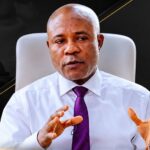
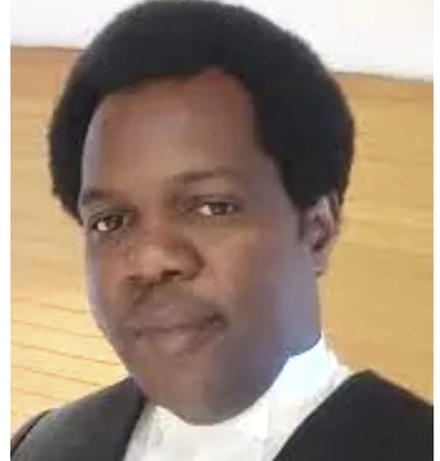
Elder statesman and former Secretary General of the Arewa Consultative Forum (ACF), Mr. Anthony Sani, witnessed Nigeria’s transition from colonial rule to self-governance in 1960.
Sani, who hails from Nasarawa State and member of the ACF Board of Trustees (BOT) in this interview, x-rays the challenges encountered by the country in its 66 years of post-Independence journey.
He also reflects on Nigeria’s evolving political structure, the difficulties of nation-building and the continuing struggle to strengthen the country’s democratic institutions. He particularly berates the judiciary for significantly contributing to the deleterious distortions in the country’s political evolutionary process.
Looking back at the past 66 years, how would you describe the journey of the country since 1960?
I witnessed the excitement that Nigerians would be free from being tied to British rule, and elect Nigerians to rule the country. That freedom is priceless. Since then, I have felt the joy of the freedom associated with independence at both personal and national levels. The ups and downs associated with individual growth has also manifested at processes of nation building which is work in progress. We started with a confederal arrangement with a weak centre and strong regions under the watch of a parliamentary system.
As a result, the negative tendencies of a diverse nation did not allow the practice to last long before it was replaced by the reverse setting of strong centr and weak regions called unitary system under the military. This unitary system was toppled and supplanted by federalism where the national government was appropriately balanced by state level power-albeit also under the watch of the military which had to fight a civil war for three years in order to keep the country one and united. After the civil war, there were interchanges between presidential civilian and military regimes up to 1999 when the military handed over power to civilians still under the practice of presidential system of government. Since then, the country has been governed by civilian multiparty democracy. During the period of independence, the country also practiced different models of economic development such as state capitalism, mixed economy and outright privatization being operated now.
You can see we have experienced all the three structures of confederation with weak centre and stronger sub-nationals, unitary system with stronger centre and weak regions and also federalism with centre strong enough to keep the country united under one roof but not too strong as to tilt the country toward unitary system. We have experienced all forms of government, the parliamentary, military dictatorship and the presidential system.
After 66 years of independence, are you satisfied with Nigeria’s judiciary in the practice of our multiparty democracy?
My grouse with the judiciary is its undue emphasis on technical justice at the expense of substantive justice which is derived from natural justice. It is this kind of attitude that makes most Nigerians not have faith in our justice system and conclude that our courts can be likened to spider web which catches small flies and allows bigger ones to go. Consider what happened in Zamfara State where the people’s electoral mandate was taken from APC and given to PDP by the court because of faulty party primaries instead of sanctioning only those who perpetrated it. Also, see how people’s electoral mandate was taken and given to PDP for the sins of the running mate in Bayelsa State, instead of sanctioning only the running mate who committed the sins. In Rivers State only Governor Nyesom Wike got away with it while all other elected people could not do so because the law allowed only Governor Wike to reach the Supreme Court. Governor Wike got away with it while other elected people could not do so because the law did not allow them to reach the Supreme Court for the same offenses. Such practice is bound to offend many people’s sense of natural justice.
What, in your view, are the most important lessons Nigeria has failed to learn from its history?
The important lessons Nigeria has failed to learn is the fact that unity in diversity is our strength and I dare say sine qua non for our socioeconomic development. The scriptures enjoin us to love our neighbours, and not only love our brothers. We have not learnt the fact that we are expected to produce what we need and want, not just consume what we do not produce. That accounts for the over reliance on oil wealth which is not the result of hard work. Once we are united and love our neighbours we can make the most of our God-given diversity and resources by working hard to overcome what divides the people and produce what we need and want.
How do you assess the North’s political, economic and social development since independence?
Western education reached the South much earlier than it arrived in the North, the initial resistance of Islam to western education which still manifests in activities of Boko Haram and the distance from the ports, the North has tended to trail the South in socioeconomic development. Despite all those disadvantages, I dare say the North has tried. If you do some trend analyses of developments in education, health and roads, you would hardly avoid the conclusion that the North has tried. Just count the achievements and name them one by one to be able to know what God has done for the North. The North knows the good things of life like order, justice, liberty, common decency, peace and prosperity for all, are never natural order of things. These things are attained through ceaseless hard work by both leaders and the led. All that is needed for the North to develop at much faster rate than currently obtains is consciously directed efforts to make desires possible and then actual.
Nigeria has struggled with questions of ethnic, religious and regional identity since independence. Why has building a strong sense of Nigerian nationalism proved so difficult, and what can be done to strengthen national cohesion?
Other News
The rise in ethnic nationalism stems from failure of leadership to deliver on the promise of democracy justly and fairly too. Meritocracy can be practiced in a country that is diverse. This is because each ethnic group has both the good and the bad.
What do you think has been the biggest strength of Nigerian democracy since 1999—and what remains its greatest challenge?
The greatest strength is the realization that we have no other country to call our own but Nigeria. During COVID-19 when countries took measures to protect their citizens, Nigerians saw the importance and the need to develop their own country. The greatest challenges are the collapse of national ideals and moral values. Most Nigerians are insular and see their communities with strong attachment to historical places instead of promoting relative pluralism from inter-ethnic marriages and urbanization.
There is growing concern about insecurity, poverty, unemployment and the cost of living across the country. From your experience, are these primarily symptoms of deeper structural problems, and what kind of leadership would be required to address them?
The challenges we face from failure of leadership are from the collapse of national ideals and moral values. I say this because our leaders derive their values from society. That is why it is often said God gives people leaders they deserve. That explains why I advocate cultural renaissance needed for restoration of our national ideals and moral values. Once national ideals and moral values are restored, there would be no overwhelming challenges of socioeconomic development.
Many younger Nigerians express frustration with the political class and sometimes question whether the generation that inherited independence has delivered the Nigeria that was envisioned in 1960. How do you respond to that criticism?
How long would it take the younger generations to put things right, assuming there have been short comings truly on the part of those who fought and secured the independences? The problems we face are the collapse of national ideals and moral values which need to be restored by consciously directed efforts by both leaders and the citizens.
Looking at the relationship between the North and other regions, what do you believe Northern leaders should be doing differently to promote a more equitable and united Nigeria?
To suggest North alone is responsible for lack of equitable and united Nigeria is most unfair. All Nigerians are responsible for the challenges faced by the process of nation building, and not the North alone. For example, the South has been at the helm of the Fourth Republic more than the North, yet there are no significant differences in their performances in governance. I think all Nigerians should come to terms with the reality and brace up against the national challenges for collective good.
What advice would you give today’s political leaders about managing Nigeria’s diversity without allowing differences of ethnicity, religion or region to become sources of permanent division?
I have said there is a need for cultural renaissance to restore national ideals and moral values which have collapsed. Nigerians should know that it is very possible to make the most of our God-given diversity by working hard to overcome the things that divide the people. Relative pluralism is the way to go and not ethnic nationalism.
Finally, what is your greatest hope for Nigeria over the next decade, and what would you like to say directly to young Nigerians who will determine the country’s future?
My hope derives from the fact that given the human and material resources, what is required for socio-economic development is the resolve and determination to apply them for the good of the country and the citizens.
Young Nigerians should work hard and avoid corruption which steals their empowerment, steals their opportunities and steals their future. The youth should note the fact of life that what does not kill them can only make them stronger. That is why it is said adversity is not only cathartic but constructive as well