Follow Us on Google

From Gyang Bere, Jos
The high rate of poverty and unemployment in Nigeria has impacted negatively on the wellbeing of the citizens, thereby jeopardizing national security and socio-economic development of the country. But the Industrial Training Fund (ITF) has stood tall in providing Nigerians with requisite skills, based on the skills gap assessment in six priority sectors of the economy as carried out by the fund, in collaborations with the United Nations Industrial Development Organization.
This was why President Muhammadu Buhari requested ITF to forward submissions on lifting 100 million Nigerians out of poverty in the next 10 years.
Director-general of the ITF, Sir Joseph Ari, said this is the first time in history that the fund has trained 500,000 Nigerians within four years. He said, because of the strategic role the ITF is playing in fighting poverty and the increasing rate of unemployment in the country, Buhari included the ITF as a member of the steering committee of the Federal Government’s survival fund that was constituted to drive the implementation of the various support schemes for micro, small and medium enterprises (MSMEs) in the country.
Ari said it was part of the national response to the COVID-19 pandemic and as part of government’s social investment programmes under the economic sustainability plan.
He noted that the ITF has trained 500,000 Nigerians within four years and plans to train 12,000 Nigerians in various skills.
He declared that the ITF would train over seven million Nigerians in agriculture, construction and facility maintenance, information and communication technology, manufacturing and services between 2021 and 2031.
“The ITF was among the few agencies requested by Federal Government to forward submissions on lifting 100 million Nigerians out of poverty in 10 years. If our proposal, which is currently receiving the attention of the authorities, is assented to, the ITF will train over seven million Nigerians.
“We believe that, until most Nigerians are equipped with competitive technical skills, we will, as a nation, continue to fight a losing battle against the blights of poverty and unemployment and their attendant consequences.”
Ari said ITF was inspired by the success stories from Japan, Germany, Vietnam, Singapore and Brazil that transformed into industrial power houses, and prioritizing technical skills acquisition would transform Nigeria in that regard.
He explained that the ITF has entered collaboration and partnership with local and international organizations such as SENAI of Brazil, Institute of Technical Education Services (ITEES) of Singapore, Galilee International Management Institute (GIMI) in Israel and United Nations Industrial Development Organization (UNIDO), among others, to provide requisite skills to drive the country out of poverty.
The DG said ITF has tagged 2021 the “year of skills escalation for prosperity,” where over 12,000 Nigerians would be trained in three to six months in web design and programming, advanced computer networking, mobile app development, iron bending, masonry and crop production.
He said others areas are agriculture, poultry, air-conditioning and refrigeration, plumbing, GSM repair, ladies’ wig and cap making.
“Apart from the NISDP that will be implemented in all states of the federation and FCT, the rest of the kills intervention programmes will be shared among the states.
“What this means is that, whereas some of the states will benefit from one of the skills intervention programmes, others will benefit from two or even three of the programmes,” he said.
Ari noted that ITF was poised to drive the process of making the Buhari administration actualize its vision and mandate to Nigeria for the prosperity of Nigerians through skills acquisition.
“Since the assumption of the incumbent administration in the ITF, our commitment to equipping Nigerians with technical skills for employability and entrepreneurship has never been in doubt. For the first time in the fund’s history, it trained over 500,000 Nigerians in only four years.”
To fast-track this effort in rural communities in the country, the ITF has secured a mobile unit vehicle equipped with sewing machines to impact rural women with vocational skills. The DG said the mobile unit would move from one community to the other to train women and youth for a period of three months. He said a numberof the mobile units were located across the six geopolitical zones.
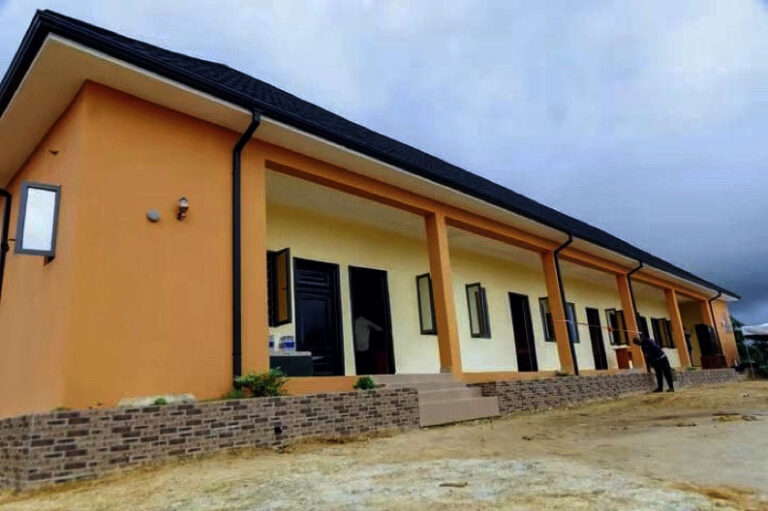
The ITF has also developed the fund’s infrastructure in line with the Federal Government’s commitment to the reduction of infrastructure deficit and open access to Nigerians desirous of acquiring technical skills.