Follow Us on Google
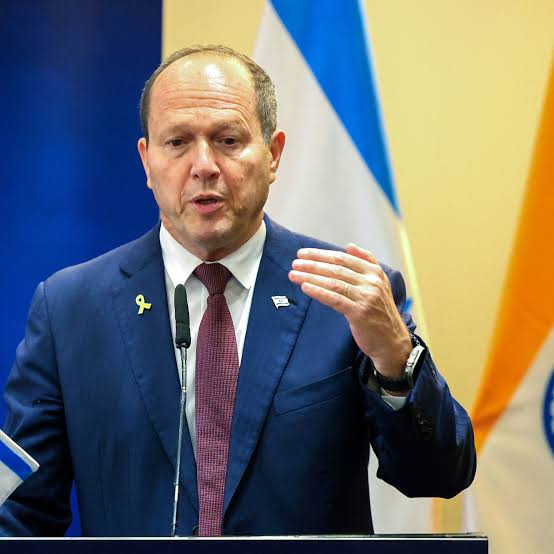
Israeli political and security leaders have expressed strong opposition to a proposed civilian nuclear agreement between the United States and Saudi Arabia, warning that the deal could ignite a regional arms race and weaken Israel’s long-term security.
The proposed agreement, unveiled on Wednesday, would permit Saudi Arabia to build civilian nuclear reactors with US technology, including the ability to enrich uranium for peaceful purposes. However, the arrangement still requires approval from the US Congress before it can take effect.
Although Israeli Prime Minister Benjamin Netanyahu has yet to publicly comment on the proposal, several current and former senior officials have criticised the plan, arguing that it was negotiated without adequately safeguarding Israel’s strategic interests.
Former Prime Minister Naftali Bennett, who is set to challenge Netanyahu in Israel’s October 27 general election, described the agreement as a major security setback.
“The nuclear agreement being advanced with Saudi Arabia, without Israel’s involvement, is a serious strategic failure that threatens our security,” Bennett said.
He warned that allowing Saudi Arabia to enrich uranium on its own soil could encourage a wider nuclear arms race across the Middle East.
Former Defence Minister Avigdor Lieberman also faulted the proposal, cautioning that Riyadh’s civilian nuclear programme could eventually evolve into a military capability.
Lieberman urged Israel to actively lobby US lawmakers to reject the agreement, arguing that it could accelerate nuclear proliferation throughout the region.
Former Defence Minister Benny Gantz echoed similar concerns, saying Saudi Arabia’s civilian nuclear ambitions should only be pursued within a broader regional security framework.
According to Gantz, introducing such capabilities without comprehensive security guarantees could undermine, rather than enhance, regional stability.
The United States has pursued a civilian nuclear cooperation agreement with Saudi Arabia under successive administrations, including those of President Donald Trump and former President Joe Biden. Previous negotiations, however, stalled amid concerns from non-proliferation advocates that the programme could provide the kingdom with a pathway to developing nuclear weapons.
Many Israeli officials had also hoped any nuclear cooperation with Riyadh would be tied to a wider normalisation agreement between Israel and Saudi Arabia, a key objective of previous US diplomatic efforts in the Middle East.