Follow Us on Google
…Urges transparency in N10 billion housing loan scheme for civil servants
From Adanna Nnamani, Abuja
The Trade Union Congress of Nigeria (TUC) has called on the Federal Government to grant a 50 per cent tax relief to workers and manufacturing companies as part of urgent measures to cushion the economic impact of the ongoing Iran–United States conflict.
The demand was part of resolutions reached at the union’s National Executive Council (NEC) meeting held in Abuja on Monday, where its leaders expressed deep concern over the ripple effects of the geopolitical crisis on the country’s fragile economy.
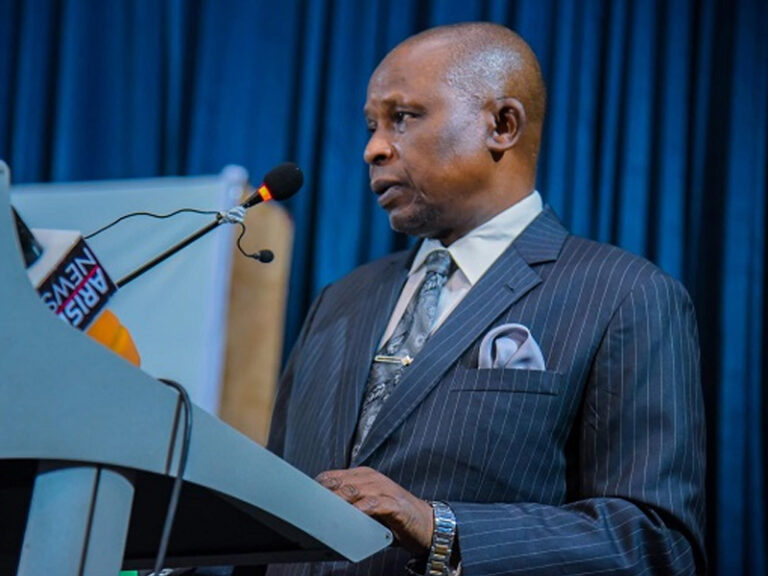
Addressing pressmen, TUC president, Festus Osifo, said the conflict has triggered a surge in global crude oil prices, leading to rising fuel costs, increased transportation fares, and higher prices of goods and services, all of which are worsening the cost of living for Nigerian workers.
Osifo noted that despite Nigeria’s status as an oil-producing nation, the benefits of higher crude prices have not translated into relief for citizens, lamenting that workers are grappling with imported inflation, exchange rate pressures, and escalating living expenses.
The union president said that immediate fiscal intervention, including a 50 per cent reduction in taxes for workers and manufacturers, would help ease the burden on households and support productivity in the real sector.
He further warned that without urgent action, the combined effect of high production costs and declining consumer purchasing power could lead to job losses and business closures across key sectors of the economy.
Beyond tax relief, the Congress urged the Federal Government to deploy excess crude revenue to stabilise the economy, support local refining, and protect vulnerable Nigerians from the shocks of global volatility.
The labour leader also urged the government to treat the Iran–US crisis as both a foreign policy and domestic economic emergency, that requires coordinated and transparent policy responses.
On energy, TUC strongly condemned the persistent increase in electricity tariffs without corresponding improvement in service delivery. It criticised the continued use of estimated billing and called for universal metering, transparency in tariff structures, and better engagement with organised labour before any further price adjustments.
Additionally, the Congress expressed concern over worsening insecurity across the country, describing it as both a national and economic emergency. It linked rising cases of banditry, kidnappings and farm invasions to declining food production, job losses, and increased poverty. The union called for a coordinated, intelligence-driven security strategy to protect farms, highways, workplaces and rural communities.
Other News
On workers’ welfare, TUC welcomed the Federal Government’s N10 billion housing loan scheme for civil servants but cautioned that it must be implemented transparently and made accessible to ordinary workers, not just privileged individuals. It also urged state governments to replicate similar interventions for workers at sub-national levels.
The Union further decried the growing trend of casualisation in the labour market, particularly in the private sector, and called on government, especially the Ministry of Labour to protect vulnerable workers from exploitative employment practices.
In the food and beverage sector, the Congress condemned what it described as unfair labour practices linked to the ongoing dispute involving National Agency for Food and Drug Administration and Control (NAFDAC) and some distilling companies. It called on the Minister of Health to urgently intervene and facilitate dialogue between the parties.
Internally, the Congress reviewed developments within its affiliates and state councils, reaffirming its commitment to discipline, internal democracy and accountability.
It also outlined plans for the 2026 May Day celebration, noting that the theme would focus on economic justice, decent work, and the protection of workers’ rights.
The TUC reiterated its commitment to constructive engagement with government but warned that it would not hesitate to mobilise workers if policies continue to deepen hardship and undermine their welfare.
“NEC reviewed the persistent hardship arising from rising fuel prices and reaffirmed that urgent government intervention is required to prevent further increases in the pump price of petroleum products.
“Council noted that the combined effects of global crude oil volatility, exchange rate pressures, and domestic supply constraints continue to drive up the cost of petrol, diesel, and aviation fuel, thereby worsening transportation costs, food prices, production expenses, and overall living conditions.
“NEC therefore calls on the Federal Government to allocate part of excess crude revenue, earned above the budget benchmark, to subsidise crude oil supplied to domestic refineries, including the Dangote Refineryand other local refineries . This approach represents a transparent, production-linked intervention that can lower the cost of refined products without reverting to the discredited subsidy regime. NEC also demands a 50 percent reduction in taxes on manufacturing companies and workers within this period to ease economic pressure and support productivity.
“NEC calls on governments at all levels to prioritize the welfare, dignity, and security of Nigerian workers in all policy decisions. The Trade Union Congress of Nigeria remains committed to constructive engagement, social dialogue, and national development. However, Congress will not hesitate to mobilize workers where policies continue to deepen hardship or undermine the rights and welfare of the working people,” it stated.