Follow Us on Google

The period between 2015 and 2019 can perhaps be said to be the most difficult in the political life of Nigerians of South East origin since the return to democracy in 1999. Having invested enormous emotional, financial and moral political capital in the candidacy of former President Goodluck Jonathan of the Peoples Democratic Party (PDP) in the 2015 presidential election, which was won by the All Progressives Congress candidate, Muhammadu Buhari, the South East geo-political zone of Nigeria would face severe political repercussions.
In practical terms, Buhari’s doctrine of 97 per cent and 5 per cent of votes given to him in 2015 by respective sections of the country as a direct proportion of patronage to be received meant the South East would be left with the short end of the stick. In Nigeria’s murky politics of ethno-geographic and religious identity, Nigerians of South East origin, who mostly identify as ethnic Igbo, would be systematically marginalised in the Buhari administration. As though being punished for exercising their constitutional right of freedom of democratic choice, Nigeria’s ethnic Igbo were excluded from Buhari’s powerful kitchen cabinet, inner cycle of power brokers and associates in the corridors of power. This systemic marginalisation would see Nigeria’s ethnic Igbo completely exempted from appointment into the headship of any security agency in the ministries of interior and defence, respectively. 
Buhari’s political scorched earth policy of winner takes all not only reversed the modest gains of the preceding 16 years of nation building but sharply polarised the polity, with Nigeria’s ethnic Igbo crying out loud against their mistreatment in Buhari’s Nigeria. The clamour for justice, equity and fairness from Nigeria’s South East geo-political zone would throw up new dynamics in the polity of the Nigerian state. In the face of a defiant hardliner President who was unapologetic about his exclusivist leadership style and refusal to redress the numerous glaring cases of systemic marginalisation of the Igbo, the twin demands of restructuring or dissolution became heightened.
Whereas the clamour for the dissolution of the Nigerian state, with the revival of Biafra secessionist agitations, was championed by Nnamdi Kanu’s Indigenous People of Biafra (IPOB), the option of restructuring through a renegotiated Nigerian federation, which guarantees justice, equity and fairness to all constituent peoples, was championed by Ike Ekwerenmadu from within the governing establishment.
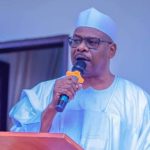
A veteran community-based politician, administrator, lawyer and federal lawmaker from the southeastern state of Enugu, Ekwerenmadu, as one of the longest-serving senators after securing a record fifth term, emerged from the shadows to chart a clear political course for his Igbo people. Occupying the sixth most important position of the Deputy President of the Nigerian Senate and highest political office holder among Nigeria’s Igbo, the burden of leadership of his people in a most difficult time fell upon his shoulders.
While the burning flame of Kanu’s IPOB, fuelled by Buhari’s failure of statesman-like leadership, was ravaging the hearts and minds of ethnic Igbo, Ekwerenmadu skilfully explored the inexhaustible mechanisms inherent in Nigeria’s constitutional democracy to seek redress for his marginalised people. In the short term, Ekwerenmadu used his position of relative influence as the Deputy President of the Senate to press for a more inclusive governance structure wherein no Nigerian is left out on the basis of ethno-geographic, religious or partisan basis. On the national stage, Ekwerenmadu would become a vocal voice in demanding equity, justice and fairness for his Igbo people within an inclusive pan-Nigerian framework of integrated socio-economic development. To evolve a sustainable good governance structure for the Nigerian state wherein the egalitarian principles of equity, justice and fairness are guaranteed to all in the long term, Ekwerenmadu strongly advocated a renegotiated federation through restructuring. To underscore his convictions on the issue of restructuring was Ekwerenmadu’s PhD thesis on the subject matter of fiscal federalism.
Restructuring would eventually signpost the electoral campaign promise of the opposition PDP in the 2019 general election, with Buhari himself making a commitment to fiscal federalism in his second term. For these and more efforts in the defence of the political and economic rights of Nigeria’s Igbo people, Ekwerenmadu is fondly referred to as the “Ike Oha Ndigbo” (strength of the people), by his kinsmen, to the admiration of the entire non-Igbo Nigeria.
Therefore, it came to the entire Nigerian nation as a rude shock the visual images of the physical assault on Ekwrenmadu at the hands of his own kinsmen at an Igbo cultural event in the historic German city of Nuremberg. In taking responsibility for the action, what appropriately qualified as an abomination was made more absurd when Kanu’s IPOB justified the attack on Ekwerenmadu on his purported support for Operation Python Dance, the military’s security exercise to crush the IPOB secessionist movement the South East. As a matter of fact, Ekwerenmadu not only fought for the release of Kanu from detention and helped arrange his impossible bail conditions, he made a passionate appeal to Buhari to call off Operation Python Dance, as in his words, it was “creating tension in the South East.”
However, the real problem is not the fraudulent fugitive Kanu and his fellow IPOB retards, but those Nigerians, especially of Igbo ethnicity, that are trying hard to justify a sacrilegious act of cowardice. Ekwerenmadu was not assaulted by members of his Enugu West senatorial district on the basis of poor performance but by an irate mob of thoroughly brainwashed charlatans that are high on the opium of Nnamdi Kanu’s Biafra utopia.
It is a fallacy to attempt to twist the cowardly ambush of a man who let down his guard believing he was in commune with his own kinsmen on the basis popular uprising against bad leadership. The grouse of IPOB against Ekwerenmadu was his unalloyed loyalty to the Nigerian state, without any iota of Biafran separatist agenda. As far as these IPOB extremists are concerned, you cannot be Igbo and Nigerian.
Enugu West people, to whom Ekwerenmadu is directly answerable as their elected senator, have returned a verdict of confidence in his quality representation for the fifth term, as seen in his unprecedented feat of attracting the largest concentration of federal government intervention projects in the 20-year history of the Fourth Republic. The office of Deputy Senate President he occupied in the eighth National Assembly was not zoned to the South East geopolitical zone as the victorious APC was determined to shut out the zone from the epicentre of government.
At the risk of his life and huge personal cost, Ekwerenmadu had to fight to clinch a position he used to effectively provide leadership for his Igbo people at a most difficult time in their political history. To now turn around and applaud or justify this unfortunate incident would be akin to the majority of Ndigbo taking ownership of IPOB’s cowardly act of terrorism against the biggest political brand east of the Niger in contemporary times.
To successfully navigate the labyrinths of the murky waters of Nigeria’s identity politics, decorum, self-respect, ethnic solidarity and support for leadership is essential for the political survival of Nigeria’s Igbo. In the eyes of the rest of non-Igbo Nigeria, the assault on Ekwerenmadu, the Ike Oha Ndigbo, is a humiliation of the entire Ndigbo “worldwide.” This reprehensible act of base ignorance, if not condemned unequivocally by those who should know better, would become a permanent scar of disrepute on Ndigbo as a difficult-to-please people, with the possibility of alienating the political solidarity of liberal non-Igbo Nigeria in the near future.
A community that strips naked its biggest masquerade in the market square only demystifies its strength, perpetually rendering itself vulnerable to external attacks.