Follow Us on Google

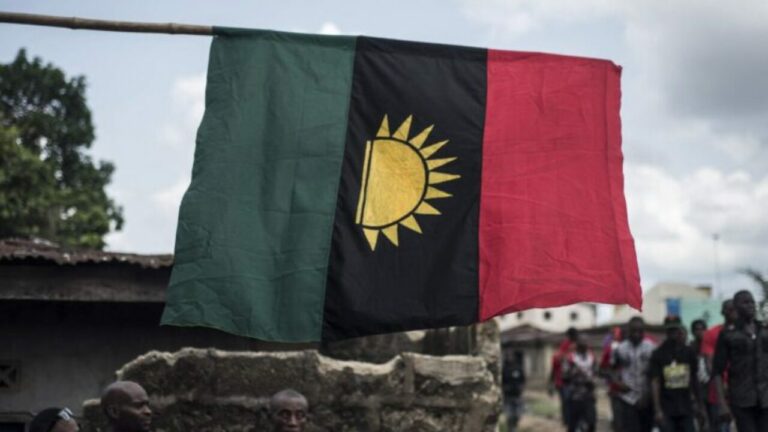
There was a little bit of diplomatic stoush between Nigeria and the United Kingdom (UK) last week following the announcement by the UK government that it was considering the offer of asylum to members of the Indigenous People of Biafra (IPOB) and the Movement for the Actualisation of the Sovereign State of Biafra (MASSOB) who are persecuted in Nigeria. But even that gesture by the UK was not warmly received by the leadership of IPOB. They said they didn’t want asylum but referendum or freedom from Nigeria.
The reason for the ongoing agitation for autonomy, IPOB reminded everyone, is the full-strength creation of the state of Biafra. Their never-ending public protests in Nigeria and overseas have resulted in a high-handed decision of the Nigerian government to brand IPOB a terrorist organisation. That declaration flew in the face of reality. The decision was absurd and purposeless. It was exaggerated and out of touch with the basic facts. It exposed the double standard in government policy.
IPOB has never been associated with killings, destruction of property, defilement of women, widespread abductions, and illegal occupation of people’s land. Yet the government declared them a terrorist organisation, while the real terror groups in Nigeria such as Boko Haram and lawless herdsmen are described, believe it or not, as bandits and kidnappers. How do you justify such insincere, ludicrous, hypocritical, and phoney policy?
It is this insincere and weird approach to national security that has given the real terrorist organisations the open space to operate freely, as they kill, plunder, rape, abduct, and destroy farmlands, businesses, and people’s property. When these terror groups kidnap schoolchildren, government officials even sit down to negotiate with them, and sometimes consider payment of ransom. How duplicitous.
Nigeria’s security problems remain the problem of Nigeria. By considering the offer of asylum to IPOB and MASSOB members, the UK has now placed itself in a Catch-22 situation. It is an impossible or paradoxical situation that will be difficult for the UK to resolve. Whatever the UK does, it could never placate IPOB members and the Nigerian government. It is a diplomatic quagmire. The UK is now seen by the Nigerian government to be meddling in the internal affairs of Nigeria. Between Nigeria and the UK, whoever falls into that sticky mud of political misunderstanding would be difficult to pull out.
The UK is trying to play the role of a good guy, a self-appointed arbitrator to settle the squabble between Nigeria and citizens of Nigeria. How does the UK untangle Nigerian citizens from the vice grip of Nigeria without drawing the anger of Nigerian government officials? Both countries have duties under the Refugee Convention but there is a clear difference in the way both countries honour their international obligations. Surely, refugees have their rights that are protected in international law. The rights are embedded in the Refugee Convention, as well as in other foremost international human rights agreements.
While Nigeria is always ready to jump the queue to sign international agreements in principle, the extent to which Nigeria honours or discards those agreements in practice is clearly problematic, duplicitous, and hypocritical. In the case of Nigeria as in the case of other democratic countries with authoritarian leaders, what you see, sign, or agree to is not always what you get in practice. That is why the UK is considering to step in to protect members of these movements from possible political oppression in their homeland. The UK is doing so because it feels it is obligated, under international human rights conventions, to safeguard citizens of other countries who are facing harassment and maltreatment in their home countries.
Days after the UK flagged that it was considering the offer of asylum to IPOB and MASSOB members, followed by the rapid expression of indignation by the Nigerian government, the UK changed position, announcing, surprisingly, that it has suspended its proposal and is now reviewing the asylum offer. What caused this change in policy is unclear but some people have already pointed to the Nigerian government’s criticism of the UK asylum proposal. Initially, the UK said it was pushing ahead with the asylum idea, regardless of whingeing and dissatisfaction by IPOB and the Nigerian government.
Other News
The situation is fast evolving. It is an interesting scenario to watch. Each side must be careful that it does not overstep its powers. The UK has as much economic, trade, educational, and defence/military interests in Nigeria as Nigeria has in the UK. The relationship is reciprocal even though the UK has clear alternative options, if the brittle diplomatic relations should go up in flames. If Nigeria pushes too hard, it could find itself isolated in the international community, including separation from some African countries that no longer see Nigeria as a continental powerhouse or giant.
Nigeria’s influence in Africa has been whittled significantly by its own blunders, coupled with poor governance. African countries that used to receive economic, military, trade, educational, and sports aid from Nigeria now boast of better socioeconomic performance indices than Nigeria. That is what happens to a former continental colossus that falls into a gutter where it is mocked, mobbed, ridiculed, pushed around, and yelled at by countries that used to tremble at the sight of Nigeria in international conferences.
The state of insecurity in Nigeria is worsening every day, no thanks to the death of Chadian leader Idriss Deby, and the mass movement of refugees and criminal elements who are taking advantage of the confusion to enter neighbouring countries illegally, including Nigeria. This will complicate insecurity in Nigeria and challenge the ability of security forces to fight militants, kidnappers, insurgents, and Boko Haram terrorists at different fronts at the same time. The anarchic environment at the moment appears beyond redemption.
In the face of all these, the sociocultural group Ohanaeze Ndigbo cautioned last week that the relentless crackdown on Igbo youth in the South-East region by security forces on the pretence that they were chasing members of IPOB and the Eastern Security Network (ESN) would aggravate the already fragile security situation and provide impetus to the groups to make a sound case for asylum to be granted to them by the UK and possibly other European countries. In that context, Ohanaeze Ndigbo has called for an immediate end to the suppression of Igbo youth. The group said arresting the youth on the basis that they were members of a terrorist organisation cannot be justified or sustained without verifiable evidence that the youth had committed crimes or were seen carrying firearms without authorisation.
The international community is watching anxiously and worryingly as Nigeria grapples with numerous security challenges. But it is not amused to see Nigerian forces hunt down their own citizens in forests and homes in the South-East region of the country in the guise of smoking out terrorist groups while the real symbols of terror operate freely within the country.
We all have so many reasons to be upset with the way our country is being governed or mismanaged, protected or assaulted, supported or abandoned, developed or underdeveloped, and displeased with the way the country is operating in an environment of anarchy.
These indicators of failure can only be fixed by Nigerians now, not by foreign forces. Tomorrow may be too late to resuscitate Nigeria that has been unconscious for years.