Follow Us on Google
By Chinenye Anuforo
Investors, regulators and development partners converged in Lagos to tackle one of Nigeria’s most persistent structural challenges, the gender financing gap that continues to limit women-led enterprises and marginalised groups from accessing capital at scale.
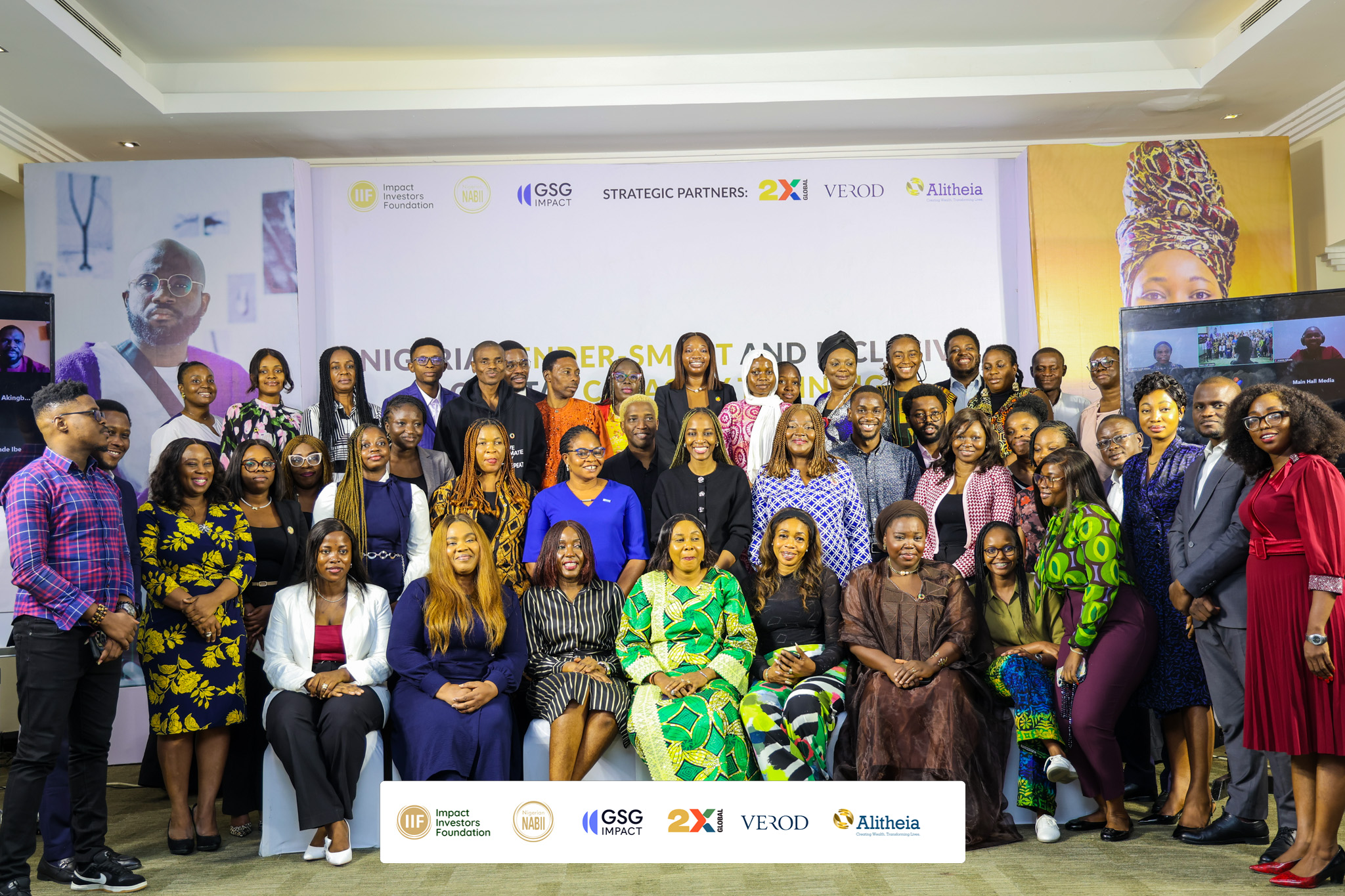
The workshop, convened by the Impact Investors Foundation (IIF) at Four Points by Sheraton Lagos, marked a significant step toward operationalising Nigeria’s Gender Equity and Social Inclusion (GESI) Roadmap. The roadmap was launched in 2025 at the Gender Impact Investment Summit and is designed to embed gender-smart principles into the architecture of the country’s investment ecosystem.
Unlike previous dialogues that focused largely on advocacy, the Lagos meeting concentrated on execution equipping financial institutions with frameworks, diagnostic tools and data systems to integrate gender considerations directly into capital allocation processes.
Chief Executive Officer of IIF, Etemore Glover, described the workshop as a transition point from commitment to measurable action. He noted that while Nigeria has made policy-level declarations on inclusion, the real work lies in redesigning institutional systems to ensure that investment decisions actively address historic imbalances.
According to him, the GESI roadmap is intended not merely as a policy document but as a working framework guiding how deals are sourced, assessed and managed. He stressed that organisations must move beyond symbolic alignment and begin implementing deliberate strategies that close financing gaps affecting women and other underserved populations.
Goodwill messages from global and national stakeholders reinforced the urgency of aligning private capital with inclusive growth objectives.
Elizabeth Boggs Davidsen, Chief Executive Officer of GSG Impact, highlighted the growing body of global evidence linking gender-diverse enterprises with stronger performance outcomes. The Federal Ministry of Women Affairs, represented by Dr. Abia Udeme Nsikak on behalf of the Permanent Secretary, Mrs. N. A. Esuabana, underscored the Federal Government’s interest in mobilising private sector resources to complement public policy interventions.
A technical session led by a Partner from PwC provided detailed guidance on embedding gender-smart standards across the investment lifecycle. Participants examined how gender considerations can be integrated into deal origination by intentionally identifying women-led and gender-diverse enterprises, incorporated into due diligence through risk and opportunity assessments, and reflected in portfolio governance structures. Exit strategies, speakers noted, must also safeguard the sustainability of inclusion gains achieved during the investment period.
International and local experts from 2X Global and Moremi Capital contextualised global gender-lens frameworks, including the 2X Criteria, within Nigeria’s evolving capital market. Discussions focused on how investors can intentionally expand access for women entrepreneurs, women in leadership positions and women participating across value chains, without compromising financial returns.
The workshop placed strong emphasis on accountability and measurable outcomes. Using IIF’s GESI Diagnostic Tool, participating institutions assessed their internal policies, governance systems and screening processes to determine readiness for gender integration. Institutions were guided in developing action plans aimed at strengthening inclusive governance, refining investment criteria and establishing performance metrics.
The unveiling of Nigeria’s Inclusive Capital Baseline Survey further anchored discussions in data. The survey offers sex- and disability-disaggregated insights into capital flows, providing a benchmark against which future progress can be tracked. Stakeholders acknowledged that without reliable data, closing financing gaps would remain aspirational rather than measurable.
Investment and sustainability professionals from Verod Capital shared practical experiences on embedding GESI metrics into governance and risk frameworks, while a case study from Alitheia Capital illustrated how gender-lens strategies can deliver competitive financial returns alongside social impact.
For Nigeria, Africa’s largest economy, the alignment between investors and regulators comes at a critical moment. Persistent financing barriers for women-owned and women-led businesses have long constrained enterprise growth, job creation and broader economic inclusion. Stakeholders at the Lagos workshop argued that narrowing this gap is not only a matter of equity but a strategic economic imperative tied to national productivity and resilience.
As the country deepens its impact investing ecosystem, participants agreed that the true measure of progress will be seen in capital flows — whether investment portfolios begin to reflect inclusive standards as core criteria rather than peripheral considerations.
The Lagos engagement signals a coordinated effort to institutionalise gender-smart investing practices across Nigeria’s financial system. With frameworks established and data baselines set, attention now shifts to implementation and to whether Nigeria’s capital markets can translate alignment into sustained, measurable change.