Follow Us on Google
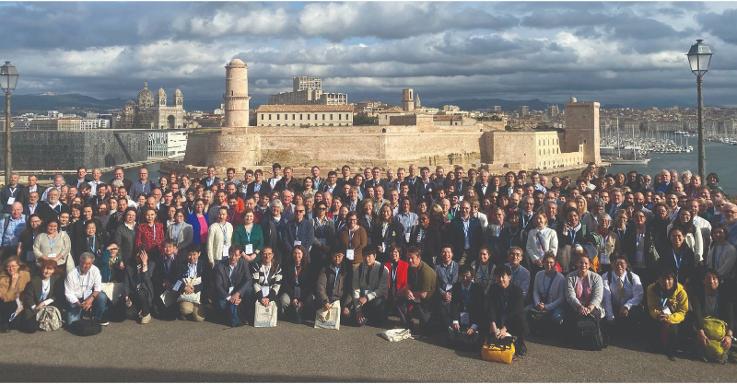
Researchers, scientists, environmental specialists, regulators and radiation-protection professionals from around the world gathered at the Palais du Pharo Congress Centre in Marseille, France, for the 6th International Conference on Radioecology & Environmental Radioactivity (ICRER 2024).
The conference provided an international platform for examining the effects, movement and management of radioactive substances in the environment, while bringing together researchers working across radioecology, environmental radioactivity, radiation protection and related disciplines.

The sixth edition of ICRER was jointly organised by the Institut de Radioprotection et de Sûreté Nucléaire (IRSN) of France and the Norwegian Radiation and Nuclear Safety Authority (DSA), in cooperation with the International Union of Radioecology (IUR), International Atomic Energy Agency (IAEA), United Nations Scientific Committee on the Effects of Atomic Radiation (UNSCEAR), European Radiation Dosimetry Group (EURADOS), International Commission on Radiological Protection (ICRP), Journal of Environmental Radioactivity (JER), European Radioecology Alliance and Société Française de Radioprotection (SFRP).
The conference addressed both established and emerging areas within radioecology and environmental radioactivity. Its nine thematic sessions covered NORM-impacted areas and legacy sites, radioactive waste management and disposal, measurement and metrology, emergency preparedness, effects of radioactivity on ecosystems, radionuclide mobility and bioavailability, global changes and radioecology, artificial intelligence and Big Data, and communication and citizen science.
This breadth reflected the increasingly interdisciplinary nature of environmental radiation research and the need to connect scientific evidence with environmental management, regulation and public engagement.
The conference was supported by an international organising and scientific structure. The programme identifies Laureline Février, Marianne Suignard, Carol Robinson, Sabrina Giner, Denis Maro, Olivier Masson, Olivier Radakovitch, Hélène Faye and Julie Glévarec among the organisation team, representing IRSN and DSA. Its scientific committee brought together specialists from institutions including the IAEA, UNSCEAR, Oregon State University, Bhabha Atomic Research Centre, ANSTO, McMaster University, the Norwegian Radiation and Nuclear Safety Authority, Fukushima research institutions, SCK CEN and universities across Europe, North America, Asia, Africa and Australia.
The programme also featured a distinguished group of plenary and guest speakers. Gonéri Le Cozannet of (Bureau de Recherches Géologiques et Minières) BRGM delivered a guest lecture examining lessons from the IPCC’s Sixth Assessment Report and the implications of climate change for environmental and nuclear risk. Hildegarde Vandenhove of the IAEA addressed optimisation of radiation protection in radioactive-waste management, environmental releases, decommissioning and remediation. Georg Steinhauser of Technische Universität Wien (Austria) presented on the “wild boar paradox”, while Mike Wood of the University of Salford (England) considered the future of radioecology. Deborah Oughton of the Norwegian University of Life Sciences (Norway) addressed the future of nuclear power in Norway.
The programme also incorporated technical lectures, workshops and specialist meetings. These included sessions on the IAEA’s methods for radiological and environmental impact assessment, radiological monitoring networks, marine organisms and seafood dose, as well as discussions connected to international radioecology initiatives. Across the technical programme, researchers examined issues ranging from naturally occurring radioactive materials and environmental monitoring to nuclear accidents, radioactive waste, ecosystem effects and radionuclide transport. Researchers from France’s IRSN featured prominently throughout the programme, with contributions from scientists including Olivier Masson, Olivier Radakovitch, Frédérick Guillory, Marc Zebracki, Hugo Durand, Béatrice Gagnaire, Sabine Frelon and Olivier Armant.
Their work covered areas including radionuclide transport, environmental contamination, ecosystem effects, biological responses to radiation and emergency preparedness. Researchers from Norway included contributors from the DSA and Norwegian University of Life Sciences, including Justin Brown, Ali Hosseini, Jelena Mrdakovic Popic, Lindis Skipperud and Yevgeniya Tomkiv.
Their contributions addressed subjects such as NORM exposure, radionuclide transfer, emergency preparedness, environmental modelling and radioecological assessment. The programme also featured substantial contributions from Japan, including researchers associated with Fukushima and other environmental radioactivity institutions. Tatsuo Aono, Hirofumi Tsukada, Yumiko Ishii and other Japanese researchers presented work addressing radionuclide behaviour, Fukushima environmental monitoring, food-chain exposure and environmental radioactivity. North American and Australian researchers further broadened the programme. Kathy Higley of Oregon State University, Sarah Donaher of the University of Tennessee
Knoxville, Julia Carpenter of ARPANSA, Mathew Johansen of ANSTO and Duncan Hardman of ARPANSA were among those contributing to sessions on environmental radiological protection, ecosystem services, seafood exposure and emergency preparedness. The conference also included contributions from researchers and institutions in Belgium, Germany, Italy, Sweden, Ukraine, Brazil, Kazakhstan, India, Tanzania, Malaysia and other countries, reinforcing its role as an international forum for radioecological research. The official scientific committee alone included representatives from Japan, Norway, the United Kingdom, Australia, Canada, Brazil, India, Ukraine, the United States, Sweden, Belgium and France. African research formed part of this wider international exchange. Researchers working on environmental radioactivity, NORM exposure and radiological risk contributed perspectives from the continent.
Other News
Among the South African contributions were studies by researchers from the National Nuclear Regulator (NNR), including N. Mohlala, who presented an assessment of human-health risks associated with NORMs and heavy metals near selected uranium mines, and A. Ocwelwang, who presented a RESRAD simulation study examining environmental radioactivity and associated risks in South Africa’s KOSH region. Researchers from other African countries also contributed to the programme, including D. Seif of Dar es Salaam University, Tanzania, whose presentation examined naturally occurring radionuclides in Mara River sediments and their implications for radiological risk to biota in the Lake Victoria Goldfield. Dr. Stephen Friday Olukotun, a Fellow of the Nigerian Institute of Scientists and Engineers at the Obafemi Awolowo University, Ile-Ife, Nigeria and a Postdoctoral Research Fellow at North-West University, South Africa, was among the African researchers who participated in the conference as one of the international delegates.
He contributed two posters: “Evaluation of radiological health risk due to consumption of milk products in the Mafikeng town of South Africa,” and “Assessing radiological hazards, lead content, levels of other heavy metals, and fingerprint development for paints from selected African countries: implications for environmental health using gamma-ray spectroscopy and ICP-MS analysis.” Both contributions were listed under North-West University in the official conference programme.
Poster presentations formed an important component of the conference, providing researchers with opportunities to share ongoing studies alongside the oral technical sessions. The first poster set included research covering NORM-impacted environments, food-chain exposure, environmental radioactivity and radiological risk, while the later poster programme included studies addressing radioactive residues, Fukushima environmental radioactivity, biological effects, artificial intelligence and environmental monitoring.
The conference also offered refresher and training courses, including Ecosystem Approaches Radioecology, Radiation-Induced Transgenerational and Multigenerational Effects in Human and Non-Human Biota, and Environmental Risk Assessment, including use of the ERICA tool. These sessions complemented the main scientific programme by providing opportunities for participants to develop practical knowledge and engage with established methodologies in environmental radiation assessment.
Beyond formal presentations, ICRER 2024 included workshops, specialist meetings and opportunities for professional interaction. The programme featured an IUR Young Investigator meeting and awards, the IUR Vernadsky Award, Alliance Best Poster Awards, the IUR General Assembly, and a number of social and cultural activities. Participants could join guided visits around Marseille, while a gala dinner provided another opportunity for informal networking among researchers and institutions.
The conference also marked an expansion in industry participation. For the first time, companies including Algade, Agilent, Bertin Technologies, ESI, HTDS and Triskem sponsored the event and maintained dedicated exhibition stands.
Their presence created an additional connection between scientific research, technical services and technologies used in radiation measurement, environmental monitoring and radiological protection. One of the defining features of ICRER 2024 was its effort to connect established radioecological research with emerging global challenges. Alongside traditional areas such as NORM, nuclear legacy, environmental monitoring, radionuclide transfer and radioactive waste, the conference examined climate change, artificial intelligence, Big Data and citizen science.
The inclusion of climate change was particularly significant. Gonéri Le Cozannet’s presentation connected the findings of the IPCC’s Sixth Assessment Report with issues such as future environmental change, adaptation and the long-term considerations required for critical infrastructure, including nuclear facilities. Similarly, the conference’s dedicated session on artificial intelligence and Big Data demonstrated how computational approaches are increasingly being incorporated into radioecological research.
Presentations included work on machine learning for modelling radioactivity in the environment, artificial intelligence applications for forecasting airborne caesium and neural-network approaches to predicting radionuclide concentrations in rivers.
The 6th International Conference on Radioecology & Environmental Radioactivity provided a broad platform for scientists, regulators, institutions and industry to exchange knowledge on how radioactive materials interact with environmental systems and human populations.
By bringing together research on NORM, radioactive waste, environmental monitoring, ecosystem effects, emergency preparedness, climate change, artificial intelligence and public engagement, ICRER 2024 demonstrated the increasingly interdisciplinary character of contemporary radioecology.
The participation of researchers from Africa alongside colleagues from Europe, Asia, North America, Australia and other regions further illustrated the importance of international collaboration in addressing environmental and radiological challenges. The conference concluded with closing addresses from Marc Gleizes of IRSN and Carol Robinson of DSA, following five days of scientific presentations, technical sessions, training, poster exchanges, awards and collaborative activities.
Overall, ICRER 2024 reinforced the importance of international scientific networks in developing the knowledge, methods and tools required to understand environmental radioactivity, assess radiological risks and protect both human populations and ecosystems. Its combination of scientific research, professional exchange, training and emerging technologies provided a comprehensive forum for advancing radioecology and environmental radioactivity research internationally.