Follow Us on Google
By Christian Agadibe
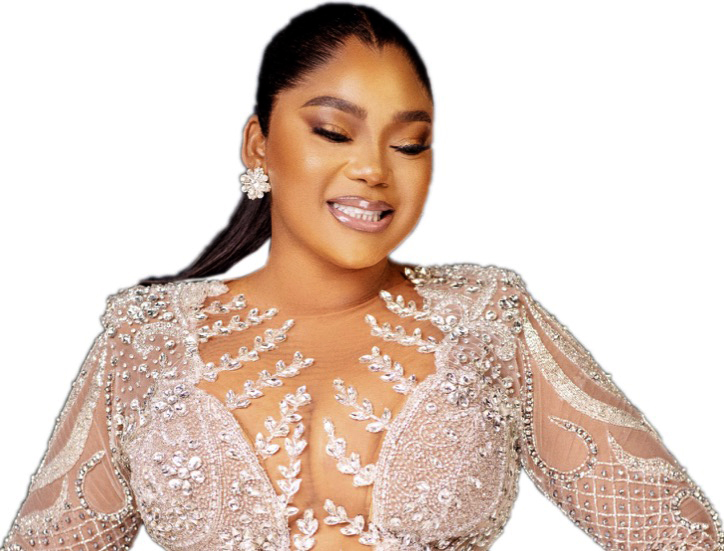
Rechael Okonkwo is a notable Nollywood actress popularly known as Nkoli Nwa Nsukka, a moniker that has made her a household name in the entertainment industry. More importantly, her humanitarian works coupled with the annual empowerment carnival she holds provide opportunities to give back to the society. At the recent carnival, over 5000 people benefited from the medical outreach just as 500 widows patients and 500 widows received bountiful gifts in cash and materials.

In this interview, she talks about her growth.
Enjoy:
You recently launched your book. What has been the reaction to it by readers, in terms of sales? Was it also published as an e-book as well for digital distribution?
The reaction has been very encouraging. I am particularly happy that the book has gone beyond being simply a publication to becoming a conversation with readers. People have shared their thoughts, experiences and different perspectives after reading it, and that has been very fulfilling for me.
In terms of sales, we have had a positive response, and I believe the book still has a long way to go. My intention was not just to launch a book and move on, but to make it accessible to as many people as possible.
Yes, we are also looking at digital distribution, including an e-book version, because technology has made it possible to reach readers beyond Nigeria and the traditional book market. Certainly a wider reach means greater opportunity for people to connect with the message behind the book.
What informed your decision to hold a carnival in Nsukka, which is essentially known as a university town and host of UNN?
Nsukka means a lot to me. It is not just a university town; it has a rich cultural, intellectual and historical identity. The presence of the University of Nigeria has given Nsukka a special place in the history of education, arts, culture and intellectual development in Nigeria. I wanted the carnival to contribute to that identity by creating an atmosphere where people can come together, celebrate, have fun and showcase our culture. Carnivals are not just about entertainment; they can promote tourism, create economic opportunities and give young people a platform.
Again, Nsukka is my home, and there is something special about bringing people together in an environment that has played such an important role in shaping many Nigerian lives.
When you look back at your journey so far in the entertainment industry, what are those moments you recall and feel most happy about?
There have been many memorable moments, but what makes me happiest is the fact that the work has connected me with people. When somebody tells you that a particular role made them laugh during a difficult period, inspired them, or reminded them of home, you realise that entertainment is much more than being in front of a camera. I am also proud of the growth. Looking back at where I started and seeing the opportunities that have come along the way gives me a sense of gratitude. The recognition, the relationships, the projects and the people I have met have all contributed to the journey. But perhaps the greatest satisfaction is still the audience. Knowing that people continue to appreciate and support what I do is something I never take for granted.
Please recall some of the challenges that came along the way and share some insights on how you overcame them.
There have been challenges, because no meaningful career comes without obstacles. In entertainment, you deal with uncertainty, competition, rejection, financial pressures and sometimes situations where your talent is not immediately recognised.
One of the biggest lessons I have learnt is the importance of persistence. You cannot allow one rejection or one difficult season to define your career. You have to keep improving yourself, remain disciplined and be willing to learn.
I have also learnt that relationships matter. You have to treat people with respect because you never know who may open a door for you tomorrow. At the same time, you must know what you stand for and remain authentic.
Most importantly, I have learnt to keep faith, keep working and understand that everybody’s journey is different. You don’t have to measure your progress entirely by somebody else’s success.
We are now in the “ember” months and entertainers plan end-of-year movie releases. What can fans look forward to from you – their favourite star?
[Laughs] My fans should definitely keep their eyes open. The ember months are always an exciting period for the Nigerian entertainment industry, and I have some interesting things lined up.
There are projects that I believe audiences will enjoy, and I am also looking forward to continuing to explore different sides of my creativity. I don’t want fans to see me doing the same thing repeatedly. I want to keep growing and surprising them.
Other News
So, beyond the movies, there are also other creative activities and engagements to look forward to. I would simply say: stay tuned, because there is more coming.
When you are back home, what are the things you do with your people for pure fun, to touch base, whether food, dance, local games, etc., without the celebrity shield or wall?
When I am home, I like to be myself. That’s one of the beautiful things about going back home. You don’t necessarily have to be “the celebrity”; you can just be that person everybody has known for years.
I enjoy spending time with family and friends, eating local food, talking, joking and catching up on what is happening in the community. Sometimes it is simply sitting down and having a good conversation.
I also enjoy the cultural side of home – the food, music, dancing and the general atmosphere. Those simple moments are important because they keep you grounded. Fame can create a certain distance between you and ordinary life, so going home reminds you of who you are and where you come from.
Beyond acting, are you engaged in other income-generating activities?
Yes. I strongly believe that an entertainer should not necessarily depend on only one stream of income. The industry can be unpredictable, so it is important to develop other legitimate interests and investments.
I have interests outside acting, including creative projects and other business-related activities. I am also interested in using my platform to create opportunities rather than simply waiting for opportunities to come. Diversification is not about abandoning acting. Acting remains an important part of who I am, but building other areas of your life and career gives you stability and also allows you to create employment and opportunities for others.
Nollywood contributed immensely to the rebasing of the GDP and the economy. For this reason, former President Goodluck Jonathan created the Creative Industry Special Intervention Fund. Would you say the creative industry has actually benefited from it? What needs to be done to achieve better results?
I believe the creative industry has benefited in some ways from government interventions, but the question is whether the benefits have been deep, broad and sustainable enough. There is still a lot of work to be done.
The creative industry is capable of contributing much more to Nigeria’s economy if the right structures are put in place. We need greater transparency in the administration of intervention funds, easier access for genuine creatives, better monitoring and a system that ensures the money actually reaches the people and businesses that need it.
We also need investment in infrastructure. Film production requires equipment, studios, post-production facilities, cinemas and distribution networks. Beyond funding, we need training and skills development because the industry is evolving rapidly.
Another major issue is intellectual property protection. The economic potential of the industry will remain limited if creatives cannot properly protect and monetise their work.
Government should also see the creative sector as an industry rather than merely entertainment. It creates jobs, promotes Nigerian culture, attracts audiences internationally and can generate significant foreign exchange.
The goal should be to build an ecosystem where a young filmmaker, actor, musician, writer or other creative professional can build a sustainable career without having to leave Nigeria to achieve international standards.
What does success mean to you at this stage of your career?
Success, for me, is no longer just about fame or how many people know your name. It is about impact, longevity and the ability to look back and know that your work has made a difference. I want to be remembered not only for the characters I played but also for the lives I touched and the opportunities I helped create.
How do you handle criticism, especially in the age of social media?
You have to develop a thick skin, but you also have to know when to listen. Not every criticism deserves a response. Some are simply just noise while others can actually help you improve. I try to take constructive criticism seriously and ignore the distractions. At the end of the day, you cannot allow social media to dictate your sense of self-worth.
What advice would you give young people who want to pursue a career in Nollywood?
Learn your craft. Don’t enter the industry simply because you want to be famous. Fame without substance does not last. Be disciplined, be professional, keep learning and understand that there is no shortcut to building a sustainable career. Most importantly, don’t despise small beginnings.
What legacy would you like to leave behind?
I would like to leave a legacy of good work, authenticity and positive impact. I want people to say that I used my talent well, represented my culture proudly and contributed something meaningful to the industry. If, along the way, I am able to inspire young people and help create opportunities for others, then I would consider that a very important part of my legacy.